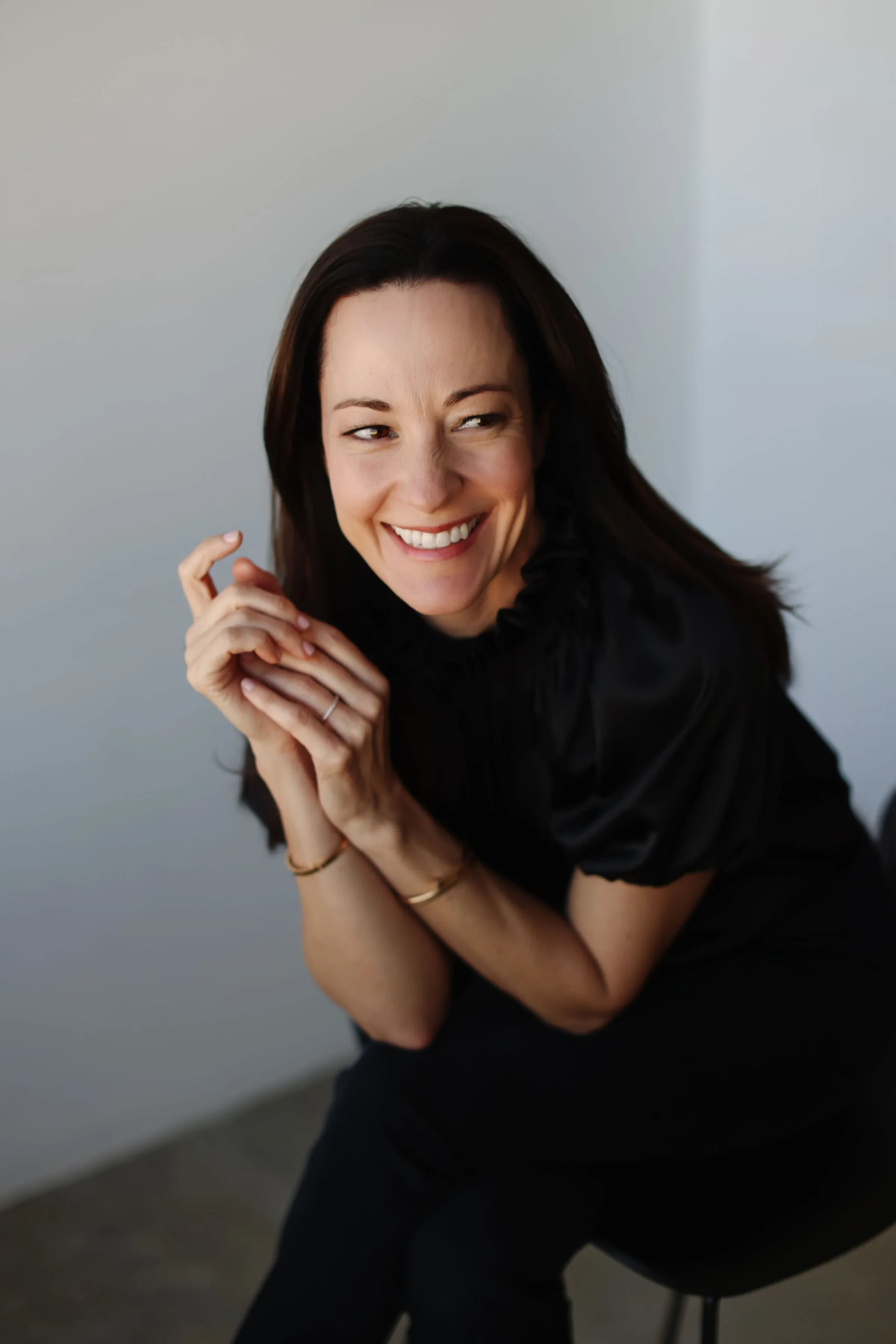
If you've been wondering whether your brain is working against you in your 40s or 50s, ADHD specialist Dr. Jennifer Dall is here to sort it out.
In this conversation, Dr. Dall talks about how ADHD shows up differently in high-achieving women, why perimenopause amplifies symptoms that were always there, and what you can actually do about it today, with or without a formal diagnosis.
This is for you if you've been thinking:
I keep starting one task and ending up somewhere completely different without knowing how I got there.
I've been wondering if I have ADHD or if this is just perimenopause or stress.
I'm organized and high-functioning on the outside. I don't understand how I could possibly have ADHD.
I was never diagnosed as a kid, but things I'm hearing now make me wonder if ADHD was always there.
My brain feels like it stopped cooperating in my 40s and I can't figure out why.
I want to know what I can do about ADHD without immediately going on medication.
I've spent my whole life being told I'm too emotional or too scattered, and I want to understand what that was really about.
Prefer to listen? Press play below:
Or listen on:
Apple Podcasts | Spotify | YouTube
Is It ADHD, Perimenopause, or Just a Lot?
A very common question from midlife women is: do I have ADHD, or is this perimenopause? Or is it just that life has gotten completely unmanageable? Dr. Dall’s answer: it might be all three, and the fact that you're asking the question at all usually means something.
Dr. Dall points out that if ADHD is on your radar, there's typically a reason. Something you've read, something you've heard, some pattern in yourself that made you go, wait a minute. In her experience, that instinct is rarely random. When she asks clients to think back, they almost always have memories that predate perimenopause, predate the pandemic, predate the latest season of life. The patterns were there. They just had different names.
ADHD in women also looks nothing like the stereotype. The bouncy, distracted boy version of ADHD is just one presentation. For women, ADHD often shows up as disorganization, emotional dysregulation, difficulty with short-term memory, masking, and over-functioning on the outside while barely holding it together on the inside. Women with ADHD became very good at hiding it, and the traits that might have flagged ADHD in a boy were reframed as personality problems in girls. Too emotional. Too disorganized. Too much.
Why High-Achieving Women Go Undiagnosed for Decades
Dr. Dall has a clear explanation for why so many capable, successful women are getting diagnosed with ADHD in their 40s and 50s: they built compensating systems so sophisticated that no one noticed, themselves included. The color-coded planners. The over-preparation. The working twice as hard to produce the same result. Nobody called these coping strategies. Everyone called them personality traits.
Perimenopause accelerates the unraveling of those systems. As hormones fluctuate and estrogen drops, the neurological support that was doing a lot of work disappears. The structures that held everything together for 20 years stop working. And the woman who always had it together finds herself genuinely struggling to do things that used to feel automatic.
Gen X women have an additional layer to contend with: ADHD simply wasn't on the table for girls growing up in the 70s, 80s, and early 90s. The diagnosis was almost exclusively associated with boys, and the traits that might have flagged ADHD in a girl were reframed as character issues. Those stories got internalized. Many women spent decades believing them about themselves.
Do You Actually Need a Formal Diagnosis?
Dr. Dall's answer might surprise you: maybe not. An official diagnosis from a psychiatrist gives you access to medication conversations, formal documentation, and in some cases a profound sense of validation. But it can also be time-consuming, expensive, and hard to access, especially for adults whose childhood records no longer exist and whose symptoms were never flagged.
Her recommendation for someone who suspects ADHD is to start by getting educated. Reputable podcasts, credible online resources, and the short assessment tools that circulate online can help you get a clearer picture of what you're dealing with and how much it's affecting your daily life. That information is useful whether or not you pursue a formal diagnosis.
If you do pursue one, the evaluation typically involves questions about executive function, organization, short-term memory, and how frequently these things impact your life. The key measure is not whether these tendencies exist, but how much they're getting in the way. Treatment, when needed, is not automatically medication. Sleep, food, movement, and hydration are the foundation Dr. Dall addresses first, every time. They are basic, and they matter more than most people give them credit for.
Working With Your ADHD Brain Instead of Against It
The most practical advice Dr. Dall offers: start with the low-hanging fruit. Identify what's most impacted and find one thing that could be easier. If calendar management is causing chaos everywhere, that's where to focus. And the solution might be delegating it entirely rather than building a new system to force yourself to manage it.
ADHD brains work on a principle Dr. Dall sums up simply: out of sight, out of mind. If something goes in a drawer, it functionally ceases to exist. Knowing that this is a feature of how your brain works, not a character flaw, changes how you set up your environment and how you talk to the people around you about what you need.
She also makes sure to name the upside. ADHD brains tend to be creative, skilled at thinking outside the box, and capable of deep connection with people they genuinely click with.
FAQs
Can perimenopause cause ADHD in women who never had it before?
Perimenopause does not cause ADHD, but it can significantly intensify ADHD symptoms in women who have always had them. Estrogen plays a role in regulating dopamine, the neurotransmitter central to attention and executive function. As estrogen declines during perimenopause, the neurological support that many women relied on to manage ADHD symptoms disappears, and compensating strategies that worked for decades stop working. The result looks like a sudden onset of ADHD, but in most cases, the underlying patterns were present much earlier in life. An ADHD-informed clinician can help distinguish between perimenopause-related cognitive changes and ADHD that was always there.
What does ADHD actually look like in high-achieving women?
ADHD in high-achieving women often looks nothing like the stereotypical presentation. Many women with ADHD appear organized, productive, and fully functional because they have spent years building compensating systems: over-preparing, working harder than peers to produce the same result, developing elaborate organizational structures that mask underlying difficulty. Internally, they may be dealing with emotional dysregulation, difficulty holding multiple things in working memory, and a persistent sense of working against their own brain. ADHD in women also frequently shows up as being told they are too emotional, too sensitive, or too much, because emotional dysregulation is a common ADHD trait that tends to get reframed as a personality flaw in women and girls.
Do I need a formal ADHD diagnosis to get help?
An official ADHD diagnosis from a psychiatrist opens the door to medication conversations and formal documentation, but it is not required to begin working with your brain more effectively. ADHD specialist Dr. Jennifer Dall recommends starting by getting educated on how ADHD shows up in adults, identifying the specific areas of life most affected, and experimenting with practical strategies tailored to how your brain works. Many adults see meaningful improvement from environmental adjustments, routine changes, and better conversations with the people around them about what they need, all without a formal diagnosis.
How do I tell the difference between ADHD and perimenopause brain fog?
ADHD and perimenopause brain fog can look nearly identical from the inside, and they often coexist. The most useful distinguishing question is: how long have these patterns been present? ADHD, by definition, predates perimenopause. If you can look back at childhood or early adulthood and find consistent patterns of distraction, disorganization, emotional sensitivity, or difficulty completing tasks, that history points toward ADHD rather than purely hormonal brain fog. A psychiatrist or ADHD-informed clinician can help assess which is driving your experience, and whether addressing both simultaneously makes sense.
What ADHD strategies actually work for midlife women?
Strategies that work well for midlife women with ADHD tend to address how their brains actually work rather than applying generic productivity advice. Dr. Jennifer Dall recommends starting with the foundations: consistent sleep, balanced eating, regular movement, and hydration. These have a direct impact on executive function and are frequently overlooked. Beyond that, strategies that work with ADHD brain tendencies tend to outperform ones that fight them. Keep important items visible rather than put away. Reduce the number of tracking systems. Delegate the tasks that consistently fall through the cracks. Communicate clearly with partners and family about what support is actually needed. The goal is to design an environment that fits your brain, not one that requires you to constantly override it.
Meet Dr. Jennifer Dall:
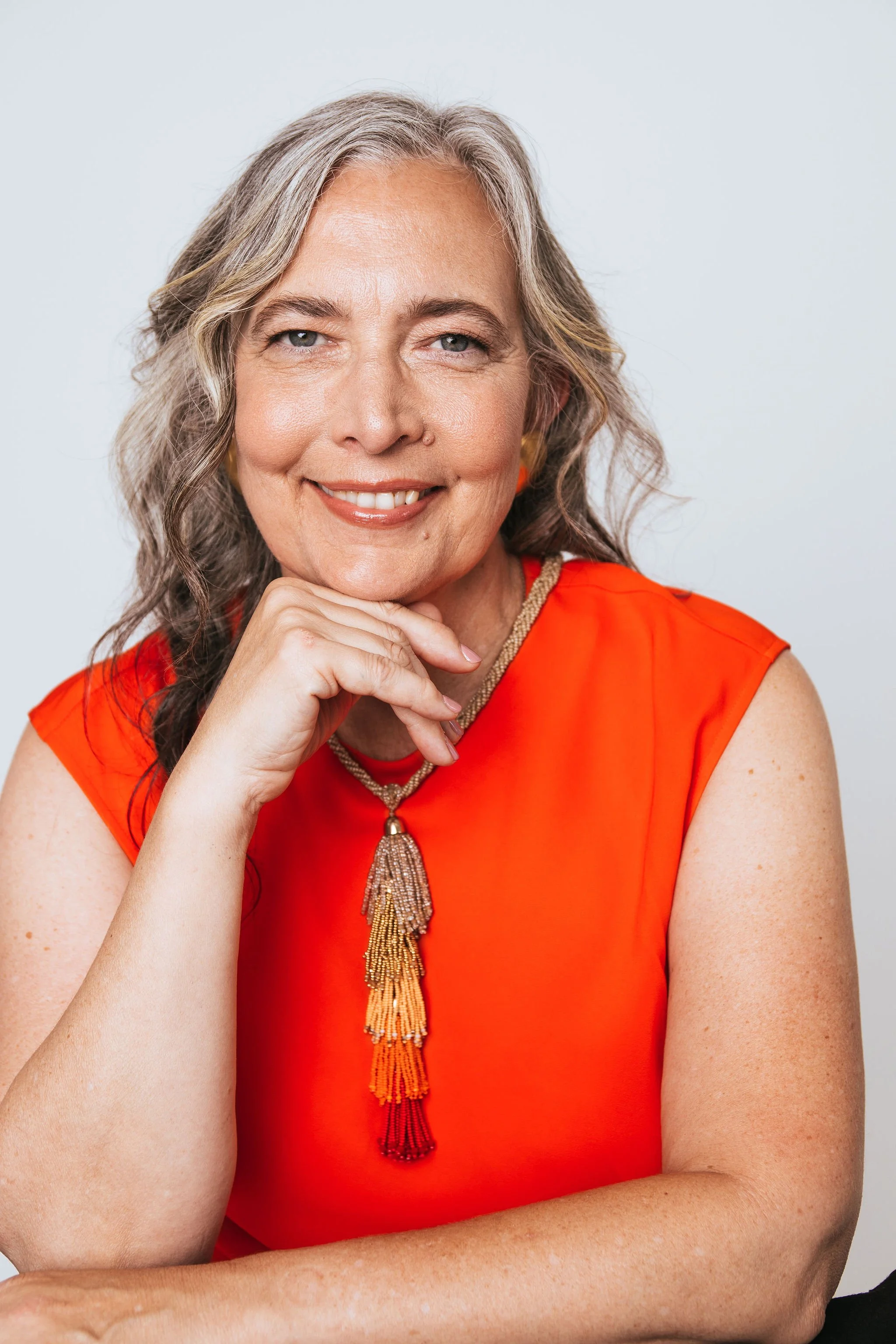
Dr. Jennifer Dall is a Grief-Informed Neurodivergence Specialist, educator, and founder of ADHD Holistically, where she helps women—especially those diagnosed later in life—understand their brains and build lives that truly work for them.
Diagnosed with ADHD in her 50s after years of being told she “couldn’t possibly have it,” Dr. Jennifer blends lived experience with 25+ years in education, ADHD coaching, yoga instruction, and grief education. Her holistic, deeply practical approach goes far beyond surface-level tips, supporting women navigating ADHD alongside grief, caregiving, career shifts, and major life transitions.
In 2026, she launched Curveball Press, her own independent press, releasing books that range from guided conversation tools for navigating ADHD to actionable productivity frameworks that help ADHD brains pursue big goals without burnout.
Connect with Dr. Jennifer Dall:
-
Jessica Long (00:00)
Do you ever feel like your brain is jumping from one thing to the next? Like you start meal planning for the week, open up your phone to check that recipe you saved on Instagram, then see an ad for a really cute dress that you might just need. Click it, then answer the fourth mom you hear. Start tidying up the house while you look for whatever said kid is looking for, then entirely forget what you were doing in the first place. Yeah. Okay, so when this happens, do you ever wonder, do I have ADHD? Or is
This is another one of those perimetopause things? Or is this just because I have a ton on my plate right now and my brain is totally overloaded? Well, Dr. Jennifer Dahl is here to help us answer this question and give us a lot more clarity around ADHD and specifically how it shows up in midlife women. Dr. Jennifer is a grief informed neurodivergence specialist, educator, and the founder of ADHD holistically, where she helps women, especially those diagnosed later in life.
Make sense of their brains and build lives that actually work for them. Dr. Jennifer brings both lived experience and more than 25 years of professional experience to our conversation today. She's going to help us understand what common signs of ADHD look like and how you can work with your brain instead of constantly fighting against it. Have a listen.
Jessica Long (01:15)
Hello, my friend. You are in the right place. This is where smart and sassy women over 40 come to figure out all things midlife. We talk hormones, careers, relationships, and everything in between. I'm Jessica Long, health coach and fellow midlife woman on this wild ride with you. Stick around for honest conversations with experts, rebels, and wise women rewriting midlife on their own terms. Let's dive in.
Jessica Long (01:39)
So I recently polled my audience on Instagram about what topics they want to hear about on the podcast. And ADHD in midlife was the runaway winner. So I am very excited to have Dr. Jennifer Dahl joining us today to dive into this topic with us. Jennifer, thank you so much for being here.
Dr. Jennifer Dall (01:56)
Thank you for inviting me in Jessica. This is such a great topic to talk.
Jessica Long (01:59)
It sure is. And as we were just saying before we hit record, it feels like it's coming up more often these days than I ever remember hearing about it in my 30s. So I think that must be true for my listeners too. And that's why they want to hear about it. So I'd love to just start with a question that I think a lot of women are wondering because I've heard some of my friends and colleagues say this. Do I have ADHD or
Is this a perimenopause thing or am I just totally overwhelmed by all that life is throwing at me right now? And how do I know?
Dr. Jennifer Dall (02:35)
Well, if you really want to know, you can go to a psychiatrist and get an assessment and that would give you a pretty good clue. what I like to talk about and and I would like to say first off, it could be ADHD, it could also be all of the above, right? ADHD, parent monopause, life, life's a little much sometimes. what I like to think about is the reason you think you have ADHD, there's a reason this has come up in your mind.
You've heard something, you read something, Has that always been there? So it may have been couched in different terms, you may have been told a different story about that factor. But if you really sit back and think about it in quiet, you probably have memories going back. So if it's that you're disorganized, then what are the stories as a kid even that you heard from parents, teachers?
Other people. So we didn't call it ADHD. Chances are, especially unless you're like really young. you know, we didn't we didn't Yeah, yeah,
Jessica Long (03:33)
We're we're Gen X Gen Xers here. We did not call it that.
Dr. Jennifer Dall (03:36)
Gen X did not know. We heard these, stories about ourselves and then we kind of believed them and took them in. So I always feel like if somebody's asking if they have ADHD, they've heard something or they've read something. It isn't just this random thing.
there's some specific or more than one specific trait that they're referring to. And so yeah.
Jessica Long (03:55)
Can we talk about those? So you talked about
feeling like you've been told you're disorganized or maybe you even think that you're disorganized. What are some of the other traits that show up
Dr. Jennifer Dall (04:05)
So
Jessica Long (04:05)
in ADHD women?
Dr. Jennifer Dall (04:08)
And it's interesting because I feel like especially with women, like with boys and men, these things show up and it's either like, boys will be boys or they have ADHD. But with girls and women, it seems like it's also then turns into a personality issue. So you're messy. You're too much or not enough, It can be the hyper focus, the oversharing, or the keeping it all in. it can have
a lot to do with executive functions, so short term memory, organization, one of the things we get really good at is masking. So we learn how to be in a place and we cover it all up. it can be emotional regulation. we can take things very hard emotionally and that leads to you're just too emotional. You're too sensitive. You cry too much.
Which is the dismission dismiss dismission? That's not the word. Dismissal that's the
Jessica Long (04:59)
Dismissal Yeah.
Dr. Jennifer Dall (05:02)
word of what you're going through. But if you really sit back and think about it, you've heard this before. Not just in the last few years, not just since you started going through perimenopause or menopause, not just since the pandemic. You've heard this before. You've heard this from people in your life and you've told this to yourself before. So that for me, that's one of the big
Clues.
Jessica Long (05:25)
So I think that's so interesting because I think a lot of my listeners are the high achieving, super intelligent, very
Dr. Jennifer Dall (05:31)
Mm-hmm.
Jessica Long (05:31)
savvy, science-based, but also maybe a little spiritual. But anyway, they've
Dr. Jennifer Dall (05:37)
Yeah.
Jessica Long (05:37)
they know how to get through life. They know how to get stuff done, they know how to be productive and at least outwardly present as being super productive. Or maybe they actually are. But
Dr. Jennifer Dall (05:48)
Right.
Jessica Long (05:49)
if you think about.
stories that you've been told growing
Dr. Jennifer Dall (05:52)
Uh-huh.
Jessica Long (05:52)
up and things that you believed about yourself. It's almost hard to parse them out as stories and not truths at this point because this isn't our
Dr. Jennifer Dall (05:59)
Mm-hmm.
Jessica Long (06:00)
first rodeo. And I I mean I
Dr. Jennifer Dall (06:02)
Well even if it
is true, even if you are emotional, it doesn't mean that that's bad or that's broken or that's wrong. So
y you you can
Jessica Long (06:09)
No, exactly.
Dr. Jennifer Dall (06:10)
be disorganized, you can be emotional, you can have problems with short term memory. But that doesn't mean you're bad, right?
Jessica Long (06:18)
Right, exactly. And yet
I think given the stories that we've been told, a lot of us might believe that those are bad traits of ours.
Dr. Jennifer Dall (06:23)
Mm-hmm. Mm-hmm. Yes.
Jessica Long (06:28)
and so to actually unravel that and try to disconnect the judgment from the habit, is the work that we have to
Dr. Jennifer Dall (06:34)
Yeah. Yes.
Jessica Long (06:36)
do at this point. So let's talk specifically about why this seems to be coming up more for women in their 40s and 50s. Like I'm in a group of
Female entrepreneurs. And a couple of them
Dr. Jennifer Dall (06:47)
Yeah.
Jessica Long (06:48)
said, I just got diagnosed with ADHD. And these women are in their 40s and 50s. And I just find that so interesting that this is happening at this stage of life. Because as I said in the beginning, I don't remember anybody talking about thinking they had ADHD in their 30s. So is there something about this stage of life that makes the symptoms present more? Or is it just that we are.
Maybe looking at ourselves in a different way and understanding ourselves differently.
Dr. Jennifer Dall (07:15)
that and more,
on a more global scale, there's been more research and more understanding about women and girls in ADHD, so that information is out there more. It's getting dispersed, you're hearing it more as an actual thing. I would say that there's been a lot of talk about the pandemic and how we all just got a lot quieter. And I know for me, things like the routines and structures I had built up so strong to mask and to make it through, they all blew away, right? That's gone.
as you're let's say in your 40s, things like you are going through perimenopause. If you have kids, they're getting older, and that's a huge change, And then in my opinion, this whole world we're living in has become a lot.
So there's a lot of reasons that are all kind of swirling together about why you're hearing about it so much more. And then, you know, to be honest, when you look at the social media and that kind of stuff, they know what you're looking at. They seem to know your diagnosis before you know it. And and so then you're seeing it more, It's kind of like that confirmation bias where like if you're looking at white cars, all of a sudden every car you see is a white car. So
Jessica Long (08:23)
Right.
Dr. Jennifer Dall (08:23)
you're seeing it more.
And there's more information about it. And then another thing is that there is
to some extent a hereditary component. It's not, you know, 100% all of that. But I know I talk to a lot of people who they've started to figure it out when their own kids were referred, a doctor or somebody at school. And so looking at their child or going through the assessment process with their child and the questions they have to answer, it's like those little check marks. They're like check, check, check, check, check. That's me. So I think that it's I don't call it a perfect storm, but I think there's all these factors.
Jessica Long (08:59)
think it's so interesting that you
Dr. Jennifer Dall (08:59)
that are coming together.
Jessica Long (09:00)
you bring up the diagnosis of the child and that sort of sets off some alarm bells for yourself, like, wait a minute, it helps you see some of those traits in yourself.
Dr. Jennifer Dall (09:07)
Or or your you know, your sister's
kid, so your what would that be? Your your niece, say, gets diagnosed and your sister's telling you about it. So you're not going through this with her, but then you hear about it or you hear about it from your best friend, right? And what they're finding out.
Jessica Long (09:19)
So we know
we know the benefits of getting diagnosed as a child, We can help you in your school environment, in tutoring, in some cases medication. What are the benefits of getting the official diagnosis when you're forty five, fifty-five years old?
Dr. Jennifer Dall (09:35)
So if you get the official diagnosis with by the way, I don't know that you have to. That's a personal decision that
is up to you because that can be time consuming and expensive and all kinds of things. if you have the diagnosis, the official little piece of paper from the doctor, you can have those conversations about medication if that's what you want to do. it may be some validation for you to say to yourself, to say that your loved ones, other people, this is why. Look, I have this piece of paper about why I do this and this and this. and so you can start working with it and thinking about it.
so those are the reasons to have it.
Jessica Long (10:09)
Well,
what can you do beyond medication as an adult, for example?
Dr. Jennifer Dall (10:13)
there's a lot of strategies. there's so many out there and what I like is we're all different and so what works for me and what works for me today isn't necessarily what works for you or what works for me next year. So I really like looking at how it's impacting you the most and what kind of strategies you can use or what kind of things you can do to help make it better.
I also like to start with those things we've known all our life. Are you sleeping? Are you eating? Are you getting exercise? Are you talking to people? Are you drinking water? Which may sound very, very simplistic, but I know how I feel when at least one, if not more, of those is out of whack. And it just makes it so much ho hard to to focus on things to pull it together, to mask, to keep it together, to be functional.
Jessica Long (10:58)
Well, this whole podcast always circles back to the fundamentals, the foundations of basic health. So even ADHD comes
Dr. Jennifer Dall (11:02)
Yes. Yes.
Jessica Long (11:05)
back to this. so tell us a little bit about your personal story. You personally got diagnosed later in life.
Dr. Jennifer Dall (11:10)
Right,
and I guess I was lucky because I knew a lot. I taught general education and special education, so I worked with lots of students with ADHD among other learning disabilities. I have a masters in special education, I have a doctorate in educational psychology. But I'm Gen X and even all I heard for the most part was about boys,
We think about ADHD and we think about the eight-year-old boy who's bouncing all over the place. We're thinking about that very outward presentation of ADHD. So over time as I learned more, as I got more girls in my classes, as I started to get more information, look deeper into myself,
I just went through a process of realizing that that's what I believed was going on. But getting there was hard and and I would say things to people who I knew who knew things about it and they say, no, you don't have ADHD. no, you you've done all these things, you run your life, you got an education, you have a job, so you can't possibly. But we're learning more about what that actually means. And
there's crossover with depression and anxiety and I had been going through some stuff and what I now believe was a misdiagnosis and mistreatment, I was given an antidepressant.
Which I then as I started really learning more, I felt like that was not the right solution. Like we talked about with the emotional regulation and those sorts of things. I think it was a simplistic look at it. So I just got into the point where I I learned more and more, I knew more and more, I looked at myself more, and I finally went to the doctor and said, I really think we need to look at this.
I wanted to know, I wanted to take a step back and look at what else was going on so that we had a clearer picture because I didn't think that it was right.
Jessica Long (12:48)
So tell me what happens in the actual evaluation and you said it was with a psychiatrist.
Dr. Jennifer Dall (12:54)
Right. So we started off with all these questions, They also, wanna know, like I talked about, has this been going on before? One of the problems with adults is that sometimes they wanna see
school records which, you know, Hello Gen X, they don't exist or they're in a basement covered in mold or something. these things don't exist. and the comments that you probably got were could do better, could pay attention more, distracted at times, but they were never linking that up to ADHD. So
Jessica Long (13:21)
But what were some of the questions
she was asking you, maybe not about your past, but about your present?
Dr. Jennifer Dall (13:27)
now I have to remember.
Jessica Long (13:30)
Mm-hmm.
Dr. Jennifer Dall (13:30)
there are questions about organization, about executive function, about do you have trouble keeping track of things? also then looking at your short term memory, your long term memory how much you can hold in your head at a time.
there's also tons of unofficial little quizzes online now, and those are similar kinds of questions. getting to how your executive function skills are working and how much they're impacting your life. Because you could have a little bit of disorganization, but if it's not really impacting your life, then that's one thing. So, how frequently
is this causing problems? How frequently are you forgetting things? How frequently do these things happen and how much are they impacting you is one of the things that they really get to in
these questions.
Jessica Long (14:17)
Okay.
Dr. Jennifer Dall (14:18)
Because again it's like, maybe you twisted your ankle a tiny bit. Okay, well that's not impacting you that much. But if it's really impacting you or you broke it
that's something that we need to pay more attention to. Does that make sense?
Jessica Long (14:28)
Yeah. And so if we think about what a lot of us believe to be the very basic definition or description of someone with ADHD is like I started working on this task and then I opened up my phone to do one thing, but I forgot what I was opening it for because I got distracted by the Instagram notification. So then I started doing that and then I shopped and I bought this. And then I realized, wait, I need to write my shopping list. So kind of bouncing from one activity to the next without really completing the one that you were working on.
Dr. Jennifer Dall (14:56)
Right. And it's it's made harder
Jessica Long (14:56)
Is that ADHD?
Dr. Jennifer Dall (14:59)
it can be, and that can be harder on your phone because your phone is then enabling you to bounce more.
Jessica Long (15:05)
Mm.
What are some of the strengths that you see in women with ADHD that maybe they don't even recognize as strengths of theirs?
Dr. Jennifer Dall (15:13)
thinking outside of the box, I think that's great, especially if you're with people who can work with it and can appreciate it. more neurotypical people, it's like this is the solution. But I can come up with a whole bunch so this thinking outside of the box and being creative is good. some people with ADHD have trouble with small talk
but when you really connect with somebody, we're able to really dive into the essence of people, it depends on the person because
it impacts different people in different ways. So you can be more external, you can be more internal. How well are you doing at managing it?
Jessica Long (15:45)
Mm.
Dr. Jennifer Dall (15:46)
so those are definitely some of the benefits. probably a lot of the women in your entrepreneur group, they're very creative. They they do well in that situation.
Jessica Long (15:55)
absolutely. I mean, I can see it, no question. So what are some ways that someone who's feeling like I might have these tendencies? I don't have the official diagnosis, but I think this kind of sounds like me. What are some of the ways that she can work with her brain instead of feeling like she's working against herself and having that story that we talked about earlier of being bad? how can we shift that story and actually work with the way her brain works to make her just
Feel more secure and more validated and more confident in who she is and how she's wired.
Dr. Jennifer Dall (16:30)
I think we start off by looking at what's causing her to think this or feel this. So there's something that's come up, whether in her work, in her personal life, in in both, that's making her realize this and impacting her. And then looking at what it is and is there benefits to it? is what you're doing helpful in some way? Are there easier ways to
get some support and work with it. So sometimes we talk about starting with the really low hanging fruit, something that's just easy that's gonna get you a result right away. And sometimes starting with something that's a little more impactful if you find that like your ability to manage too many calendars is just really impacting every part of your life than looking at it and understanding that you're not broken for one thing. Your brain works different.
it works different than how many of the ways that we have are set up, right? A lot of our outside world is set up for a much more neurotypical mind. So Let's look at what's really going on what's good about it, what's working, what strategies do you have and what can we do to make it just a little bit better? And that's everything from some strategies to maybe handing it off to somebody else to just being able to have conversations.
Like maybe I can just have a conversation with my partner about we keep getting in a fight about I don't know, me me dropping everything when I walk in the door. Okay. Or me having to have stuff out. So ADHD, I know for me, if it's out of sight, it's out of mind. So with my projects, I really work best if I still have them out. And this can look very messy and be very frustrating to somebody who's like, why don't you just put it in the drawer?
until you need it. I was like, because if I put it in the drawer, I will forget about it and I won't know where it is. And so back to what you're asking, so getting to the bottom of it a little bit more and being able to have a conversation with the people around you who it's impacting so that maybe they're not getting upset. You can both learn to work with it better and have conversations about it.
Jessica Long (18:27)
the concrete examples really help me. So like
Dr. Jennifer Dall (18:31)
Yeah.
Jessica Long (18:31)
the scheduling thing, you know, a lot of us are in charge of multiple people's schedules, our own,
Dr. Jennifer Dall (18:36)
Yes.
Jessica Long (18:36)
our collective schedule with our partner, our kids' schedules,
Dr. Jennifer Dall (18:38)
Mm-hmm.
Jessica Long (18:39)
So if you're saying the management of all the schedules isn't working for you, that's something you could delegate. Or if the way you
Dr. Jennifer Dall (18:46)
Yeah.
Jessica Long (18:46)
like to work is
creating conflict with your partner or somebody else in your household, have the conversation and then maybe you set up a station and that's where your projects are set out. And
Dr. Jennifer Dall (18:56)
Mm-hmm.
Jessica Long (18:56)
then the rest of the house can be a little tidier and that makes your partner happier.
Dr. Jennifer Dall (19:02)
Yeah, yeah, exactly.
back to the calendar, as women in our society, we kind of get that put on us, right? There's this assumption that you're gonna manage all of that. And so being able to step back, this is not just I'm tired and I don't wanna do it, but my brain doesn't look at it this way. And this is how it works better for me, or this is the support I need. you're very logical, you get frustrated when I don't keep the calendar right.
Can you do it?
Jessica Long (19:31)
Yeah, and just let's play
let's play to each other's strengths. my husband and I talk about that a lot. It's
Dr. Jennifer Dall (19:34)
Yeah. Yeah.
Jessica Long (19:37)
like, I don't feel like I'm the best at this. I mean, the problem is we have a lot of overlapping strengths and overlapping room for room for improvements. so that makes
Dr. Jennifer Dall (19:40)
Mm-hmm. Yes. Right. Right.
Jessica Long (19:47)
it hard, but still we try to play to each other's strengths as much as possible to just keep the households more smooth and keep everybody feeling like they're contributing more. So
Dr. Jennifer Dall (19:57)
Mm-hmm.
Jessica Long (19:58)
For anyone who's listening to this and thinking, they are talking about me. I definitely think I could have ADHD and I've probably had it my whole life. What do you recommend she do first?
Dr. Jennifer Dall (20:11)
First, there's some really great podcasts with information that talk about it looking online at reputable places, getting some information, thinking about your past and your things. it's then gonna depend on your health insurance, your relationship with your doctor or your therapist.
their knowledge because you can't just assume that they know everything because a lot of them don't know much about it. but starting off with really looking at yourself, why are you thinking this? What are the areas that this has impacted you? How is it impacting you? And is it some quick fixes? Is this really a big deal? And getting some support with people around you. I start there because the medical route can be very important.
But it can also then be a barrier,
at least to starting to find out things.
Jessica Long (20:58)
Mm-hmm. Speaking of that, what
about our AI friends? Would you recommend someone open up Chat GPT and say, Do I have ADHD? That's probably what people are doing.
Dr. Jennifer Dall (21:11)
Well, I think with everything like that you just need to take it with a grain of salt. I I know that I do use some of that. I have learned ways to organize things. but that's more of as a tool. you can go on there, but then like with everything else, like if you're trying to find out if you have a strep infection or if you have cancer or if you have ADHD
That depends I think on your feeling about AI. And your inputs it what it's
Jessica Long (21:31)
Of course, and your inputs, right? And and what it's what data sources it's pulling from and all of that.
Dr. Jennifer Dall (21:36)
pulling from and and I find like sometimes it kind of reflects back what you're putting in anyway. So like
Jessica Long (21:43)
Mm.
Dr. Jennifer Dall (21:43)
if you go in my partner theorises I have ADHD, but these are all the reasons I don't think you're probably gonna get more an answer on that way. Where if you go in you say, I really think I had
ADHD you're probably gonna get an answer back that way.
Jessica Long (21:55)
Is there anything about ADHD in midlife that I did not ask you that you think is really important to cover before we wrap up?
Dr. Jennifer Dall (22:02)
no, just keeping your eyes and ears open because they are doing a lot more research, they are learning a lot more things. I think that whether it's any or all of those things, being kind to yourself and trying to help yourself That's the moral
Jessica Long (22:15)
That's the moral of the story, everyone.
Dr. Jennifer Dall (22:17)
of the story. Be nice to yourself.
Jessica Long (22:19)
Doctor Jennifer, thanks so much for coming
on the show. Where can everybody find you and learn more about your work?
Dr. Jennifer Dall (22:24)
you can find me at adh holistically dot com. That's the best place or at Instagram. I'm also doing more with my press, but either way is all gonna feed into the same place. Yeah, thank you.
Jessica Long (22:35)
Wonderful. Thanks so much for your time today.
Jessica Long (22:39)
So we learned today that if you feel like your brain works differently than most people's, it's not a bad thing. It is something to be aware of, though, and to try to work with rather than against. You can pursue an official diagnosis if you think that would serve you, and you can start making small shifts to your everyday tasks and habits that set you up for better success rather than trying to do things in ways that work for other people. And remember, you have special strengths that are unique to you. Make sure you use them.
If this episode hit home for you, please share it with a friend who you think would enjoy it. And remember to leave a five-star rating and a written review on Apple Podcasts. That is the best way to help me land amazing guests who have so much wisdom to share with us. Thanks so much for listening, and I will see you next week.
🎧 Other Episodes You’ll Love:
Why Perimenopause Hits Some Women So Much Harder (It Might Be Your DNA)
Why You Can’t Relax Even When You Have Time (And How to Feel Calm Again)
Like what you hear?
➕ Follow Midlife Advice on Apple podcasts, Spotify or YouTube for more super smart and slightly sassy midlife conversations that blend science, intuition, and zero BS.
⭐️ Please share this episode with a friend, drop a 5-star rating and leave a review! That is the best way you can help me book more expert guests for us!
Disclaimer:
Belong Wellness and its members, managers, employees, contractors, and other agents or representatives are not licensed medical care providers and do not provide medical services or advice, including without limitation diagnosing, examining, preventing, treating, or curing any medical conditions. The information shared in this podcast is meant to be educational, not prescriptive. Please consult your medical doctor before making any changes to your diet or lifestyle. Further, the opinions of guests on this show do not necessarily reflect the opinions of Jessica or anyone affiliated with Belong Wellness.