How People Pleasing Keeps the Patriarchy Running
People pleasing feels like a personality trait. The over-explaining. The softening. Carrying everyone’s worries like it’s your job. But what if it’s also the thing keeping the patriarchy running?
That’s the idea clairvoyant and energy worker Christine Agro brings to this conversation. She has spent almost thirty years helping people clear old patterns, and about a year ago she started seeing a deeper one underneath all the people pleasing.
She calls it patriarchal encodement: the program that tells us everything is our responsibility, and that stepping out of line isn’t safe. Her take is that the patriarchy can’t keep running if we stop running this program inside ourselves. And no, that doesn’t mean any of this is our fault.
This is for you if you've been thinking:
I feel guilty every single time I say no, even when I know I'm right.
I've done years of therapy and boundary work, and I still over-give.
I spend way too long crafting emails and texts because I'm worried how they'll land.
I'm successful and outspoken at work, so why do I still feel like I'm carrying everyone at home?
When I ask my partner for help and he gets defensive, I end up defending myself instead of holding my ground.
I feel like I'm doing something wrong when I sit down and do nothing.
I know the patriarchy shaped me, but knowing that hasn't changed how I act.
Prefer to listen? Press play below:
Or listen on:
Apple Podcasts | Spotify | YouTube
What Is Patriarchal Encodement?
Christine Agro describes patriarchal encodement as a kind of energetic programming that runs under the surface and shapes how we react, respond, and what we believe we're allowed to have or do. Because it runs underneath our awareness, we tend to assume it's just who we are. Our personality. Our particular set of challenges.
Christine has worked as a clairvoyant and energy worker for almost thirty years, typically clearing what she calls "above-ground" patterns: the family dynamics, beliefs, and high-emotion moments we absorb growing up. About a year ago, she began seeing a deeper layer in her clients, particularly women who had already done a lot of personal growth work but still felt a pull of "I shouldn't do this" or "this might be dangerous" when they used their voice.
How is that different from cultural conditioning? Christine sees them as intertwined. Cultural conditioning is how we understand the pattern intellectually. Her analogy: it's like an operating program on a computer. Knowing the program is there doesn't change how the computer runs. Updating it, or deleting it, does.
Where It Shows Up: Your Voice, Your Boundaries, Your Plate
Christine names a handful of places this pattern tends to live: our voice, our boundaries, our power, our self-worth, and our ability to trust what we know. Voice is one of the biggest. We soften what we want to say. We pull back. We spend hours crafting a message. Underneath, she says, the question running is: if I say this, will I still belong? Will I be safe? Will I be accepted?
Then there's the plate spinning. Many capable women read their ability to carry everything as proof of how competent they are. Christine reads it differently: as a pattern saying "carry all of this, for everybody." When we step back and look, much of it isn't ours. Other people's lessons. Their emotional energy. Their worries. And sometimes a nineteen-point fix-it plan for a problem that was never ours to solve.
She also points to knowing. We make a decision, then second-guess it from every angle, looking for outside permission to trust what we already know. And rest: many women feel that sitting down and doing nothing isn't allowed. Christine's reframe is that sitting down is not doing nothing. It's where we regenerate.
Why Knowing Isn't Enough
If you've read the books and still feel guilty every time you say no, this part is for you. Christine's view is that awareness is the necessary first step, but understanding a pattern in your head doesn't move it. Change happens when you actually work with it.
Her simplest starting point: after you react, even after the fact, ask whether that reaction is really yours. Am I really afraid here? Do I really need to carry this? Once you start questioning it, she says, the energy starts to move. From there, anything that moves energy can help: breath, movement, walking, running, or simply the clear intention to let it go.
Christine is also direct that this usually isn't a one-and-done process, and that it's hard to do alone. She compares it to trying to do surgery on yourself. Her recommendation is to find a practitioner whose approach resonates with you, whether that's breathwork, tapping, hypnotherapy, or energy work, and try it.
When You Change, the People Around You React
Christine shares a real example from her own life. When she asked for help at home and was met with defensiveness, she used to defend herself: she wasn't controlling, she wasn't nagging. Now she holds the line instead: "I don't understand why me asking you to do this, which would make my experience easier, requires that kind of response. Is it not possible for you to do this?"
FAQs
What is patriarchal encodement?
Patriarchal encodement is a term used by clairvoyant and energy worker Christine Agro to describe a deep layer of energetic programming that shapes how women react, respond, and what they believe they are allowed to do. It shows up as softening your voice, over-giving, taking responsibility for everyone else, and feeling unsafe when you set a boundary. Christine distinguishes it from cultural conditioning: conditioning is how we understand the pattern intellectually, while encodement is the pattern still running underneath, which she says has to be actively cleared rather than just understood.
Why do I feel guilty saying no, even after doing boundary work?
Many women find that they understand boundaries perfectly and still feel guilt, anxiety, or even physical shakiness when they hold one. Energy worker Christine Agro attributes this to patterns running below conscious awareness that link speaking up with being unsafe or not belonging. Her suggestion is to notice the reaction, ask whether it's really yours, and then use something that involves the body, like breathwork or movement, to help it move, rather than relying on insight alone.
What is the difference between people pleasing and patriarchal conditioning?
People pleasing describes the behavior: saying yes when you mean no, softening what you say, managing other people's feelings. Patriarchal conditioning describes one of the roots: generations of cultural messages that caregiving, accommodation, and carrying everything are a woman's job. The two overlap heavily, which is why people pleasing often persists even in women who are confident and successful at work.
How do I stop carrying everyone else's emotions?
Start by noticing. When you catch yourself worrying about a problem that belongs to someone else, or building a plan to fix it for them, pause and ask whether it's actually yours to carry. Christine Agro describes much of what women carry, other people's lessons, worries, and emotional energy, as never having belonged to them in the first place. Awareness is step one; a regular body-based practice, like breathwork or movement, can help release what you've been holding.
Meet Christine Agro:
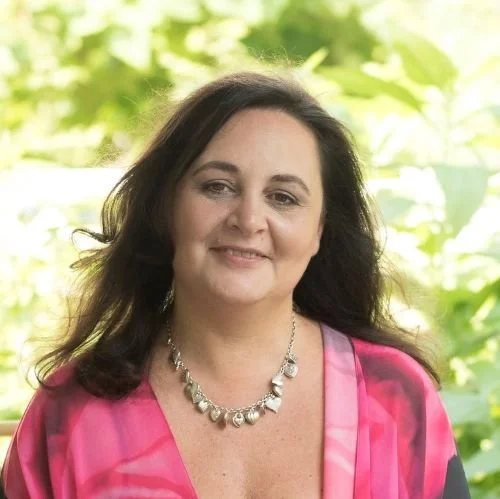
Christine Agro is a clairvoyant, master energy worker, and founder of the Intrinsic Energy Institute. With more than 30 years of practice and a background in naturopathic medicine and master herbalism, she developed Intrinsic Energy Work and leads De-Encode, a program for clearing patriarchal encodement.
Connect with Lisa Clements:
christineagro.com | @christineagro | christineagro.substack.com | Patriarchal Encodement Workbook
-
Jessica Long (00:00.418)
So we're gonna dive into a tricky subject today, but I'm here for it because we're in a safe place with an expert to guide us. So Lisa, thank you so much for coming on the show to talk about the big topic of money.
Lisa Clements (00:13.038)
Yes, ma'am, I am looking forward to it. My favorite topic.
Jessica Long (00:18.718)
Yes, I always love when it's someone's favorite topic. Then I know I've got the right person. Okay. I want to start with saving versus investing because I've saw this in myself. I've seen it in other women I know where a lot of us feel really comfortable saving and we're doing a good job contributing to our 401k. We might be saving for our kids' college education, but that's feels like part of the picture. It feels like we're missing a big part, which is investing.
Lisa Clements (00:23.865)
Yes.
Jessica Long (00:46.39)
Investing feels big and scary and high stakes if I don't understand it. But aren't we missing a piece of the puzzle if really all we're focused on is saving?
Lisa Clements (01:00.122)
Absolutely we are. I could not agree more. The saving, and I've seen this in my own clients as well, because I I work with women. The I I am so impressed with how
disciplined women can be and how many of my clients come to me with somewhere between 40 and 80 thousand dollars in savings and I I go my gosh like that's congratulations that's fantastic and we also need to get some of that invested and a lot of it depends on a couple things one
making sure you have that safety net. So, especially if you're single, I recommend at least six months of living expenses. If you're married, then I say, okay, two to three months because you have a partner to lean on. So having the emergency fund is important. If you have college savings goals for your children, I can understand you know the importance of that, but then that should be invested because typically you're
looking at a you know eight to well it could be you know eighteen year to two year horizon depending upon how old your child is before school
But we need to take advantage of the exponential growth that the market experiences because of compounding. Because once our money grows, there's growth on that growth. And so it just it we can't make up for it when it's sitting in a savings account, let alone a savings account with one of the big banks. Unfortunately, the big well-known banks that we see on TV most often have the lowest interest rate.
Lisa Clements (02:58.908)
So that even your money in savings isn't earning a lot of interest. And so I'm a big proponent of high yield savings accounts or money markets or funds with short-term treasuries or you know, any way to get at least three to four. Right now it's September of 2026, and we're, you know, high-yield savings accounts. We can get interest rates between 3.5 and 4% on our savings.
Yeah.
Jessica Long (03:30.016)
That's not bad. I remember when it was like one point seven and that felt like a nice return.
Lisa Clements (03:35.186)
Exactly. Exactly. And so that's where I'm like, okay, so first we want to make sure we're not saving too much. And second, for the money that we are saving, we have to make sure it's in high yield, you know, high interest, high yield interest savings accounts. Yes.
Jessica Long (03:53.549)
Okay, you're already giving us good advice. And you're reminding me of when I was in my late twenties and I opened an ING account. Do you remember ING, the orange, the orange branding? And I was so proud of myself because it was a high yield savings. And that was about as about as sophisticated as I got until I met someone who could help me take this to the next level. But you mentioned make sure you're not saving too much. What is too much? How do we know when it's time to stop saving and start?
Lisa Clements (04:01.951)
yeah, yeah, yeah.
Lisa Clements (04:10.53)
Yeah.
Jessica Long (04:23.416)
Finding other solutions for our money.
Lisa Clements (04:27.296)
My guideline, my recommendations are around if you're single, like I said, six months of living expenses, six to nine months actually. I always give a range. If you're partnered up and you have the benefit of you know someone that you could help would help carry the financial burden with you, then I say only three months of living expenses. the other money that should remain in savings is money that you plan to spend in the next one to two years.
So if there's a big you know, European vacation that you're saving for, or you want to go on a mission trip to, you know, Guadalajara for a certain amount of time or, you know, that money needs to be n what they call near liquid. Liquid only means that it's, you know, ready to be it's drinkable water. It's you know, like
Jessica Long (05:24.27)
It's it's easily accessible, right? It's the closest thing to cash.
Lisa Clements (05:27.262)
Yeah, exactly. Yes, exactly. So the it's based on the emergency fund in my in my opinion and the near term
things near term goals that you're saving for. So for example, if I have a client who says, Lisa, I might be, I might want to buy a house within the next year or two, then I say, okay, let's look at where your money sits today because if we're gonna want to free up, you know, potentially 10 to 20% of the value of whatever house you buy, then we need to have that money near, you we need to have it accessible. I don't want it to be invested
In something that when you come to me and you say, Lisa, I need that $30,000 or that $50,000 right now, I don't want to say, well, see, tech stocks are down right now, and so it's a really bad time to sell. So can you hold off? And you're going, No, we just found the perfect home, you know, like we we need that money. So that's that's why I say shorter term goals.
you know, you typically want to keep in something more conservative and that you know you can sell regardless of what the market is doing and and be able to use it.
Jessica Long (06:47.552)
Okay, that makes sense. And so also from the how much to save perspective, you're talking about it from like a monthly expense perspective, not a percent of your full portfolio.
Lisa Clements (07:03.214)
Say that again, I'm not sure I understood the question.
Jessica Long (07:05.208)
So you're saying like have a six to nine month kind of savings nest egg, right? In case as emergency fund, in case you lose your job or something else comes up that you were not anticipating. So that's how we should cons d determine how much savings we should have versus looking at our whole portfolio and like cutting it into a pie chart and saying twenty percent should be in savings, X percent should be in investments and whatever else there is.
Lisa Clements (07:11.896)
Yeah.
Lisa Clements (07:31.843)
Right. Right. You're exactly right. Yes, I get what you're saying. I don't look at it in terms of a percentage of your portfolio should be in savings. I look at it in terms of how much money do we need to have on hand should an emergency arise, and what are those near-term goals you want to be spending money on in the next one to two years.
Then it and it doesn't matter to me what percentage of your overall portfolio that is. because once we have those things covered, then I want to make sure everything else is is invested. Now, how it's invested, that's where it gets really interesting because then we can talk about should it all be invested in stocks? Should it be in bonds? Should it be in commodities, hard assets like gold.
Silver.
battery minerals, you know, in a house, should it be invested? You know, a lot of people overlook the equity in their home as actually being a part of their portfolio. So they go, I I'm so I have 100% of my portfolio in stocks and I'm nervous. And I go, no, actually, you know, when we look at the equity in your home as being part of your net worth, you've only got, you know, 40% or 60% of your net
Worth in the stock market. The rest of it is in your home equity or your, you know, other assets, for example.
Jessica Long (09:08.952)
Got it. So you do you talk to your clients? You're you kind of interview them and understand what their goals are, but also what their risk profile is to help them decide how much they should invest and then what they should invest it in, versus there's a general guideline for all women and all women should have X amount invested.
Lisa Clements (09:28.878)
Yeah, that's a great a great question. I definitely interview every one of my clients to understand and I also use assessments with them to get a risk score. pretty basic, like zero out of a hundred, and I use software that assigns the number based on how they answer the 14 questions. but that's just one component. You know, we I often find that most people's risk
Risk scores end up being anywhere between like 40 and 70 out of 100. So, what that tells me is that most of my clients, myself included, typically follow this like moderate risk profile. But many of my clients are still at least 10 years away from retirement.
Which means that even though my personal preference is, I like things a little more moderately invested, I I want to encourage not anyone to move outside of their comfort zone, but at least to look at the math and say, okay, a moderate investment return to meet your moderate desire of risk.
May only get you, you know, a five to four to eight percent return, whereas a more aggressive, not a one hundred out of one hundred risk, but a seventy three out of one hundred can get you a twenty percent return on your money. And that's just speaking about returns
based on the markets from say twenty twenty two to twenty twenty six, you know, that we've been in this incredible run over the last four to five years.
Jessica Long (11:22.542)
And someone could say too, okay, I'm willing to take 73% risk on a certain chunk of my money, but not all of it, right? So you could kind of separate it out and say, let's make this more of the quote-unquote play money. And I don't mean to like make light of it, but where I'm willing to take more risks and see what goes on. And then this
Lisa Clements (11:37.56)
No, you're right.
Jessica Long (11:41.176)
Portion is gonna be my moderate risk 'cause that's really where I feel the most comfortable. And then you get to compare them, right? And say like, all of a sudden my risk tolerance just went up to an eighty because the seventy-three's paying off pretty well.
Lisa Clements (11:52.042)
Right.
Exactly. And I it's funny, I have had that happen, especially I do have married couples as my clients. And you know, retirement accounts are always only in the name of one person. So if they each have retirement accounts, you know, they they kind of look at it like a game against each other. And so in our performance reviews, where I'm looking at the results, the one who was more conservative oftentimes has a lesser return by a few percentages.
points and it is k very common that that
That spouse will say, all right, put me more aggressive. This is, I don't like my spouse, you know, getting that much more, you know, getting an extra four percent return than I am. And I think it's, you know, it's funny. And of course, I always reground them to, you know, I wouldn't encourage you to to go more aggressive if we were working with a shorter time frame or if we needed the money sooner, that kind of thing. So it's always just regrounding ourselves in what's the money for? How long do we have?
Till whatever that goal is, and then your risk profile, and then here are the options. And so you're right, there are people who like to manage their whole profile portfolio to one number. Like when you put it all together, I'm a 70 out of a hundred, say. and there are people who like to divide up their portfolio and think about it just like you outlined. You know, like I have this this one retirement account that is left over from a previous employer. Let's go crazy.
Lisa Clements (13:28.56)
with that. Like let's make it super r you know, but these other things I wanna ke and I'm good for that too, you know, 'cause then in the background I'm the one averaging it all out and making sure that overall we're not taking too much risk for them.
Jessica Long (13:43.399)
Mm-hmm. Yeah. No, I I am speaking from a little bit of experience there myself. I have I have an old 401k that I was like, fall to the walls, like go crazy, because it's, you know, not that big. So who cares? And then I watched it grow and I was like, ooh, okay. I'm ready to be a little more aggressive on my bigger chunk. And that paid off for me over the long term. Again, you have to kind of ride some of the waves that get really uncomfortable, but because
Lisa Clements (13:48.406)
Yeah, it sounds like it.
Lisa Clements (14:04.994)
Yeah.
Jessica Long (14:11.736)
To your point earlier, I didn't need that for any short-term spending that I knew was coming. I was more comfortable not looking at it every day and riding the wave. And and it if you look at it quarter by quarter by quarter over the years, it has definitely paid off for me to go a little be a little more aggressive in in that area as well. I do want to talk about.
Lisa Clements (14:20.302)
Yeah.
Lisa Clements (14:33.326)
That's awesome. I love that.
Jessica Long (14:35.884)
Just investing too, because you know, some terms have been thrown around already that some listeners are probably like, I don't know what she's talking about. And that's kind of the whole point, right? The whole reason why a lot of us don't get into investing is we don't even speak the language. Where are we supposed to learn this? I guess AI could help us with a little bit of this, but I don't want to trust AI with all my finances either. Maybe it can be my guide to help me understand the language, but
Where do you think someone who's listening who's thinking, yeah, okay, I've got maybe too much in savings. I really need to figure this out before I'm 80 years old and wanna create a nice, you know, retirement account for myself, where should she go to learn about investing that is a safe place?
Lisa Clements (15:16.44)
Yeah. I love Investopedia. That was where I went a lot when I started was just going to Investopedia.com and I'd type in what is, you know, a preferred bond? What is a, you know, the the more complex
I ended up taking classes, of course, about five, six years ago, so that I could get a better understanding of the market. But I don't think women have to take classes. I think you can start with Investopedia, and then I think you can take things or concepts that you look up there and go, okay, that's what that a convertible bond. I see what that means. Kinda. And then go to Chat G.
And say, I think a convertible bond is this. Can you give me a real life example of how this would? And then you go, okay, all right. I think I'm gonna schedule one of the so many financial advisors offer a free consult, as I do, you know, which is like take advantage of those. my gosh, you could take one a week for two months if you wanted to, and go through different and just have like one question area that you wanna ask about.
And leverage the advice, the knowledge of people who are out there doing this for a living. There are groups online. Dow Janes is one of them. Gosh, I should probably come up with a list of more that I could provide in the
In the show notes, but I do think it for me it's very simple just starting with Investipedia, and then the other place too, is if you go to Schwab.com or Vanguard or Fidelity or BlackRock or you know, any of those big Merrill Lynch, any of those big investment firms, which are basically companies that operate like banks only.
Jessica Long (16:56.632)
Mm-hmm. Mm-hmm.
Lisa Clements (17:25.884)
They're not giving you bank accounts and savings accounts, they're giving you investing accounts to give you access to the markets. they have a bunch of educational resources on their websites as well. and so it's very frustrating sometimes because you go and you see the little magnifying glass, and you're like, Okay, I want to learn something. I don't even know what to ask. Like, what do I even type into the magnifying search bar? And so that's where I
Jessica Long (17:51.628)
Mm-hmm.
Lisa Clements (17:55.757)
recommend like just start with type in the word basics stock basics bond basics
Type in the number 101, you know, because so many educational things they s they call them, you know, investing one one, estate planning one one or one hundred, you know, which is typically in the university setting that first level, first year of classes. those
Jessica Long (18:25.056)
And so do you think they we should know investing, estate planning, what else? What are some of the other like classes, the one on one classes we should go to as college freshmen?
Lisa Clements (18:36.726)
As college freshmen, so for me, the first thing is just yeah, investing. So understanding the difference between a stock and a bond. that to me is was huge, is just understanding that stock is actually part ownership, like it's an ownership share of a company that I make money on.
through dividends, which is when the company makes money and at the end of the quarter it goes, we brought in a lot of money. Okay, we're gonna share some of the profits with the people who are part owners in our company.
So they pay what they call dividends. So that's one way you make money on a stock. The second way you make money on a stock is the actual ownership share becomes more valuable. The one little piece of ownership you have, which they call a share. You own a share of the company. That becomes more valuable as the company becomes more valuable. So it's like, okay, there's your first basic building.
Block of investing right there is that a stock is part ownership in a company. You own it in the form of a share, and the way you make money is either the company is paying you dividends, sharing its profits with you as you own it for the length of time that you own it, or the actual value of the share itself is increasing in value. So when you go to sell it, you make money on that sale because it's worth more than.
When you bought it. So, like already your audience is, you know, 10 times smarter than the average bear because they understand just stock. And then that's where you go with understanding stock, bond, etc. So
Jessica Long (20:17.366)
Mm.
Lisa Clements (20:31.2)
Other areas to know, well, there's estate planning, which is how do you plan, particularly, this is important to me as a single woman. What happens if something happens to me? You know, I have a binder that has in it what, you know, here are my accounts, here's, you know, where the pass, you know, whatever not necessarily the password, it's an iPhone thing that I ask my clients to do. but
managing things if something happens to you, power of attorney, etc. Then there's tax planning, which is how do I save money in taxes? And then there's risk planning, which is insurance and do I need
Short-term disability, long-term disability, do I need long-term care insurance? Gosh, it's so expensive. So those are some of the things that I think we have to educate ourselves about when it comes to our finances.
Jessica Long (21:35.574)
Okay. And if we are looking for a financial advisor, aren't there key things that we need to look for? Like they're a fiduciary and then what are any red flags that we need to know about?
Lisa Clements (21:47.843)
Yeah, you're absolutely right. The word fiduciary means that they are looking out for your best interest, which means they're not selling products. And when I say product, I mean insurance p policies, annuities, any kind of financial,
Arrangement with you that they make a res a commission or a bonus on. So a true fiduciary is someone who, like, if if we were working together, Jessica, and you said, you know, I'm worried about short term disability, I would say, me too. Here's how much I think you should have in short term disability. Let me go shop wholesalers that I have relationships with. We'll get bids, and you and I will evaluate.
them together and decide if one of them is right for you. Whether you buy a short-term policy or not makes no difference to my income. That's a fiduciary because then you know I'm on your side. I'm not gonna want you to buy any product that is taking advantage because it doesn't matter, you know, I I have no gain, no loss except for knowing that you're taken care of, which as a fiduciary is my number one responsibility.
Thank you.
Jessica Long (23:10.55)
Yeah. And so I feel like you could find that red flag in their cost structure, in their payment structure. Like how do they make money? If they make money based on what you're buying, or they get percentages of what you're making, things like that, like then that doesn't indicate that they're all always looking out for your best interests because they're looking out for their best interests.
Lisa Clements (23:31.129)
Right, they make more if you buy a certain product.
Jessica Long (23:34.894)
Mm.
Lisa Clements (23:35.119)
The only place that it's different is in assets under management. You probably have heard this AUM model. And basically what it is is a way you can either pay a flat fee for planning services, like $300 a month or $3,600 a year, or I've seen planning fees go as low as $3,000 a year up to $15,000 a year just for planning services.
The investment management is often handled separately, which is through this charging based on how much money we're managing for you. And that's called an AUM model because it's based on the assets under management. It's typically a percentage. So the industry standard is 1%.
Which means that if you have one million dollars, you'll pay ten thousand dollars or one percent of that to a financial advisor to manage it over the course of a year. They only bill it once a quarter, so it's not ten thousand at once. It would be twenty five hundred per quarter. roughly, of course, depending upon the account value. but people are starting to get more competitive. Like I charge point
Eight because I I break out my planning fee if you're under a certain account value. because I still want women to have access to planning services, even if they're just starting off. You know, even if I have a couple younger clients that have, you know, sixty thousand dollars, eighty thousand dollars, and I'm like, great, I'd love to be, you know, that's super. I want to work with you. Let's start building that, and we'll just yeah.
Jessica Long (25:12.834)
Mm.
Jessica Long (25:25.614)
Well, that's such a good question. I mean, is there a threshold, a minimum threshold that we need to have before it makes sense to work with someone like you? It sounds like you're saying no.
Lisa Clements (25:34.471)
No, there are a lot of financial advisors that have a minimum threshold that say we only we don't charge any flat fees, we just charge AUM, and because of that, you have to have at least a half a million dollars before we'll work with you. If that's the case, you say totally understand. Thanks so much. Bye-bye. And then you you go on to someone like myself or many in my in the industry who
like just building wealth with people and can then charge a fee.
So it so you only have, or we're opening up your first Roth IRA and we're gonna put $7,500 in it this year. That's fine. I can help and facilitate that entire process, but the way that I'll get compensated for that will be the $300 a month planning fee I charge. You know, and then eventually once you have enough that you're that I'm making at least $3,600 a year from your investment portfolio.
Jessica Long (26:31.403)
Okay.
Lisa Clements (26:40.892)
Then I stop with the planning fee and we just go to AUM. So, you know, you're looking for someone who has the flexibility, and not only do you want to find out if they're a fiduciary and make sure they don't sell products, but find out their why. I don't think there's anything wrong, you know, the the good old Simon Cynic why.
Jessica Long (26:45.454)
Mm.
Lisa Clements (27:05.464)
I think it's important to understand why your advisor is an advisor. You know, there are a lot of twenty-two-year-old
kids coming out of school who want to be financial advisors, and I always had a hard time with that because I was thinking they don't have the lived experience, they don't know what it's like. They don't, how are they advising me? I've also talked to men in their 60s when I was looking for advisors 10 and 15 years ago who I felt like all they were about was just getting the money transferred over. They wanted to manage my retirement accounts, and that was it, but they didn't do tax planning, they weren't gonna talk to me about areas of my
life that were at risk like what happened if as a single woman I had a disability or you know so you you want someone who does more than just money management so ask about what all areas they plan for make sure they're not selling products or compensated based on policies they sell you but then also find out their why like if you
Talk to me, I you know, I'll say I became a financial advisor after being a corporate gal for twenty-four years because I what I myself was frustrated with this. You know, I myself felt like the entire industry was talking down to me and like, just leave s no, we got ya, we got ya. This is just one percent fee and you're taken care of and you're looking fine for retirement.
And I was like, it that doesn't make s what about what about you know, like, shouldn't I be doing Roth conversions? Shouldn't I? There's all this stuff I'm hearing about on TikTok and and you know, other places that and so I'm like, we need more answers as women we need more answers. So yeah. That's an example of a why.
Jessica Long (28:54.818)
Ha ha ha.
Jessica Long (29:04.96)
I love that. I love that you you want to know someone's why. And I liked your idea of go out and take advantage of all those free consultations because not only do you are you getting more information, but you're getting an energy vibe on them. Like, is that someone you might actually want to work with? Do you like talking to them? Do you feel comfortable around them? How do they make you feel? and all of that matters, especially when we're talking about something that's really high stakes, like money and taking care of ourselves.
I also want to ask you before I forget about debt, because we've been talking about savings and investing, but what about people who have debt? And so should they be paying off their debt first things first before they do anything? Or should they be paying off their debt while they are also holding the six to nine months in savings and starting to play around with investment?
Lisa Clements (29:54.585)
My answer there is all about the interest rate of your debt. So if it's a credit card that has a 28.99% interest rate, I've seen some awful ones. Yes. Definitely, it was definitely last week I saw a 27.99, and I was like, my lord, that's awful.
Jessica Long (30:08.606)
my god, do they go that high now? Good grief.
Jessica Long (30:21.752)
Yikes.
Lisa Clements (30:23.008)
If that's the interest rate, you pay off your credit card first. If it's above a, you know, and we can talk, I'll give just a a generic example, but let's say your investments are earning 15% return annually right now.
That's fantastic. It's not unreasonable based on how well the market's doing right now. And you've got a student loan that its interest rate is 4.6%. Keep investing. Pay off the loan as slowly as possible because that debt is only at 4.6%. And if you took the money you would use to pay off that debt.
and put it in the market at earning 15%, you'd have a 10% plus still positive flow of money, right? And so that's where I go.
Jessica Long (31:22.678)
Mm.
Lisa Clements (31:25.114)
you know, p some people want to pay off their houses, but they have a three point eight five interest rate. And that's where money becomes a v a very personal thing. Some people, my advice is don't pay off the house. Invest the money because I can get you a
A you know at least a 15% return, don't you know, pay off the house very slowly. Keep that 3.85% debt. That's excellent debt. I'm thrilled with that because I know you'll if I invest and get you a 15% return, you're coming out at least 11 to 12% ahead.
However, if it's a credit card at 27.99%, I can't get you that. I can't beat that in the market and keep you, you know, diversified. Unless I went like all NVIDIA three years ago. You know what I mean? Like I can't, I cannot beat that interest rate. So then I say, do not.
Jessica Long (32:21.502)
Right.
Lisa Clements (32:28.186)
Put money into investments until you pay off the high interest rates. What's that interest rate magic number? It's really dependent upon how you're investing your money and if you'll actually, you know, if you have student debt that's at 5% or less.
And I say, well, don't pay off that debt first, just pay the basic payments, the minimum payments, and invest the rest. Then I have to get to know you as a client, to know you behaviorally, to know, Jessica, will you really invest the extra money? Or are you gonna go to Chipotle one more time? You know, like if that's the case, then I'm gonna say put it all towards the student debt, you know, because that other money's never gonna make it to the investment account.
Jessica Long (33:16.75)
Well, I was thinking that as you were talking, like this is why it's so helpful to have someone in your corner, right? Someone to work with like you who really understands the whole universe of all of this and can look at my full picture and get to know me and understand my risk tolerance and my behaviors and my lifestyle and all of that. I can see how valuable that is and just
I can feel in my own body, that's what I would want. It's like I want someone that I can really trust who knows this because I want to know enough, but I don't want to spend my time getting to know all the details. It's just not me. I want someone who this is her favorite topic. She loves to talk about all this, and she's got my back. So if someone listening is thinking, like, yeah, I don't think I'm fully optimized there. I know that there's more that I could be doing. I know my money could be working harder for me and helping me have.
Lisa Clements (33:51.951)
Get it.
Lisa Clements (33:55.338)
Yes.
Yeah.
Jessica Long (34:11.328)
A better lifestyle now and a more comfortable retirement. What do you think she should do? What should her first step be?
Lisa Clements (34:18.648)
Yes. First up is just take an inventory.
So first of all, just get out a blank piece of paper or an Excel spreadsheet, depending on how advanced or how much you like to write. And just be like, okay, bank account number one, ally, checking, $2,000, Ally, say, you know, or happen. I use happen right now, bank. They have a 4.6% high yield interest rate that I love. So happen bank, $12,000. Okay. 401.
Okay, from first employer. Okay, shoot, that's still sitting out there. what's my login for that? Blah blah blah. You know, like, okay, I gotta chase that down, I gotta find the HR part. Like, so just get getting that inventory and finding everything is the first step. And then the second step is start having some exploratory calls.
Do not at all feel obligated to, you know, if I schedule a call, then I'm gonna have to work with the person. And what if I don't like her? What if now's not the right time? Shoot, this is you, this is your money story. This is your future. Like you take advantage of the opportunity. Schedule a free 15 to 30 minute call with me. And it does, you know, you may we may hit it off, or or you may say, at least.
I like what you're talking about, but I'd like someone closer to where I live. Okay, yeah, let me get you some referrals to people that you could actually go meet with in person. Like that is perfectly okay. So I want to give anyone listening to this total permission and license to be like
Lisa Clements (36:04.814)
You know, this is your money world. You there are a lot of people out there like me who want to help you organize it and goal set and achieve your objectives. So find someone you really like working with because this can be a lot of fun.
Like I I love I have some client calls that I just I get so excited to log on the phone with because I'm like, what's happening with your job? Did so-and-so get promoted? Did da da di but, you know, like is your increase coming now? Should we start looking at other jobs? Should we, you know, like it's a it's like a having this this advocate in your corner is what it should feel like.
Jessica Long (36:47.744)
Yeah. And I also think if it felt like you were having that weight taken off your body, right? Because this feels like a heavy burden for a lot of us and almost shameful. Cause it's like, I should have done this years ago. I should know more about this. Well, whatever. Lit what if you shed all of that, imagine how great you would feel. And you might even make some more money while you're at it. So Lisa, if someone listening is like, you're my girl, how does she find you?
Lisa Clements (36:58.233)
Yeah.
Lisa Clements (37:09.021)
Exactly.
Lisa Clements (37:14.906)
I'd say, give me a call. I my website is Clear Springs Wealth. Because I like the idea of money being this never-ending spring. So Clear Springs Wealth. And you can I have callendly links on there. You can schedule time directly. you can drop me an email on the contact portion. If you're not sure and you wanna, you know, read some of my blog articles or
Jessica Long (37:22.776)
Clearspringswealth dot com.
Lisa Clements (37:44.108)
You know, to make sure that I I do understand y your particular predicament and what your life is and your life challenges. Like I think that's the kind of person you want to be working with. So even if it's just an intro call with me to help get you to someone else, that
That would be n nothing would make me happier. I just I hate that there are so many women out there who do feel that shame and that burden. because I get it, because the financial industry is hard to understand and it isn't taught when we're young and boys are treated differently than girls when it comes to this stuff. And so yeah, my heart is, man, we need
We need more women feeling empowered when it comes to their money and their wealth. So
Jessica Long (38:33.358)
Amen. All right, go to clearspringswealth.com, book your call with Lisa. Thank you so much for coming on. I could have talked to you for another hour, but these people are busy. We gotta wrap up. Thanks so much.
Lisa Clements (38:41.786)
That's right. That's right.
🎧 Other Episodes You’ll Love:
Like what you hear?
➕ Follow Midlife Advice on Apple podcasts, Spotify or YouTube for more super smart and slightly sassy midlife conversations that blend science, intuition, and zero BS.
⭐️ Please share this episode with a friend, drop a 5-star rating and leave a review! That is the best way you can help me book more expert guests for us!
Disclaimer:
Belong Wellness and its members, managers, employees, contractors, and other agents or representatives are not licensed medical care providers and do not provide medical services or advice, including without limitation diagnosing, examining, preventing, treating, or curing any medical conditions. The information shared in this podcast is meant to be educational, not prescriptive. Please consult your medical doctor before making any changes to your diet or lifestyle. Further, the opinions of guests on this show do not necessarily reflect the opinions of Jessica or anyone affiliated with Belong Wellness.