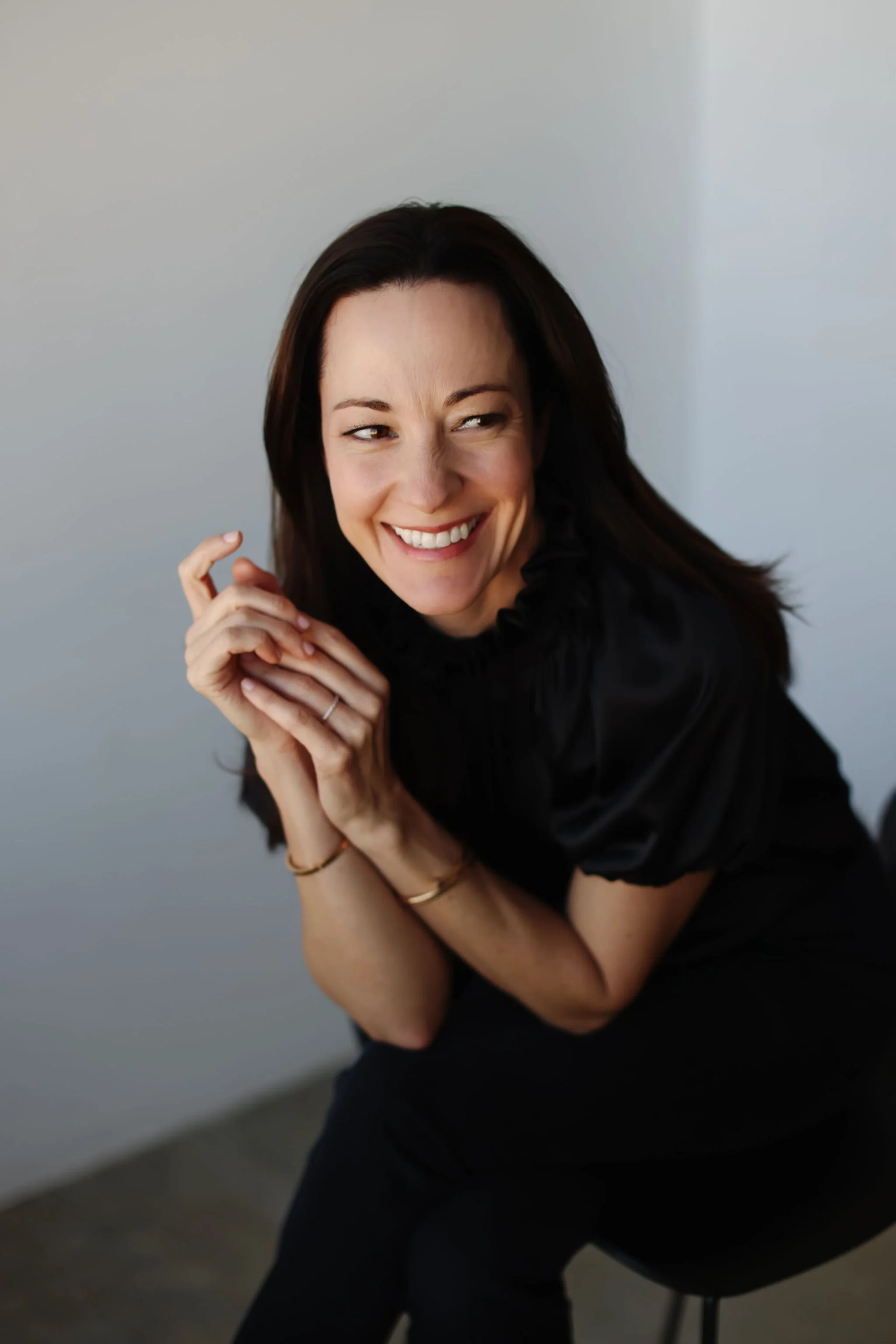
Plastic Surgery in Midlife: When to Consider It, What Recovery Looks Like, and How to Find the Right Surgeon
If you have looked in the mirror lately and felt like you don’t recognize who’s looking back at you…
and you have already tried the serums, the fillers, and the tightening treatments…this conversation is for you.
I sat down with Dr. Carolyn Chang, a board-certified plastic surgeon in San Francisco, to get a direct answer to the question a lot of midlife women are wondering:
Is there actually something I can do about this? And if so, what exactly is that?
This is for you if you've been thinking:
"I look in the mirror and I don't recognize myself anymore."
"My eyelid skin is so heavy I can feel it weighing on my eyes. I can barely wear mascara."
"I've tried fillers. I've tried lasers. Why isn't any of it actually working for my jowls?"
"I'm not ready to just accept this, but I don't know what my real options are."
"I'm curious about a facelift but terrified of looking overdone or obviously done."
"How do I know if surgery is the right call for me, or if I'm getting talked into something?"
"What does recovery actually look like? I can't disappear for weeks."
"Is breast implant illness something I should actually worry about?"
Prefer to listen? Press play below:
Or listen on:
Apple Podcasts | Spotify
Why Midlife Women Are Looking at Plastic Surgery Differently
The most common thing Dr. Carolyn Chang hears from women in their 40s and 50s is not "I want to look younger." It is "I want to look like myself again." There is a difference, and it matters.
As estrogen declines through perimenopause and menopause, the face changes structurally. Skin loses elasticity, the underlying tissues shift, and jowling appears along the jawline. The average age of menopause in the United States is 53, and Dr. Chang sees the effects most clearly in women in their early 50s who are noticing their faces feel unrecognizable to them.
This is not a vanity problem. It is a confidence problem. Dr. Chang has had women tell her, after surgery, that they feel like they got a do-over. That level of restored self-recognition affects how people move through the world, how they show up professionally, how they feel taking a photograph. The stakes are real.
What Noninvasive Treatments Can and Cannot Do for Skin Laxity
The honest answer is: noninvasive treatments can help, but they cannot do what surgery does.
For early facial aging, including the onset of jowling, there are options. Ultrasound-based technologies like Thermage and Ulthera can tighten the skin and underlying structures a little. Thread lifting offers some temporary lift. Laser resurfacing can tighten the surface of the skin slightly and improve its quality. These are real tools.
But none of them produce a real lift. Surgery fixes contour; noninvasive treatments work at the surface and can improve skin quality, but they cannot reposition what has shifted.
Dr. Chang describes a "watershed period" that many women hit in midlife: the noninvasive treatments aren't quite doing enough, and the timing isn't right for surgery. Her advice is to do what you can, invest wisely in what actually moves the needle for you, and be honest with yourself about what you are waiting for.
One important note: repeated energy treatments (like Ulthera) can cause scar tissue that makes future surgery more difficult. Not impossible, but more complex. If you are planning surgery eventually, it is worth having an honest conversation with your surgeon about what you have already had done.
The Procedures Dr. Chang Discusses Most with Women in Their 40s and 50s
Eyelid Surgery (Blepharoplasty)
This is one of the most common entry points, and one of the most underrated. As the brow drops and the eyelid skin loses elasticity, many women find themselves with heavy, hooded lids that make them look and feel tired. Mascara transfers. Eye makeup feels pointless. The weight becomes physically noticeable.
Blepharoplasty removes the extra skin and, when needed, the underlying fat. It can often be done in the office under local anesthetic and takes about 30 minutes. Recovery is approximately one week before most people feel comfortable returning to work, and by six weeks, the results are photograph-ready. The scar sits in the natural crease of the eye and is not visible when the eyes are open.
Dr. Chang notes that some women also need a brow lift, not just eyelid surgery, because the brow dropping is contributing to the problem. A good consultation will help clarify which applies to you.
Facelifts: What They Actually Do
Today's facelift is not what most people picture. Modern techniques treat the underlying structures of the face, not just the skin. The goal is to reposition what has shifted: the tissues along the jawline, the areas around the nose and mouth, the neck. Done well, the result looks like you, rested and restored, not pulled.
There is a lot of conversation right now about the "deep plane" facelift. Dr. Chang explains that the deep plane is actually one specific surgery within a broader category of SMAS (structural) techniques. The term has been over-marketed, and comparing a "deep plane" to a "SMAS lift" is not an apples-to-apples comparison. What matters is what your surgeon is actually doing, how experienced they are, and whether the procedure is right for your anatomy and your goals.
Facelift recovery is more significant than eyelid surgery. About two weeks before most people rejoin normal life, with hair covering what is still settling. Final results take three to six months. Scarring sits around the ear, where the anatomy hides it, and typically matures to a fine white line.
Tummy Tuck and Body Surgery After Pregnancy
After pregnancy, many women find that no amount of diet and exercise returns their midsection to where it was. This is not a discipline problem. Pregnancy stretches the skin and the abdominal wall in ways that do not fully reverse. Dr. Chang describes it as a balloon: you can deflate it, but the wall stays stretched.
A tummy tuck does two things: it removes excess skin and fat, and it tightens the abdominal wall underneath. The combination produces a flat contour that exercise cannot. Recovery is about two weeks before returning to normal activities, with the hardest stretch in the first three days.
The most important timing consideration: be at a stable weight before surgery. Significant weight fluctuations after a tummy tuck will affect results. Dr. Chang recommends being within about five to ten pounds of a stable weight before considering any body surgery.
Breast Surgery: Lift, Implants, or Both
After breastfeeding, the question is usually not just volume, it is position. If the nipple is still centered in the breast after the volume is lost, an implant alone may restore the shape. If the nipple has dropped below the fold of the breast, a lift is needed first. Putting an implant in without a lift when one is indicated will not produce the result you want.
Breast implant illness is a real concern for many women considering implants. Dr. Chang's view: it is real, but it is a diagnosis of exclusion, meaning other causes need to be ruled out first. She has not seen a definitive case in 25 years of practice. If you experience a cluster of vague symptoms after implants and nothing else explains them, it is worth investigating. The treatment, if confirmed, is removal of the implant with its surrounding tissue.
What Recovery Actually Looks Like
The honest week-by-week breakdown, from Dr. Chang:
Eyelid surgery: About one week before looking presentable. Bruising largely resolved, sutures out, some puffiness remaining. Glasses help. By three weeks, most people will not notice. By six weeks, ready for photos.
Facelift: Two weeks before rejoining normal life, though not perfect. About 50 to 60 percent of swelling gone. Hair can cover irregularities still settling near the ears. Final results take three to six months.
Tummy tuck: Hardest in the first three days, with significant improvement by week one. Off driving and back to normal activity by two weeks. Dr. Chang uses a regional block during surgery plus a pain pump for three to five days post-operatively, which has substantially improved the recovery experience.
What These Procedures Cost
Costs vary significantly by region and by surgeon, and San Francisco represents the higher end of the national range. These are approximate figures from Dr. Chang's practice:
Facial surgery: roughly $30,000 to $70,000 depending on what is included and how much is done
Tummy tuck: mid-to-high $20,000 range
Mommy makeover (breast and tummy): approximately $40,000 to $50,000
Dr. Chang did not explicitly say to walk away from low pricing, but the implication was clear: surgeon experience, facility quality, anesthesia, and complexity all drive cost. A price that seems too good is worth interrogating carefully.
How to Choose a Surgeon You Can Trust
Dr. Chang's advice is less algorithmic than most people expect: trust your gut. Then verify it.
When you walk into a consultation, notice whether you feel heard. Notice whether the proposed solution makes sense to you. Notice whether the office staff makes you feel confident. These instincts matter.
Then look at results. Look at before-and-after photos until you have a clear sense of this surgeon's aesthetic. If the results don't look natural to you, no matter what the surgeon says, you will not get something different. The photos tell you what their version of "natural" actually looks like.
Finally, experience with the specific procedure you want is not negotiable. Ask how often they perform it. The difference between someone who has done hundreds of a procedure versus dozens is real.
FAQs
What plastic surgery procedures are most common for women over 40?
In their 40s, many women are focused on body changes after pregnancy, including tummy tucks and breast surgery. By the early 50s, facial surgery becomes more common as menopausal changes affect skin laxity and the underlying structure of the face. Dr. Carolyn Chang sees this shift clearly in her practice: body in the 40s, face in the 50s, with significant variation by individual.
How do I know if I need a facelift or if noninvasive treatments are enough?
Noninvasive treatments can improve skin quality and produce modest tightening. They cannot reposition underlying structures. If you are seeing jowling, a softened jawline, or significant skin laxity, those are structural changes that noninvasive treatments cannot fully correct. Surgery is the more effective answer for contour problems. The best way to know is a consultation with a board-certified plastic surgeon who will tell you honestly what each approach can and cannot deliver.
What is blepharoplasty and what does recovery look like?
Blepharoplasty is eyelid surgery, most commonly on the upper lids, that removes excess skin and, if needed, fat. It can be done in the office under local anesthetic in about 30 minutes. Recovery is approximately one week before returning to work and normal activity. Scarring sits in the natural crease of the eye and is not visible when the eyes are open. By six weeks, results are ready for photos.
What is the difference between a deep plane facelift and a regular facelift?
The deep plane facelift is one specific surgery within a broader category of SMAS (structural) facelift techniques. A SMAS lift is not one surgery; it describes multiple approaches to treating the same structural layer. Comparing a "deep plane" to a "SMAS lift" is not comparing the same things. The term "deep plane" has been heavily marketed and should be evaluated carefully. What matters most is what your specific surgeon does, how experienced they are, and whether the technique is right for your anatomy.
Is breast implant illness real?
Yes, Dr. Carolyn Chang considers it real. It is defined as a cluster of vague symptoms (fatigue, brain fog, skin issues, and others) that appear after getting implants and resolve after removal. The challenge is that it is a diagnosis of exclusion: other causes need to be ruled out first, which makes it difficult to identify and slow to confirm. Dr. Chang notes it is extremely rare and has not seen a definitive case in 25 years of practice with thousands of implants. If you have ongoing unexplained symptoms after getting implants, it is worth investigating.
Meet Dr. Carolyn Chang:
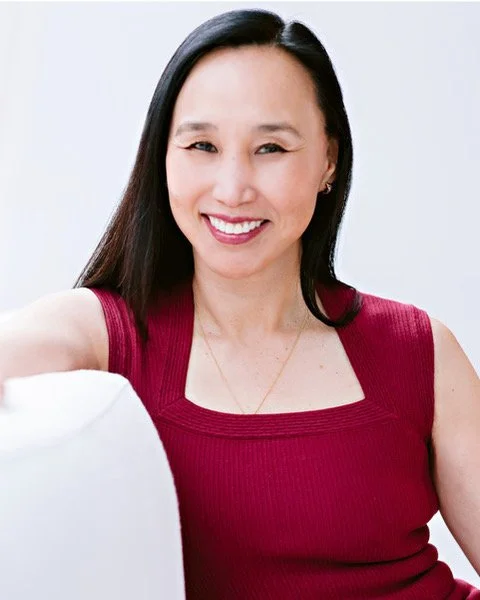
Carolyn Chang, M.D. F.A.C.S., is a board-certified plastic surgeon and the recent past Vice-Chairman of Plastic Surgery at California Pacific Medical Center, where she also serves on the Board of Trustees for the CPMC Medical Foundation. Dr. Chang is nationally recognized for her work in natural-looking facial rejuvenation (including the FACS facelift), breast surgery, and body contouring, tailored to post-menopausal changes.
Dr. Chang received her Bachelor of Science degree with honors from Stanford, and her medical degree from Stanford University Medical School where she was the recipient of the Dean’s Award for Excellence in Clinical Medicine. She continued at Stanford University Medical Center for her general surgery and plastic surgery training. Following her experience at Stanford, Dr. Chang further honed her aesthetic surgical skills under the tutelage of Dr. John Q. Owsley, one of the inventors of the modern-day facelift.
Connect with Dr. Chang:
-
Jessica Long (00:00)
Have you found yourself pulling your face back in the mirror just for a second and thinking, ⁓ that would be nice. Or maybe you've tried lasers, fillers or tightening treatments, but you still don't feel as confident in how you look now as you used to. And you want your confidence back, not someone telling you to learn to love your aging self. Well, today I'm sitting down with Dr. Carolyn Chang, a board certified plastic surgeon in San Francisco who trained under one of the inventors of the modern facelift.
and has spent her career focused specifically on natural looking results for midlife women. She is here to give us the real talk on plastic surgery in midlife. We cover jowls, wrinkles, hooded eyes, sagging breasts, and tummies. We talk about when non-invasive treatments can help and when surgery might be your better option. And we go over how to know if you're a good candidate for surgery, when is the ideal time, what recovery actually looks like, what it costs, and how to find a surgeon you can trust.
If you've been curious about any of this, you'll walk away from this episode with a lot more knowledge under your belt.
Jessica Long (01:05)
Hello, my friend. You are in the right place. This is where smart and sassy women over 40 come to figure out all things midlife. We talk hormones, careers, relationships, and everything in between. I'm Jessica Long, health coach and fellow midlife woman on this wild ride with you. Stick around for honest conversations with experts, rebels, and wise women rewriting midlife on their own terms. Let's dive in.
Jessica Long (01:29)
Dr. Chang, I am looking forward to getting the real talk from you about plastic surgery in midlife. So thank you so much for coming on the show today.
Carolyn chang (01:37)
Well, Jessica, thank you. I'm so pleased to come on and it's my favorite topic.
Jessica Long (01:44)
Good, because I know there are a lot of burning questions. So let's just start with what are some of the most common reasons women in their 40s and 50s are coming in to see you?
Carolyn chang (01:55)
Well, the most common reason I find is that they're just not comfortable with the way they're aging. So they're looking at themselves in the mirror and they're not recognizing themselves. Sometimes it's pictures. Sometimes it's after baby, for instance, and their body is completely different than what they had before. And I think there's a little bit of loss of self-confidence surrounding the way people look and women are coming in saying, what can I do? How can I help myself?
And far above and beyond obviously diet and exercise.
Jessica Long (02:22)
Right, right. And so do you find that most women are saying, I just want to feel like myself or look like myself, or are they trying to get ahead of the clock or is it maybe a little bit of both?
Carolyn chang (02:33)
Well, I'm in San Francisco and so everybody wants to look like themselves. Thank goodness. So yes, absolutely. Women are always saying, I just want to feel like my old self again. That's a universal thing that I hear.
Jessica Long (02:46)
Yeah, you and a lot of doctors who treat women in their 40s and 50s. We all just want to feel like ourselves. What are the most common procedures that women in this age group are getting?
Carolyn chang (02:58)
Well, I think it depends on the women, and the age. So when you start to get into perimenopause and menopausal, you know, the average age of menopause in the United States is about 53. So I see a lot of women in their early 50s. That I think the primary thing that people are asking for is facial surgery because they're really starting to see the menopause changes in their skin. Lose estrogen, you get jowling, you get thinner skin.
irregularities, your eyelids are drooping, you're just feeling a lot older. When you're in more your 40s, mid 40s, I think a lot of those women aren't quite ready for facial surgery. And I'm seeing a little bit more, body after baby, that kind of thing.
Jessica Long (03:39)
Hmm.
Okay. So is that like the entree? You take care of body after baby and then maybe you're ready for the facelift later.
Carolyn chang (03:48)
Well, luckily in my practice, I get a lot of repeat business. So yes, I do see that phenomena quite often.
Jessica Long (03:53)
my gosh, is this like tattoos where you get one and then you want another one?
Carolyn chang (03:58)
Sometimes it's a gateway drug,
Jessica Long (03:59)
Well, you mentioned jowls and that is so common. I hear that term all the time amongst my friends talking about like, my face is just drooping and they're kind of taking their fingers and pulling it back. Are there non-invasive treatments that actually work for this or do you actually think surgery is the better answer in most cases?
Carolyn chang (04:11)
Mm-hmm.
Well, as far as treating early facial aging, which is what I think you're referring to, that means that the onset of early jowling. So those are the little pockets that are on either side of the jawline that you you're not, you don't have that sharp jaw anymore or the lines that you see around your nose that are coming down and they look like frown lines. So those are nasolabial folds. So those are some of the early signs and there are non-invasive things you can do. Nothing is going to be as effective surgery.
There are various ultrasound-based lasers, like Thermage and Ulthera, that can tighten the skin and the underlying structures just a little bit. There is some thread lifting that you can do. Those are temporary results, unfortunately, and sometimes if your tissues are really heavy, that's not helpful. Laser resurfacing, on the external side, not the ultrasound technology, but actually fixing the skin can sometimes tighten the skin a little bit and give you a little bit of relief. But nothing is gonna give you that
real lift that surgery will do. So unfortunately there is a sort of a watershed time when you're not quite ready to do surgery and the non-invasives aren't quite enough and so you just got to kind of ride that out a little bit do the best you can and save yourself for the real deal.
Jessica Long (05:34)
Well, and so that's applying to like wrinkles too, I'm assuming that what you're saying.
Carolyn chang (05:39)
Well, wrinkles are a different thing. Wrinkles are skin quality. And surgery fixes skin contour. So it's a different thing. So gels, for instance, are a sagging of the structures around your jawline, particularly near your mouth. And so that's a contour problem. So you use surgery to fix that. The fine wrinkles and things are skin quality problems.
Jessica Long (05:41)
Okay.
Okay.
Carolyn chang (06:02)
Now the side effect of tightening the skin when you do surgery is that you make the wrinkles look better, but the actual wrinkle is still there. So you can camouflage it, but you can't fix it. So the perfect rejuvenation would be to do the surgery and then do some resurfacing with a laser to treat the wrinkle directly.
Jessica Long (06:22)
Okay. And you mentioned this period of time where we might not be ready. What is the ideal age to treat jowls with surgery?
Carolyn chang (06:33)
So the ideal age is something I talk about with patients all the time. Because sometimes people say, well, should I just get a little bit more and do it later? And that's not true. So the ideal age really, in my opinion, is when you actually have something to fix that's discernible, meaning I can look at you and say, this surgery is actually going to help you in X, Y, and Z location. And you have to combine that with you being mentally ready, meaning you look at yourself and you say, you know what? I can't stand this enough.
that I want to do some surgery. So if you don't have the two together, then you're not at the right time. It's not the right time for you. So there is no real age per se. It's not like I can say at 45, you need to do this. It's going to be individualized for each person.
Jessica Long (07:15)
that makes sense. And I like that you're talking about you have to be mentally and emotionally ready. And it does make me think about the underlying reason that someone's coming to you that we talked about at the beginning, which is a kind of a loss of confidence or a loss of identity where you're not feeling like yourself and you're wanting to be feeling like yourself again. Do you find that women report back that when they have had a major surgery that it actually addresses?
Carolyn chang (07:21)
Mm-hmm.
Jessica Long (07:40)
that deeper need or do you think that they also need to be maybe having some talk therapy or doing something else on the side to address the deeper issue?
Carolyn chang (07:46)
Hahaha!
Well, I think all of us have deep issues that need talk therapy, but when you're talking, when you're talking about just pure cosmetic surgery on the face, it does bring back a tremendous amount of self-confidence. Tremendous. I've had women tell me, my God, I look at myself in the mirror and I feel like I get a do-over. And that is such a powerful thing. It's not going to cure your deep seated problems, but it is definitely going to make you feel a lot more confident. And when you feel more confident, people look, people notice.
Jessica Long (07:53)
Amen.
Carolyn chang (08:20)
Women are happier. They can put makeup on again. they can take pictures and not feel embarrassed about it. They see themselves back and it's really remarkable what kind of confidence that gives you. And sometimes it's practical. Sometimes people are on the job market and they want to feel and look as good as they can.
Jessica Long (08:37)
Absolutely. And your confidence affects your energy so much, which then creates your whole reality around you. So I can totally understand how feeling more confident is going to change the way you feel as you move throughout life. I want to go back.
Carolyn chang (08:49)
Absolutely, absolutely. People don't
necessarily look at the most beautiful woman. They look at the most confident one, oftentimes.
Jessica Long (08:56)
For sure,
for sure. I do want to go back to something you said, because it reminded me of a listener question that came in, which this woman knows a lot about beauty. And I had to Google her question to even know what it meant. So maybe you can help us. Her question is, do electromagnetic frequency services compromise future facelifts? So maybe you can actually start by telling us what electromagnetic frequency services are, which one she's referring to, and then answer her question.
Carolyn chang (09:22)
Yeah,
I could be wrong because I don't know every single thing out there, but I have a feeling she's not talking about electromagnetic. I have a feeling she's talking about ultrasound. So there's a lot of talk in both the online social media and in real literature about what energy does to the face over the long term. So some of those things that we're talking about, the thermage,
Jessica Long (09:31)
Okay.
Carolyn chang (09:45)
and the Ulthera that are ultrasound-based energy treatments, what they do is they cause scarring in the deeper tissues. And that's how they create collagen and they create tightening. And so sometimes if you do a lot of those, it can make your future surgery a little bit more difficult because you've got areas of scar tissue and fibrosis. And that is a real phenomenon. There are cases where...
You open the face and there's just so much that's been done before that the planes aren't as good as they used to be They're not as defined you have fillers and all this you old threads all kinds of things in there And so it can make your future surgery a little bit more difficult. So I have a feeling that's what she's referring
Jessica Long (10:22)
Okay. Difficult, but not impossible. Never impossible. Okay. And you mentioned planes. Another question from a listener was, what is the deep plane facelift technique that we're hearing a lot about these days? What is it? Do you do it? Is it better than old technology?
Carolyn chang (10:25)
Never impossible, but much more difficult.
Mm-hmm.
Right.
Yes.
So there's a lot, a lot of, lot of discussion about this. And there's been even more now because now the plastic surgeons are coming back in and they're talking about the smads lift. So for a long time, the only thing you could see online and on Instagram and in the lay literature of what's the deep plane. So let's talk about what it is. It's a really important topic. So the history of plastic surgery of the face was that you would do things with just the skin. So you lift,
what you saw that fell and you'd lifted on the skin of the face and the results were not so good. They weren't long lasting. You'd get some weird contour problems on the skin as the skin sagged. And so as the technology developed, we learned that the better way to treat the face is to treat all of the things that are aging. That means to treat the underlying tissues. And most of these technologies were developed in the plastic surgery literature because that was who was doing cosmetic surgery.
So we have a structure where the acronym is the SMAS. That's an acronym for much longer name, but it's an actual structure. It's an actual anatomic structure that is named in an anatomy book. And so that is the layer that we're all referring to. And so in the early days of discovering how to do a lift, there were different ways that you could treat that SMAS layer. So you could do something like a placation, which means you just take two ends of the SMAS and you
bunch them together and you create some lifting that way, Or you could take a strip out of it, let's say in the middle of it, and then you take the two sides and tighten it, Or you could just lift up the lateral part of it and actually lift it up and move it. And that would be a lateral SMAS. Or as the technology got better and the anatomy got more understood, you could do a very definitive procedure where you're taking the section under, you're lifting the whole SMAS
you're dissecting all the way to basically the nose, you're releasing all the ligaments and you're producing a really powerful flap that then you reposition completely and correct everything that's fallen. So that means then that a SMAS lift is not one technique, And it matters what you do as to what kind of effect you're gonna get.
So now fast forward in the literature and you've got something called the deep plane. And that originated in the otolaryngology side of surgery. So these are facial plastic surgeons primarily. And the deep plane is one specific surgery. So the SMAS is a whole cluster of things, all of which deal with some procedure on the SMAS. So it's not defined, but the deep plane is one procedure. And what that procedure is, is it's an extended SMAS dissection.
where you're doing a complete dissection, you're releasing all the ligaments and you're repositioning the entire tissue. So the long and the short of it is you're not comparing apples to apples when you talk about a SMAS lift versus a deep plane. So you really need to talk to your surgeon about what he or she is actually doing. And furthermore, you need to understand that all surgeries are not applicable to every person. In other words, you might be someone that's gonna benefit from a smaller procedure.
Or you might be that person that needs the whole thing because as you do more surgery, you get more complications as well. And so I think it's really important to customize the procedure for yourself and to understand what it is that your surgeon has in plan for you and decide if that's really the right thing for you. And as far as whether or not one is better than the other, that's a really hard thing to prove. And I don't think anybody's proven that to be the case because it depends a lot on what you're starting with, what procedure you do, how your tissues are.
Jessica Long (13:56)
Mm-hmm.
Carolyn chang (14:19)
And so, it's a topic that unfortunately I think has been over marketed.
Jessica Long (14:24)
it's a good reminder that every case is unique. So just because there's this new option available doesn't mean it's necessarily the right one for you given what your current situation is and what your goals are. Okay.
Carolyn chang (14:27)
Yes. Right.
And you have to also
understand that that procedure is one procedure, whereas there's a whole bunch more procedures that you can do with that layer, that same layer. There is no such thing as a deep plane layer. That deep plane is treating this mess.
Jessica Long (14:49)
Okay. I also want to talk about eye surgery because I saw on your website that this is often an entree point too. And I mean, I struggle with this myself. I feel like in the last five years, my eyelids have fallen down my face and they're now heavily waiting on my eyes. So even when I just look up, I can feel the weight of my eyelids in a way that I never could before. And
Carolyn chang (14:52)
Mm-hmm.
It is.
Jessica Long (15:11)
I can hardly wear any eye makeup. And when I put mascara on, it just transfers to the upper eyelid anyway. So I have to wipe that all off. And I know I'm not the only one with this issue. How do you know when you're the right candidate for this? If you're feeling like this heaviness and this drooping happening, I've talked to my dermatologist about this and she said there's nothing I can do to help that. You have to have surgery to correct that. So it sounds like,
Carolyn chang (15:17)
Mm-hmm. Mm-hmm. Mm-hmm.
Mm-hmm. Mm-hmm.
Jessica Long (15:38)
surgery would be the answer. But how do you know when you're the right candidate for that surgery?
Carolyn chang (15:43)
so the way the eyes age, especially the upper lids, is it's twofold. You get extra skin just from loss of elasticity and from gravity, but you also get extra skin in the upper lid because the brow starts to fall. So we call that browtosis. So usually what you see around the eyes is a combination of both the brow dropping and the lid skin getting redacted and stretched. so what does that mean?
Well, everybody who has hooded eyelids from extra skin is going to benefit from what's called a blepharoplasty, where you actually cut out the extra skin. And then a fraction of those people are going to benefit from that skin excision plus a brow lift. And so I can probably say that most people where you feel like the eyelid skin has drooped over the top are going to benefit from a blepharoplasty.
There is a different phenomena called eyelid ptosis that some people have droopy lids because of that. And that's a different anatomy. That means that the eyelid itself has actually dropped, not that the skin is redundant. So there's sometimes a difference there. And I think you probably have to see your surgeon in order to really discern that. But for the most part, you're right. The upper eyelid skin falls down and it's pretty straightforward and you remove it.
Jessica Long (16:52)
Mm-hmm.
It sounds so terrifying. Is this just something you do like every day and it's not a big deal to me? I'm like, ⁓ my God, you're going to cut out some of my eyelids. Good. that just sounds so terrifying. And I'm so afraid of something going wrong. what are the success rates and how common is this procedure?
Carolyn chang (17:17)
So luckily the eyelid surgery itself, especially the upper lids is quite straightforward. It's all in the design. So once you design the pattern, then you just cut on the dotted lines, you take the skin off. If you have any fat, we would remove that, but other than that, you just close it. So it's pretty straightforward. It's something that you can often do under local in the office, which is what I offer. And so you have to think about it like the dentist. Once it's numbed up, you don't feel anything and it's done in 30 minutes. So it's...
Jessica Long (17:43)
my gosh.
Carolyn chang (17:43)
It
is actually quite straightforward.
Jessica Long (17:46)
And then what's the recovery like?
Carolyn chang (17:48)
about a week. So you'll have at the end of the week, you'll the bruising should pretty much be gone. The decisions will be sealed. The sutures will be out. You may have a little rawness. You might look like you've had allergies or you've been crying. So you a little bit of puffiness, maybe a little glassy look on the eyeball itself. But with glasses, you should be able to go back to work and out to school or whatever you're doing pretty easily. And by three weeks, you probably won't notice it at all. By six weeks, I say you're ready for pictures.
Jessica Long (18:17)
my gosh, what about the facelifts that we were talking about? What does the recovery look like for the hose?
Carolyn chang (18:23)
So those are bigger surgery. They go deeper, right? So you're treating two layers. It's more extensive. It's a larger portion of your face. So the recovery is definitely more difficult. It doesn't hurt much, but it takes some time. About two weeks is what I tell people to give themselves, but they're not perfect at two weeks. So at two weeks, you're still gonna have some swelling. You may still have a little bit of irregularity out towards your ears. You might have some bruising that's deep.
about 50 to 60 % of the swelling is gone. So it's definitely not finished, but at some point in time you need to rejoin life. And I think that's a nice time to think about it and feel pretty good for the most part, because your hair can cover up a lot of the stuff that's still a little bit irregular. And most people will go back to their regular activities at two weeks. Now, if you want to feel really confident, you got to wait about six weeks.
and the final results really going to be more like three to six months.
Jessica Long (19:21)
And does it leave any visible scarring?
Carolyn chang (19:25)
If you cut on the skin, you will always have a scar, no matter where it is. But the location of the scar is anatomically hidden, and the healing time once you let it go and mature completely, should be a pretty fine white line in most people's skin types.
Jessica Long (19:43)
And where is it?
Carolyn chang (19:44)
So it's around the ear, the front of the ear, and in the back of the ear and into the hairline. So you use the ear contours to hide the scar.
Jessica Long (19:49)
Okay.
And with the eye surgery, the eyelid surgery we were talking about, the scars just kind of hidden by you opening your eyes, is that right?
Carolyn chang (20:00)
Yes, it's in the crease of the eye where you open and close.
Jessica Long (20:03)
Let's talk about some of the body procedures because another common thing that I hear is after I breastfed, my boobs just are so saggy. They're hanging down now. They don't lift like they used to. Some women have excess skin just from stretching out during pregnancy that genetically they never lose or, a hernia or something that maybe happens as a result of pregnancy that they want to take.
Carolyn chang (20:15)
Mm-hmm.
Jessica Long (20:27)
care of and don't want to be a part of their silhouette anymore, understandably. So what can you do to help women coming to you with complaints like this?
Carolyn chang (20:36)
Well, what we're talking about is breast and body rejuvenation after pregnancy specifically. And the most common things that I hear about are the excess skin and the fat, the width that they've gotten around the middle section and that no matter what diet and exercise they do, they still have that extra roll of skin and fat and that extra pooch. And some women even say, I still look pregnant.
people still ask me if I'm pregnant and that's just a depressing thing for them because they're still dieting and exercising and you just can't get anywhere. And the reason why that is is because the skin and the underlying structures, the entire abdominal wall stretches during pregnancy. And then when you have the baby, it deflates, but it doesn't quite snap all the way back. So it's like putting air in a balloon. You take the air out and the balloon is still, the wall, the balloon is still a bit lax. And then you do it two or three times and you've got a floppy balloon.
So there's no amount of diet and exercise that's gonna tighten that balloon. You can make that balloon thinner, but you can't tighten the actual overstretched balloon. And that's where tummy tuck comes in. So what the tummy tuck does is it takes off, obviously, the roll of skin and fat. And that's pretty straightforward. You know you make an incision, you lift it up, you can take out the extra and cut it out and close it again. But the poochiness of the belly, that laxity that the balloon wall had,
is what the real magic is with the tummy tuck because what you're doing is you're tightening that abdominal wall. So you're gonna get a flat contour on the base. And that way when you take the extra skin and the fat off, you're as flat as you can possibly be. So that's a really common thing that we do after pregnancies because it's almost reconstructive in nature because you can't do it on your own. And then as far as the breast surgeries go, the most typical thing would be
Jessica Long (22:12)
Hmm.
Carolyn chang (22:17)
losing volume and needing a lift. So how do we decide what you need? Well, if you're someone who once you breastfed, the skin expanded and then it shrank again, but your nipple still in the center of the breast, then you're someone who's a candidate for just volume because the shape of the breast is determined by the configuration of the skin.
So if your skin configuration relative to the nipple is still relatively proportionate, then you just add a little volume. It's like pumping air in your breast and you're still gonna have a nice shape. But a lot of women don't have that luxury. And after the breastfeeding, the nipple can sag below the fold, of the breast. And if that's the case, if you put an implant in alone, that nipple is still gonna be low. And so then you need a lift.
And those are, once again, maybe a little bit too technical for, you know, without pictures, but that's the algorithm that we as surgeons use to decide what kind of surgery you need.
Jessica Long (23:13)
No, I'm following. That makes sense. Okay. Interesting. So I did have a listener question come in. She wants to know is breast implant illness real? Have there been improvements to prevent it?
Carolyn chang (23:14)
Okay. All right. Good.
So breast implant illness is very ill-defined because it can be a cluster of a lot of different symptoms. It can be myelogists, can be brain fog, can be rashes, it can be a lot of different things. And breast implant illness, I believe, is actually a real thing. It's a real illness, but it's a diagnosis of exclusion. So that makes it harder to define. So basically, if you're someone who's had implants or any foreign body probably,
and you're starting to feel some vague things that are not going away, they're not making you feel good, then it's probably time to investigate all of the usual causes for those things. And in the investigations of those more common illnesses, if nothing turns up, then it could be that you have breast implant illness. The treatment for that is to remove the implant with the scar tissue around it. And that does cure a lot of people, not everyone.
but it is a very difficult thing to diagnose, and to identify. can take a long time for people, but I do think it's real. I do think it's extraordinarily rare. So I cannot say that in my 25 year career of thousands of implants, I've actually ever seen a definitive real case in my practice. So it's hard. It's hard to figure it out.
Jessica Long (24:41)
Well, that's good to hear.
Yeah. And it's, I'm sure that's very challenging for the person feeling those symptoms because really they have to take their implants out to know if that's the true cause, which is really a tough decision to make. I want to go back to something you were mentioning during the tummy tuck portion, which is women at this stage of life coming to you saying I've added extra weight in my midsection, this kind of quote unquote, meadow belly. I hate that term, but that's what's being thrown around.
Carolyn chang (24:51)
Right, right, yes.
Jessica Long (25:10)
Does a tummy tuck actually address the root cause of this meaning do the results actually sustain or can it just come right back right after surgery?
Carolyn chang (25:20)
Well, the results of the tummy tuck are definitive in the sense that you're correcting the poochiness of the abdomen. So you're tightening the abdominal wall and you're removing the extra skin and the fat, but you're not preventing weight gain or weight loss. So you want to do the surgeries when you're at a pretty stable weight. And by stable, I mean within five, 10 pounds probably, depending on the size of the person or the height of the person.
If you're someone who's losing a ton of weight, let's say you're in the middle of losing 60 pounds, well, that's not the time to do it because the results will not sustain if you've got fluctuations like at that degree. And so I think in that sense, you have to know where you are and be at a stable weight before you consider doing any surgery really, but especially body rejuvenation.
Jessica Long (26:04)
And what does the recovery look like for a tummy tuck and the breast surgeries you were mentioning?
Carolyn chang (26:08)
So
it's funny because when you do the two together, you really don't pay attention to the breast much. It's true. It's all about the belly. So it's about two weeks and six weeks for a full recovery.
Jessica Long (26:20)
Okay. And what does it look like in the middle of the recovery? What does week one look and feel like?
Carolyn chang (26:25)
Well, the worst is probably the first three days. In my practice, We have two ways that we really mitigate the post-operative discomfort. One is using a regional block during the surgery. So we deposit some local anesthetic in strategic locations that lasts, 12 hours or so. It really has made a huge difference in the pain control at the beginning, which then will reduce complication rates as well. And people are far happier.
And then people go home with the paint pump, which then continues to give you some local and aesthetic over three to five days. So, but it's still not so fun, right? So the worst of the first three days, but everyone turns the corner at about a week and by two weeks you're off driving and doing all your normal things.
Jessica Long (26:55)
Mmm.
That's a really major surgery. I can't believe in two weeks you're driving around.
Carolyn chang (27:07)
It is, it is.
Well, the body heals. The body always wants to heal. And remember, I'm dealing with healthy people.
Jessica Long (27:15)
That's true. Okay. Let's talk about cost. What is a realistic range for these procedures we've been talking about
Carolyn chang (27:19)
Mm-hmm.
Well, it's going to be regionally different. So if you're looking at an urban area with a lot of demand, high cost of living, then you're going to be looking at higher costs because everything costs more. The personnel costs more, the supplies costs more, the rent costs more, And so I think for facial surgery, can run anywhere from the thirties up into
50, 60, 70s, depending on what you're doing and how much you're doing. A lot of it's time dependent. I think for a tummy tuck, can be anywhere from about, the mid to high twenties. When you start to talk about a modem makeover, meaning the breast and the belly, you're probably looking more like 40 and 50. These are just some examples. even if you go to different areas in the Bay area, you're going to get different pricing.
So I'm talking about probably the average in San Francisco.
Jessica Long (28:06)
And if someone were considering one of these procedures and interviewing surgeons, what questions should they be asking and what red flags should they be looking for?
Carolyn chang (28:18)
Well, you really just need to trust your gut, right? You walk in and you have a general feeling about the office. You have a general feeling about the surgeon, the surgeon's style, right? So don't ignore that. So just because your friend went to this person doesn't mean that person's right for you. So you want to be sure that you feel comfortable being able to express what you want and that you feel like that you're being heard. And you want to make sure that you feel like the solution that's being given, the proposal that's being given to you is reasonable. Like people know
whether or not you understand medicine at all, something that's reasonable or not, or something that doesn't feel right. And you shouldn't ignore that feeling. Also, you need to see what the experience is of the procedure. If the person's never done one, then you're dealing with a whole different level of comfort versus someone who's done hundreds or specializes in that. So that's part of your comfort level. Budget is important too.
it has to be something you can actually feel comfortable doing. And then also the support staff in the office is super important. Like you need to know that, you know, surgery can't be there all the time. So you need to know that when you call in, you're going to feel comfortable talking to the people in the office, that they're knowledgeable and that they have your best interests in mind, that they seem like they know what they're doing. So all of those things go into your decision-making. And then finally, you need to look at results. So you need to look at pictures and you need to make sure those pictures are accurate.
And that will really tell you what you're going to get because everybody says they're natural. But if you see pictures that aren't natural, then you're not going to get something different.
Jessica Long (29:45)
Very good point. It's reminding me of looking for an interior designer. Look at her style. Does her style fit yours? Okay, it's kind of the same here.
Carolyn chang (29:50)
Exactly. Yeah. Yeah. If she specializes
in French Chateau, you're not going to get modern, right? It's just not going to happen.
Jessica Long (29:59)
Okay. How important is it that you work with someone who specializes in the procedure that you're interested in? Because we've talked about so many, I presume you perform all of these. Would you consider yourself a specialist in one of them or all of them or?
Carolyn chang (30:07)
Mm-hmm. Yes, yes.
Well, I have a unique background. I was trained in facial plastic surgeon by one of the fathers of face lifting. So he defined that that's mass layer. so I have a very special expertise in that. So if you want to say that's a specialty, that's a specialty. But then I joined a breast and body practice when I started practice. And so I'm one of the few surgeons that can actually say I specialize in two prongs
of cosmetic surgery, but I do only cosmetic surgery at this point in my career. So I'm unique that way, but I think that if you go to someone who does a lot of surgery, you can go to someone who does a lot of surgery well. like, for instance, I don't do rhinoplasty. So I limit myself to things that I know I do well. And I do about five surgeries over and over and over again. You can go to someone who just does breasts. You can go to someone who just does face. You can go to someone who just does nose.
Jessica Long (30:38)
Okay.
Carolyn chang (31:03)
I think it's just important to see what the experience is of the surgeon, how often they do it, and what the pictures look like.
Jessica Long (31:08)
Pictures, pictures, pictures. And I like what you said about support staff. That's super important. Cause I can imagine if you need support, they're the ones who are gonna be answering the phone. Okay, so for the woman who's listening, who's feeling curious, but a little uneasy, what do you want her to know?
Carolyn chang (31:12)
Yeah, super important, very. Yeah.
Well, I think curious means that you should probably go online, do a little research. You can ask around and see if know people that have done whatever it is that you're interested in doing. And then you have to understand that when you make appointments to talk to physicians, it's just like going to the store. You don't have to buy it. You you're window shopping. And I think a lot of people come in and they're really nervous. And I say, don't be nervous. We're just talking. Doesn't mean you have to do anything. It's information gathering.
Jessica Long (31:51)
Okay, good point. Don't feel pressured to buy just because you're there. Okay. Take advantage of that initial consultation to get in, get a feel for the office, have a conversation with the doctor, see some before and afters, understand their style and decide from there what's right for you.
Carolyn chang (31:54)
There's no, you don't have to buy anything just because you're there.
Yeah.
Absolutely.
Jessica Long (32:10)
Wonderful. Dr. Chang, thanks so much for coming on the show. Where can everybody find you and learn more about your practice?
Carolyn chang (32:17)
Well, there's no plastic surgeon in the world that can't be found. So, I'm www.drcarolynchang.com and My medical Instagram is Carolyn Chang MD. We look forward to having you and thanks so much for having me, Jessica. I enjoyed talking to you.
Jessica Long (32:20)
Haha
Okay, we will.
Absolutely. I'll put all those links in the show notes so everyone can find you. Thank you so much.
Carolyn chang (32:41)
Thanks.
Jessica Long (32:43)
I hope this episode gave you a little more clarity and a lot less fear about what your options actually are and how to move forward if and when you're ready. Please help other midlife women who are seeking answers find this episode by leaving a five star rating for the show on Apple podcasts or Spotify. And while you're there, make sure you're following the show. So next week's episode drops right into your feed. I will see you then.
🎧 Other Episodes You’ll Love:
Skincare for Women Over 40: How to Care for Dry, Sensitive, Aging Skin
Like what you hear?
➕ Follow Midlife Advice on Apple podcasts, Spotify or YouTube for more super smart and slightly sassy midlife conversations that blend science, intuition, and zero BS.
⭐️ Please share this episode with a friend, drop a 5-star rating and leave a review! That is the best way you can help me book more expert guests for us!
Disclaimer:
Belong Wellness and its members, managers, employees, contractors, and other agents or representatives are not licensed medical care providers and do not provide medical services or advice, including without limitation diagnosing, examining, preventing, treating, or curing any medical conditions. The information shared in this podcast is meant to be educational, not prescriptive. Please consult your medical doctor before making any changes to your diet or lifestyle. Further, the opinions of guests on this show do not necessarily reflect the opinions of Jessica or anyone affiliated with Belong Wellness.