You sleep a reasonable amount. You eat pretty well. You move your body most days. And somewhere around mid-afternoon, your energy disappears anyway, like someone flipped a switch.
Chris Burres, a research engineer who has spent over three decades studying a molecule tied to some of the longest longevity results ever recorded in animal research, says there's a piece of this most of us never check: the tiny power plants inside every cell in your body, your mitochondria.
This is for you if you've been thinking:
I sleep okay, eat pretty well, and exercise, and I still hit a wall every single afternoon and don't understand why.
I've had my hormones, thyroid, iron, and blood sugar checked and everything came back "normal," but I still don't feel like myself.
I keep hearing the word "oxidative stress" in wellness content and I don't actually know what it means.
I want to understand what mitochondria are and what they have to do with how tired I feel.
I'm skeptical of most supplement claims and I want the real, unvarnished version of what this is and isn't.
Prefer to listen? Press play below:
Or listen on:
Apple Podcasts | Spotify
What Your Mitochondria Actually Do (and Why They're Tied to Your Energy)
Mitochondria are the part of your cells responsible for taking the food you eat, breaking it down, and converting it into ATP, the actual energy currency your cells run on. There are anywhere from 50 to 5,000 mitochondria in a typical cell, depending on how much energy that cell needs. Your red blood cells have none. Your neurons, which burn through an enormous amount of energy relative to almost every other cell type in your body, have roughly two million each.
Mitochondria also carry their own separate DNA, passed down only from your mother, and they're involved in producing pregnenolone, the precursor hormone behind estrogen and testosterone. So when Chris says mitochondria are connected to more than just how tired you feel, he means it literally: this is the same system that's tangled up with your hormone production.
Mitochondrial function tends to decline with age. Part of that is simple wear. Part of it involves something called senescent, or "zombie," cells: cells that have reached the end of their useful life but don't get cleared out the way they're supposed to through a process called autophagy. Instead they sit there consuming resources without producing value, and they can release inflammatory signals that recruit nearby cells to do the same. Mitochondria can undergo a similar process, and Chris describes a feedback loop where hormone shifts and mitochondrial function affect each other in both directions, which is part of why this piece often gets missed in a standard workup that only looks at hormones in isolation.
What Oxidative Stress Actually Means (and Why It Isn't Automatically Bad)
"Oxidative stress" gets used constantly in wellness content, usually without much explanation. Here's the plain version, from Chris. As mitochondria use oxygen to make ATP, a small amount of that oxygen converts into highly reactive molecules called reactive oxygen species, often shortened to ROS or loosely called free radicals. Chris compares this to exhaust from a power plant: making energy inevitably produces some byproduct.
Under normal conditions, your body handles this byproduct with its own internal antioxidants, primarily glutathione and melatonin, working right inside the mitochondria. Oxidative stress only becomes a problem when ROS production outpaces what those defenses can manage, whether because of smoking, drinking, chronic stress, EMF exposure, menopause, or simply the ordinary wear of getting older. When that happens, the reactive molecules are left to bump around and cause damage to proteins, cell membranes, DNA, and the mitochondria themselves, which can lead to a cycle: stressed mitochondria produce more ROS, more ROS further stresses the mitochondria, and so on.
The upshot: oxidative stress isn't inherently bad. It's a normal part of making energy. It's the buildup, when your body's own defenses can't keep pace, that causes the downstream problems most people associate with the term.
The Molecule Behind the Conversation: What Is ESS60?
ESS60 (short for Elemental Safe Spheres, 60 atoms) is Chris's company's name for a molecule more commonly known as C60, or buckminsterfullerene: a spherical cage of 60 carbon atoms shaped roughly like a soccer ball. It was discovered in 1985 at Rice University, and the three scientists who discovered it won the Nobel Prize in Chemistry in 1996.
His lab began manufacturing and distributing the molecule in 1991, five years before that prize was awarded, and it has been sold for use in industrial applications like inks, batteries, tires, and photocells ever since, well outside the health and wellness space.
The reason it eventually crossed over into supplements traces back to a toxicity study. Part of the molecule's structure resembles benzene, a compound known to be toxic, so researchers ran a toxicity study on it using WISTAR rats. Instead of showing toxicity, the treated rats reportedly lived roughly 90 percent longer than the control group, a result Chris describes as the longest longevity result ever published on mammals. His lab supplied the material for that study and is credited in it.
That result is also where the caution has to come in, and it's worth being direct about it here rather than glossing over it.
What the Evidence Actually Shows, and Where It's Still Early
The original rat study is real, peer-reviewed, and published, but it was a single, small, exploratory animal study, not a large trial, and not conducted in humans. A later mouse study attempting to replicate the lifespan finding did not reproduce the same result. A more recent, more rigorous rat study has added useful safety data, but none of this amounts to evidence that ESS60 improves energy or sleep in people.
What Chris's company does have on the mechanism side is peer-reviewed research showing that ESS60 concentrates inside mitochondria and can bind to a limited number of reactive oxygen species there, based on findings dating back to the 1990s. Chris refers to this as the "BOSS theory," short for buffering oxidative stress system: the idea being that the molecule may help absorb some of the reactive byproduct mitochondria produce, similar to the role your own glutathione and melatonin already play. That's a plausible mechanism grounded in published research, but a plausible mechanism is not the same as proof that it changes how tired or well-rested you feel.
What the company does have a lot of, by Chris's own account, is customer testimonials. He describes the most common pattern as better focus and energy during the day, followed by improved sleep, most often noticed within the first month of daily use. The company has also run two small, informal sleep studies in which everyone who took part reported some improvement, and it's currently starting several more structured real-world trials, on frequent headaches, on a cardiovascular inflammation marker called hs-CRP, and on skin appearance with a related product. Those trials are new and not yet published.
What You Can Actually Do About This Today
Chris's honest starting point, and it's one worth taking seriously: if you're focused on longevity or energy in general, the highest-leverage moves are still sleep, nutrition, and movement, in that order of impact according to the longevity experts he's interviewed, with mindset underneath all three, because none of the other changes stick without it.
For anyone specifically curious about ESS60, Chris's suggestion is to treat it as a genuine self-experiment rather than deciding in advance how you'll feel. Track something concrete, afternoon energy, sleep quality, or workout recovery, before you start, then track the same thing daily for a few weeks. He points to about a ten day window as roughly how long it takes to notice the product's effects wearing off if you stop taking it, based on customer reports, which gives you a rough timeframe for how long a fair trial should run.
FAQs
What are mitochondria and why do they affect my energy?
Mitochondria are the structures inside your cells responsible for converting the food you eat into ATP, the molecule your cells actually run on for energy. Nearly every cell in your body contains mitochondria, with the number varying by how much energy that cell needs; your red blood cells have none, while your neurons can contain roughly two million each. Because mitochondria are also involved in producing pregnenolone, the precursor hormone behind estrogen and testosterone, their function is connected to more than just how energetic you feel day to day. Mitochondrial efficiency tends to decline with age, which is one reason fatigue can increase even when sleep, diet, and exercise haven't meaningfully changed.
What is oxidative stress, and is it always bad?
Oxidative stress happens when reactive oxygen species, a natural byproduct of mitochondria making energy, are produced faster than your body's internal antioxidants, primarily glutathione and melatonin, can neutralize them. Producing some reactive oxygen species is a normal part of energy production and isn't itself harmful. It becomes a problem when production outpaces your body's defenses, whether from chronic stress, smoking, alcohol, EMF exposure, hormonal shifts like menopause, or simply aging, because the excess reactive molecules can damage proteins, cell membranes, DNA, and the mitochondria themselves.
Is there scientific evidence that ESS60 improves energy or sleep in humans?
Not yet, in the form of large published human clinical trials. What does exist: a small, peer-reviewed rat toxicity study reporting a roughly 90 percent lifespan increase, which was not reproduced in a later mouse study, plus peer-reviewed research showing the molecule concentrates in mitochondria and can bind a limited number of reactive oxygen species there. The company also has two small, informal sleep studies and is beginning additional real-world trials on markers like inflammation and headache frequency, none of which are yet published or peer-reviewed. The bulk of the energy and sleep claims currently circulating come from customer testimonials rather than controlled human research, which is worth knowing before you weigh in on whether to try it.
How do I know if my fatigue is hormonal, mitochondrial, or something else?
There isn't a single test that cleanly separates the two, in part because hormones and mitochondrial function affect each other. A reasonable approach is to rule out the usual suspects first, thyroid, iron, blood sugar, and hormone levels, with your doctor, since those are the most established and treatable causes of fatigue. If those come back within normal range and you're still hitting a wall, that's when it may be worth looking at foundational habits like sleep, movement, and nutrition, and, if you're curious, running a short, tracked experiment with something like ESS60 to see whether it changes your afternoon energy or sleep quality over a few weeks.
Meet Chris Burres:
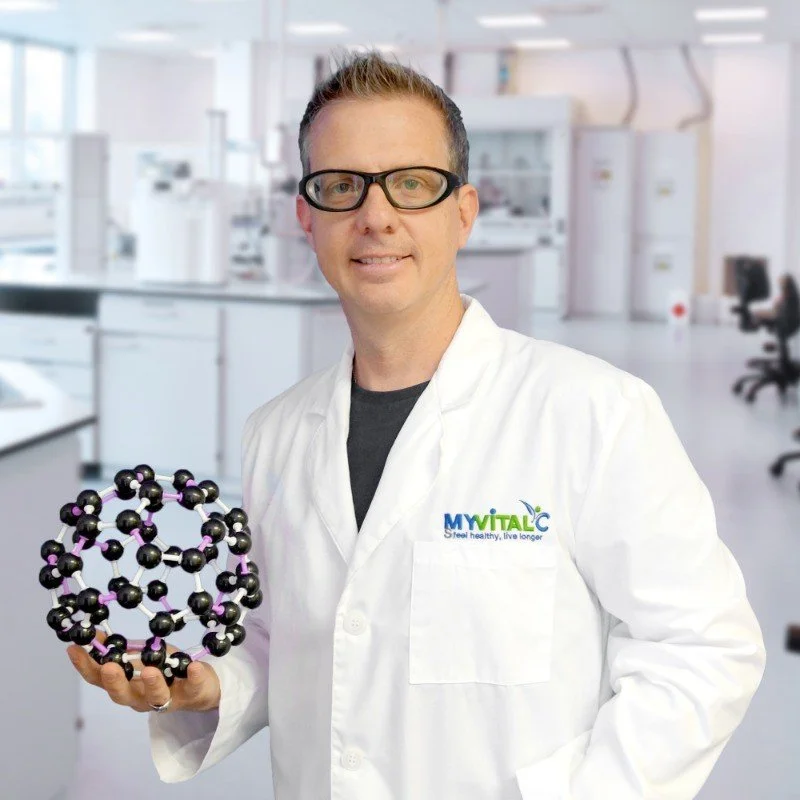
Chris Burres is a research engineer and the founder and chief scientist of MyVitalC.
Since the early 1990s, his lab has manufactured and supplied ESS60 to research institutions worldwide, years before the molecule became known in the biohacking space.
He also hosts the podcast Live Beyond the Norms and is the author of Live Longer and Better.
Connect with Chris Burres:
myvitalc.com/jessica | @myvitalc | Book: Live Longer and Better | Podcast: Live Beyond the Norms
-
Jessica Long (00:00)
Chris, if you can crack the code on fatigue and lack of energy in midlife, I'm gonna have a lot of happy listeners. Thanks so much for coming on the show and sharing your insights with us today.
Chris Burres (00:10)
Jessica, thank you so much for having me and allowing me. I I am in a lab code. I am not a doctor, but I am a geeky lab guy and I love to like geek out about stuff. But don't worry, your audience like I I speak both science and nor normy. I don't know. I don't know what it's called.
Jessica Long (00:27)
Okay, Normie. We're
talking to a Normie Science Geeky guy today, everyone. And he's gonna help us understand why we're losing all of our energy. Sometimes for some of us, it's in the afternoon. For me, it used to be right after lunch, but now it's actually closer to dinner time, which is unfortunate because that's right when I want to spend time with my kids. And I'm just feeling like, my God, I have nothing left in my tank. And when you're talking about women in their 40s and 50s, and we're saying I'm losing energy, I'm tired, we're gonna look at things like,
Hormones, iron levels, I hope, thyroid, blood sugar, all for the right reasons. And those are all important factors to look at. But you're saying there's something important that we're missing.
Chris Burres (01:07)
Mm
Jessica Long (01:07)
What is that?
Chris Burres (01:09)
it's probably the mitochondria. It's probably the little power sources of every cell in your body. There's actually between fifty and five thousand mitochondria in every cell in your body. your blood cells actually don't have any, and your brain and neurons have two million. It is amazing how much energy our nervous system uses relative to our other systems. And it wouldn't be a surprise if there is something that could support your mitochondria, right? So we're not replacing the mitochondria, it's a very complex organelle, but something that could support your mitochondria.
Would be something that you would want to seek. And I'll just kind of lay out here our most consistent testimonials we're talking about this molecule, and it's an amazing molecule. It won the Nobel Prize. Well, it didn't, like, I don't know, no molecules can't win Nobel Prizes, like the people
Jessica Long (01:55)
Ha ha ha.
Chris Burres (01:56)
who discover them do. Nobel Prize winning, responsible for the single longest longevity experimental result on mammals in history. That molecule, the testimonial for that molecule is most.
frequently people take it in the morning, they report mental focus and energy during the day, and then better sleep that night. Now there's two Yeah. Yeah.
Jessica Long (02:15)
Okay, hold on. I'm hold on, hold on. Okay.
Can you just back up and quickly remind us what exactly are mitochondria and what do they do
Chris Burres (02:24)
Mm.
Jessica Long (02:25)
and why are they a factor in our energy levels?
Chris Burres (02:28)
So so if you go back to high school ki biology, the mitochondria is the power source of every cell. It is a separate kind of entity. It actually has separate DNA that's passed down only from your mother, which is kind of interesting. So mom is in charge, as it turns out. Not just
Jessica Long (02:44)
I knew it!
Chris Burres (02:47)
only from your mother. And there's the it's the the component of your cells that's responsible for taking the food that has ended up in your and it's broken down to molecules.
At this point, right, including glucose, from your blood and then processing it, converting it into something called ATP, which is the energy source that your cells use. So fundamentally, if you think, wow, this is the energy source of all of the cells in my body, that sounds kind of important. Now you also throw into that mitochondria are responsible for the production of pregnolone, which is the precursor hormone for our key sex hormones, to
testosterone and estrogen. And it's a signaling molecule and it can be distressed and it can be firing on all four cylinders and we would like the latter, not the former. That's my my brief mitochondrial kind of description.
Jessica Long (03:44)
Okay, so I'm starting to feel the weight of this and the importance of this. And now is mitochondrial function something that just kind of declines with age like everything else, or is this specifically related to hormonal fluctuations that happen in perimenopause? Do are we affected more during this time? Like help me understand what is happening to mitochondrial function as a midlife
Chris Burres (04:07)
Yeah.
Jessica Long (04:08)
woman.
Chris Burres (04:08)
So over time, there's a there's a couple of things that happen. So one is that your mitochondria tend not to function as well, right? So you're probably familiar with senescent cells. These are also called zombie cells. These are cells in your body that have kind of expanded, extended, expanded, they've gotten to the end of their lifespan. And they're supposed to normally what's supposed to happen is called autophagy, where your body eats that cell, takes the components out of the cell, and repurposes them. But for whatever reason,
And it doesn't do that. So you have this cell that if it were, you know, if the worst thing that it did was take resources, that would be bad, right? Because it's not delivering a value any value. So imagine you got this liver cell, it's a zombie cell, a senescent cell, it's taking the resources, right? So it's taking that food, the ATP is processing it, but it's not doing anything. That would be bad enough. But it turns out these zombie cells actually will release inflammatory markers and try and convince and recruit all of its
neighbors to do the same thing. Mitochondria have this have a similar process. And so they can become senescent. They can become useless and then end up causing kind of bigger downstream problems. The mitochondria function tends to decrease at age. There certainly are peaks you know, when you're sick, your mitochondria is more stressed. And I'll talk about kind of what a stressed mitochondria looks like and what it ends up doing in terms of kind of longevity and and overall health. And then
Yeah, it's got a there's a feedback loop with your hormones. So when your hormones are off kilter, then your mitochondria is off kilter. So you want to do whatever you can s do to support either side of that equation, which is the mitochondria or the hormonal side.
Jessica Long (05:51)
Okay.
And a lot of us hear about hormone replacement therapy as one option for supporting hormone health, in addition to all the basics, the foundations of health, sleep, nutrition, stress management, movement, all of that stuff that we know to do. But this does feel like a missing piece. Like no doctor that I've been to has actually mentioned mitochondria to me at all. Why do you think that is?
Chris Burres (06:11)
Mm.
well I think here's the thing. When you go to a doctor, and I think it's not just you, it's like everyone, you think that the doctor and and you and you and you're presenting in some way, right? Some sort of symptom, some sort of thing that you don't like. then you think that they're trying to find the root cause. And that's not actually what's happening in traditional medicine.
They're trying to plug you into the equation and then figure out what pops out the other side. So if it's some sort of torn rotator cuff, like plug that in the equation, maybe you maybe you need a surgery, right? So it's usually either a a process, a procedure, or a prescription. And they're really just trying to tick tick the box. Now it's a lot more sophisticated, they have a lot of education, so they understand a lot of this stuff, but they're really not looking for the root cause. That's why a lot of people end up moving towards functional practitioners because functional.
Functional practitioners are actually trying to find that root cause. And so they're not breaking down to, the engine's working or not working. They're saying, your liver is processing things improperly. There's this prescription that's supposed to help it process it properly. So we're gonna do that. Maybe that prescription, if it works, is impacting the mitochondria, but they don't have that conversation with you.
Jessica Long (07:29)
Okay. Interesting. I kind of wish they would because it's helpful for me to understand this and know this and and also know what questions to ask and what kind of research to do on my own. So I'm glad we're having this conversation. But you did mention that mitochondrial function does kind of decline with age and that it is impacted by these fluctuating hormones. So what is a realistic expectation of what our energy and vitality can feel like at this stage of life? Should we just kind of throw out the idea that we're ever gonna
Chris Burres (07:55)
Yeah.
Jessica Long (07:56)
feel like we did in our 20s? Or are you saying
This molecule that you mentioned earlier in the episode is something that can actually support us.
Chris Burres (08:05)
I I certainly believe that the molecule can support you. I also am pretty certain you have some some people in your audience who have experienced the upside, right? Maybe been in the doldrums of of perimenopause and then gotten things right, whether it's with HRT or whether it's with through the diet, exercise, sleep, all of the things that you need to do that you unf you just need to spend more time focusing on these, right? When when we're in our late twenties, we're like we can party and then we wake up and we're like groggy, but that doesn't
doesn't seem to matter and then that all collapses. I I feel like that's happened to me. I've had to get a lot of things back on track and feel like the product does it in this way. I'll I'll tell you this. So
I ended up running a longevity summit and I interviewed 57 experts in longevity, including Dave Aspray, Ben Greenfield, Dr. Stephen Gundry, and I asked all of them to kind of provide some input. What are the two to three tips or tricks and w I love to call them shortcuts because everybody wants shortcuts to longevity?
Jessica Long (09:03)
Mm-hmm.
Chris Burres (09:04)
And I compiled all of these together and they the it was an interesting exercise, but one of the things that I would say, well, here I I'm trying to figure out what piece of the story to tell.
So sleep, nutrition, exercise, and then mindset. And they actually had sleep lower than exercise and nutrition, and then mindset was even much further. And my first response was, my first thought was, I think they got it wrong, because sleep is so very important. Like we know that sleep is good for your mental, physical, and emotional well being. I mentioned that's our most consistent testimonial. If that's the only thing we did, we would be delivering lots of value to lots of people, right?
and then I kind of mold it over for a couple of days and I realized they did get it wrong, but they got it wrong for a different reason. They got it wrong because mindset wasn't on top.
Cause here's the reality. If you know you need to change your sleep program, right? You need to put your device away, stop doom scrolling, and you don't have the mindset to make that change, you're not gonna make that change. If you know you need to do more movement, let's say you're at that phase phase, or you need to do more resistance and VO2 max training, but you don't have the mindset to make that change, it's not gonna happen. And finally, nutrition, if you know you need to put down the Twinkie and you don't have the mindset to put the Twinkie down, like so mindset is everything. And
This really ultimately leads to
Me thinking about my product and where it might fit in. And I often say, you know, if you're thinking about longevity, you're thinking about health, you might not want to start with our product. You might want to start with, you gotta get your sleep right, you gotta get your nutrition right, you gotta get your movement right. And all of that takes mindset, as we just mentioned. And one of the key things we have testimonials and you think about this functioning and and supporting the mitochondria where you have two million mitochondria in every brain cell. I think this product can actually help.
help support your mindset. that's that's what I think can happen at the end of the day.
Jessica Long (11:01)
Okay, well let's talk about what this product actually is.
Chris Burres (11:04)
Yeah.
All right. So I am holding up a model of a molecule. This is a podcast, so I know there's people who are listening. All you have to do is imagine a soccer ball where the lines on the soccer ball represent the bonds between the carbon atoms. So you have a spherical molecule of 60 carbon atoms in the shape of a soccer ball. the molecule was discovered in 1985 at Rice University. The three scientists who discovered it went on to win the Nobel Prize in 1996 for that discovery. our lab started manufacturing and distributing it in 1991.
A
full five years before they were awarded the Nobel Prize. We are the oldest and longest manufacturer and distributor of this molecule on the planet. We call the molecule ESS 60, Elemental Safe Spheres and 60 Atoms. The molecule, the reason they won the Nobel Prize is because the molecule is amazing. It performs as well or better than the current best materials in almost every application. So it makes better ink, better batteries, better tires, better photo cells. This is where people
People start to get nervous because, like, this is a health I nobody in your audience, I'm assuming, woke up, looked out at their car, and thought, I wonder what part of my car battery I should be taking on a daily basis for my health. And
Jessica Long (12:16)
Correct.
Chris Burres (12:17)
this and this correct, hopefully, there there is that one. Jill, Jill,
Jessica Long (12:21)
Ha ha ha.
Chris Burres (12:22)
you know who you are. So this and the story gets a little bit worse before it gets better. So one of the shapes on the exterior of this cage is the same shape, not the same formula, but the
The same shape as benzene, and it actually occurs 20 times on the exterior of this cage. Benzene is known to be toxic and known to be carcinogenic, so they put this molecule.
In a toxicity study. And in that study, instead of being toxic, the test subjects that they gave it to, in this case WISTAR rats, lived ninety percent longer than the control group. And as I mentioned, that's the single longest longevity experimental result on mammals in history, peer-reviewed, published research. My lab provided the material and my lab is mentioned in that original study. And so that kind of changed my trajectory from being a happy go-lucky carbon nanomaterial scientist. I like to g give myself that moniker.
to being the chief scientist of a health and wellness supplement company, which was a journey honestly, my business partner and I didn't really want to go down. I you know, I feel like the supplement industry you could describe generously as being challenged and is very different than delivering commercial quantities of carbon nanomaterials to research institutions around the world. So we tried not to get into the industry as customers were calling us and and saying I mean it was very interesting because the these
you know, they're like, how much should we take? We're like, this is for inks, batteries, tires, and photo cells. We think none. We add not for human consumption to our labeling. they start calling, they're like they start calling about two to three times per week, and those phone calls sounded something like this. Say Joe would call me and and and Joe would say, Hey, Chris, my knee pain is gone. And I was like, Joe, you mean the knee pain of your rat, right? Because it literally says not for human consumption on the labeling. And Joe would go, Yeah, yeah, yeah. Hey, if my rat weighs two hundred and seventy-five pounds
And does HIT training on Wednesdays and Fridays. should I take I mean, should my rat take some additional servings on Wednesdays and Fridays? We knew what was going on, and we were okay with it because in the literature it was clear it was safe, you know, in addition to this study where the rats lived ninety percent longer. but we just didn't want to get in the industry. It's just not the place that we wanted to be. Finally. Yeah.
Jessica Long (14:44)
It's a highly unregulated place. It's the wild west
out there. So I can understand why you wouldn't want to be there.
Chris Burres (14:50)
It is, you know, and a lot of our neighbors I don't like.
I just don't like
a lot of
Jessica Long (14:55)
Okay.
Chris Burres (14:56)
our neighbors. and s and we knew, you know, the the bad things would happen. finally at the end of 2017, a guy with a big YouTube following started sharing all the benefits. He was that's how everything changes now, right? U YouTube following. he was sharing all the benefits he was getting taking it on a daily basis and our phone started ringing 10 times a day. And so we really asked ourselves two questions. First moral question, are we comfortable selling it?
I take it, my wife takes it, everybody on our team here takes it. By the way, not a requirement. You know, you know nobody's watching you clock in and then making sure you take your MyVital C. everybody just likes it and likes the testimonials that are coming in. And then finally the legal side, the FDA and the FTC, you gotta dot the I's and cross the T's. And so we did that or continue to do that and yeah, started bringing this product to market in 2018.
Jessica Long (15:49)
So is this FDA approved?
Chris Burres (15:51)
So that's a great question. I can tell you in none of the supplements you take are FDA approved. Like not a sing
Jessica Long (15:56)
That's what I thought.
Chris Burres (15:57)
right, not a single one. I'm gonna share something with you that terrified me when I saw it and might terrify you. So, my job now chief scientist of a health and wellness supplement company, what are the rules and regulations? I found this next statement on the FDA website. I took a screenshot because like that's coming down tomorrow. I can't believe it's here.
And the statement was, you do not need to prove that a supplement is safe before you bring a supplement to market. And I was like, that's not what anyone believes. Certainly wasn't what I believed.
and it turns out it's actually the right thing, right? And and I'll kind of explain it this way. So if Jessica, you and I decide to come up with kind of different supplements, you decide to do a we both decide to do like a vitamin D and vitamin E, right? And you do 10% vitamin D, 90% vitamin E, I do 10% vitamin E, 90% vitamin D. We have two supplements. And the FDA does not have the budget to approve all of these things before they go to market. Now there are severe restrictions, you gotta, you've gotta document.
everything that's going on. There are s processes. We are of course a GMP facility, good manufacturing practices facility. but yeah, this this this market doesn't need FDA approval to come and and no supplements do.
Jessica Long (17:14)
Yes, so you can understand the skepticism of all of us when it comes to supplements
Chris Burres (17:18)
yes.
Jessica Long (17:18)
and we're we're listening you talk and we're like, yeah, but why should we believe you? And so there's that question. But then also, okay, we've talked about the molecule you showed us, the little soccer ball form, but I don't know what this is. Like, how do I take a molecule? Like, is this
Chris Burres (17:33)
yeah.
Jessica Long (17:34)
is this a pill that I take? Is this an injection? Is this powder? Well, what what are we talking about here?
Chris Burres (17:40)
Well, good thing it's not an injection, right? I'm a biohacker, so I have enough of those these days.
Jessica Long (17:45)
Mm-hmm.
Chris Burres (17:47)
it is a high quality extra virgin olive oil with as much of this ESS sixty molecule as we can get to dissolve in it. So typical serving is one teaspoon per day. I take a little bit more, and depending on how busy and under certain circumstances, which we were talking about before we got on air here, happy to talk about that. there I'll I'll have a lot more based on you know what's
Yeah.
Jessica Long (18:12)
And
I asked you before we hit record, is it possible to have too much of this? Is there toxicity issues that we need to think about? And you said the only risk is drowning. Okay. So don't go don't go swimming in this pool of olive oil molecules. Okay.
Chris Burres (18:21)
Yeah, yeah. Yeah, i well I I I can say this yes, I can say this
confidently, and this may sound bizarre, but it's safer than water. Right, 'cause the reality is you can drink too much water too fast, cause what's called hyperhydrosis, your cells start exploding and you can die. what would happen with olive oil or with our product is you would just get too much oil in your stomach and your body would throw it up.
Jessica Long (18:47)
So let's go back and talk about why would a midlife woman want to take this? And
Chris Burres (18:51)
Mm-hmm.
Jessica Long (18:51)
we know that we're having these fatigue and energy issues. We talked about mitochondria and how this molecule can support mitochondria. You showed me that you have a product that has a menopause label on it. What is that product? What does it help with? How much do we take? What are realistic expectations for how we can feel if and when we take this?
Chris Burres (19:12)
So this menopause support bottle exists because of the impact that this product had on my wife while she was going through menopause. She went through early onset menopause. and you know, it was severe headaches, it was, you know, the hot flashes. She had positive impacts in those arenas. and so if you think about, well, let me let me describe what it's doing, what we think it's doing. And this is according to the boss theory. And the boss theory stands for buffering oxidative.
Stress system.
What gives credibility to this theory is there is peer-reviewed published research showing this ESS sixty molecule inside of the mitochondria. and we know from way back in the 90s that this molecule can hold up to six negatively charged particles on the exterior of the cage. By the way, I'm gonna get a little geeky here, and then I'm gonna bring it all back with a little bit of fun, and we're gonna use a biological analogy that starts with Mardi Gras. So there's a there's gonna be fun at the end of this, because Mardi Gras is always fun.
Jessica Long (20:10)
Okay, we're coming along on the ride with you. Let's go.
Chris Burres (20:13)
Yeah.
A healthy mitochondria, like any power source, produces a negative byproduct. You think about your car going down the road, it's got exhaust. In the case of mitochondria, it's reactive oxygen species. The way I picture these is they're like little bumper cars running around your body if they're left to their own devices, and everything they smack into, they cause rust, they cause oxidative stress, oxidative damage. And this sounds horrible, and it is horrible, but like so many systems in our biology, there is a way to manage that, and that is in the mitochondria.
Mitochondria, the antioxidants, glutathione and melatonin. Now, melatonin is the sleep hormone. Our most consistent testimonial is sleep, so there's some really nice parallels operating here in the mitochondria. So as your mitochondria is producing energy, it's producing these reactive oxygen species. They're bonding with glutathione and melatonin, so they don't do any damage. But what happens when you stress a mitochondria?
Begs the question: how do you stress a mitochondria? I point out: if you're alive in modern society, you have stressed mitochondria, right? Smoking, drinking, EMF radiation from your cell phone, menopause, like you've got stressed mitochondria. And when you stress your mitochondria, it starts producing more reactive oxygen species than the internal glutathione and melatonin can manage. And that's again, if they're left to their own devices, they run around and cause all that damage.
That's where the ESS60 molecule comes in. Again, peer-reviewed, published research, it's in the mitochondria. We believe it holds on to up to six of these negatively charged reactive oxygen species, so they can't run around and do damage like a bumper car. And then when your mitochondria replenishes the glutathione and the melatonin, then they can manage them properly. So here is the I believe like all biological analogies should start with Mardi Gras. I mean, a lot of biology
Jessica Long (22:03)
Okay.
Chris Burres (22:04)
happens at Mardi Gras, so why not?
so it's the end of Mardi Gras, and you have these drunk reactive oxygen species running around on Bourbon Street, spray painting the walls, smashing windows, tearing up cars, and you have the New Orleans Police Department, the glutathione, and the melatonin coming onto Bourbon Street, handcuffing themselves to those reactive oxygen species and getting them off of Bourbon Street. But what does the New Orleans Police Department do when they get overwhelmed? They take those reactive oxygen species and they stick them in a paddy wagon. They attach
Jessica Long (22:34)
Mm.
Chris Burres (22:35)
them to
the exterior of the ESS sixty molecule so they can't run around and do any damage. And then when the New Orleans Police Department can replenish the glutathione, replenish the melatonin, then they can handcuff themselves to those reactive oxyes and get them off of Bourbon Street. And that's why we say, yeah. Yeah.
Jessica Long (22:51)
Okay, so let me ask you this, 'cause it sounds like
the antioxidants are also on this police force. So why can't we just eat a bunch more raspberries and have the same effect?
Chris Burres (23:01)
Well, I think you you bump into a couple of things, right? So one is inside the mitochondria you have a select few antioxidants, and your body can make them inside of that mitochondria, but it has there's a rate limit. Mitochondria's really kind of fascinating in this regard. Why would you ever have a power source that can produce so much energy that it can't handle the negative byproduct? And the answer is because you're trying to get away from a lion. Right? Like
Jessica Long (23:27)
Mm-hmm.
Chris Burres (23:28)
I doesn't matter if you have a downstream negative impact that's gonna
gonna impact you in five, ten, twenty years or whatever, even in an hour, it just matters that you survive this line attack, right? And so it's its internal systems can get overwhelmed. And when they do, that's when it starts calling the causing these kind of life changing, really mo almost all chronic diseases can be tied back to dysfunctional mitochondria.
Jessica Long (23:53)
Interesting. And you're what you're describing sounds like the state of chronic stress that most of us are living in all the time. And so therefore,
Chris Burres (24:01)
Yes.
Jessica Long (24:02)
yes, everything that you just described isn't just happening when we're running from the line or seeing an overwhelmed inbox. It's happening all the time because we are constantly getting external stimuli that causes our stress levels to elevate. And you said something in the very beginning that
a the nervous system uses a lot of energy. And so I immediately thought, okay, if we're living in a chronic state of stress, then no wonder we're so fucking tired all the time.
Chris Burres (24:28)
Yes,
yes. Tired, stress out, overwhelmed, you know, whatever whatever the feelings are driven. In fact, I got this is kind of a cool testimonial that I think sits really inside of it. So we got I got some product off to a lady in the UK. She recorded a video and in the beginning of the video she was sharing that she was in the middle of quitting smoking. Now, I don't know if you've been around anyone who's ever quit smoking. My parents both smoked and they both quit multiple times. It was never pleasant.
So I thought, this lady, I've wasted shipping to the UK, this is of no value. She went on to give a very good testimonial about the product, but she said one thing that I'll never forget. She said that she finds herself having a longer fuse with her toddler.
Now, if you've ever dealt with a toddler or maybe an adult who acts like a toddler, you know.
Jessica Long (25:19)
Both, both.
Chris Burres (25:20)
Yeah. And and maybe even ban a toddler from time to time. right.
Jessica Long (25:25)
yeah, all three. Yes.
Chris Burres (25:28)
there's a fuse, right? And that fuse has a length. and I think that's that kind of piece, that's that better ability to process because you're reducing the negative impact of stress mitochondria. At the end of the day, you're just supporting the mitochondria's natural function.
Jessica Long (25:45)
This is fascinating stuff. Okay, so you've mentioned a lot of testimonials that are coming in. You've mentioned the rat study. For the skeptics who are like, dude, your industry is totally unregulated. I don't know.
Chris Burres (25:55)
Mm.
Jessica Long (25:56)
How much of this is actually evidence based in humans versus
Chris Burres (26:00)
Mm.
Jessica Long (26:01)
what we're just kind of getting from anecdotal input?
Chris Burres (26:05)
So I I'll start this with by describing us as a very, very strange supplement company. In the best possible way, most supplement companies do not do research, even fewer publish that research. We published in 2024, 2025, we'll be publishing before the end of this year, so three years in a row. And we're actually starting four real-world trials. And let me I'll I'll get to those by describing this. People often ask, what might my experience be on the project?
product and we tend to think of it as a three-month experience that has parallels with our most consistent testimonial of focus and energy during the day and then better sleep that night.
So month one is focus and energy. there's one particular testimonial I lean on here. We got some product to a lady who took the product in the morning, recorded her video that night, and sent it in. And in that video, she pointed out that she didn't finish her cup of coffee. Now, if you're a coffee drinker, like not fin noticing that you didn't finish your cup of coffee is a big deal, right?
And I'll tell you, I used to be a two to three cup of coffee per day person. Now I'm like a half, maybe one full cup.
it's more about the ritual and come to the office and make my cup of coffee and enjoy it. but yeah, so focus and energy month one. Month two is deep sleep. And I believe that actually deep sleep is happening in month one and helping focus and energy. but it every because everybody gets a little bit more or less sleep, none of us are like Brian Johnson, you know, getting the exact same amount of sleep every single day. You get a little bit more or less sleep.
So can be really hard to kind of pinpoint. I started taking My Vital C and my sleep collectively has gotten better, right? Because it's a little bit more better or worse every day. so that's month two, and I'll share my business coach. The way he puts it is that for 50 years he needed an alarm clock. When he started taking My Vital C, he wakes up before the alarm clock. It doesn't matter if he's got a late-night mixer, a late-night dinner. what does matter is if he doesn't get the product for about 10 days, then he starts to need the alarm clock.
Clock again, and that coincides with the literature that this molecule clears out of your system in about 10 days. And then in month three, if you think about reducing the negative impact of stress mitochondria, that should generate systemic benefits that should stem cause head-to-toe testimonials, and that's what we have. In fact, we have testimonials so powerful that we can't talk about them. We actually have to do research to do it, which is why we're starting four real-world.
Trials. One has already been started on frequent and severe headaches. The next one we're going to start is on HSCRP. That stands for high sensitivity C reactive protein. It's an inflammatory marker typically associated with cardiovascular disease or cancer. We have a practitioner whose patient pool had such phenomenal results from the perspective of HSCRP that we want to do this study additionally. There's a pub peer-reviewed published study last year in Beagles showing them reducing their HSCRP.
C R P.
Third one is sleep. We've actually done two separate ad hoc sleep studies, small cohorts. Most important piece of those two studies is 100% of people who have are taking the product reported improvements in sleep while taking the product. And then finally, we do have a cosmetic product. I didn't really want to make a cosmetic product. One of my business partners made me. And so now it's on the market. It is a peptide that we call UTH29. It is our ESS60 molecule.
As an activator. The peptide is water soluble. The ESS60 molecule is oil soluble. We could have shoved these two together with an emulsifier. We decided emulsifiers don't sound good. And there are no health benefits, so you should use less. And so it's a two-parter. We got such amazing testimonials about that. And both of those molecules have years of results in peer-reviewed published research to help wrinkle and eight-spot. So we're doing that wrinkle and eight-spot study.
Jessica Long (30:11)
Okay, so I think my audience might be latching onto that a little bit because we're
Chris Burres (30:15)
Mm-hmm.
Jessica Long (30:16)
always wondering like what could I do to make my skin look a bit a little bit better? Also the sleep input is sounding good and just kind of that, you know, N of one with your wife saying it helped her with hot flashes and headaches, which I know are also a common both common symptoms at this stage of life. So if someone listening is thinking like, okay, I'm curious about supporting my mitochondria, what would you suggest that she do?
Chris Burres (30:41)
So I've made a URL for your audience. and the URL is MyVitalC, C as in Carbon. So myvitalc.com forward slash Jessica. and let me walk you through what you'll find on that page, because I've I've got some freebies and some super cool stuff, and then something I'm super proud of. So I mentioned that longevity summit where I interviewed 57 experts in longevity. I compiled those tips into 18 biohacking tips. That's absolutely free. It's right at the top of the page. We just need your name and email, and they can get
at biohacking tips. There is a coupon code on that page. Gotta go to that page to get that coupon code. And it is good for only the stuff on that page. We have specials as deeply discounted as 40% on this page. You cannot find this on our website. It is only available mybitalc.com forward slash Jessica.
And what that looks like is as you scroll down, you'll see our olive oil product. You can buy a pack of two, a pack of three, or a pack of six. the six has the 40% discount. Our thought process is it's a three-month experience on the product. Maybe you buy six, keep three for yourself, give three to somebody else. I like to joke, I would selfishly keep all six. That's fine. and there is a subscription button. You get an additional discount for subs subscription. Please, even if the two is delivered every two months, three every three months, six every six months.
Months, even if you just want one pack, take advantage of that discount. Our customer service department has a thousand five-star reviews on Google. They're not trained to talk you out of canceling your subscription, they're trained to help you. Just turns out most people don't cancel their subscription. As you go a little bit farther down, there's two, three, and six of our inside out set, which is our skin reduo set. That's that UTH 29 peptide. By the way, that's youth 29, kind of fun. and then the ESS60 activator.
Plus the four-ounce bottle, two three six, same deal. and I think we have just the renew under that. as you scroll down the page, you'll find my book. So I wrote this book, Live Longer and Better. Your journey to living longer and better has never been more achievable than today. You can find that on Amazon for $19.95. You can find it on this page for $19.95 for an additional $10. I will autograph that book for you. 100% of the $10 fee goes to Operation Underground Railroad.
You may remember an amazing movie called The Sound of Freedom, amazing movie about a horrible topic, which is child exploitation. It's about Operation Underground Railroad, and they're doing a great job of getting child exploitation off of our planet. It should have never been here. A hundred percent of that signature fee goes to Operation Underground Railroad.
Jessica Long (33:19)
well that's a nice feel good note to end on. Thank you so much for sharing a little science lesson with us, who I would say most of us have not been in science class in a while. So this was fun.
Chris Burres (33:28)
Yeah.
Jessica Long (33:30)
Everyone go to myvitalc.com slash Jessica and go find all those deals. Thanks so much for coming on the show today.
Chris Burres (33:36)
Thank you for having me, Jessica.
🎧 Other Episodes You’ll Love:
Are Hidden Mineral Imbalances Causing Your Brain Fog, Fatigue, and Mood Swings?
5 Habits That Improved My Sleep in Perimenopause
Like what you hear?
➕ Follow Midlife Advice on Apple podcasts, Spotify or YouTube for more super smart and slightly sassy midlife conversations that blend science, intuition, and zero BS.
⭐️ Please share this episode with a friend, drop a 5-star rating and leave a review! That is the best way you can help me book more expert guests for us!
Disclaimer:
Belong Wellness and its members, managers, employees, contractors, and other agents or representatives are not licensed medical care providers and do not provide medical services or advice, including without limitation diagnosing, examining, preventing, treating, or curing any medical conditions. The information shared in this podcast is meant to be educational, not prescriptive. Please consult your medical doctor before making any changes to your diet or lifestyle. Further, the opinions of guests on this show do not necessarily reflect the opinions of Jessica or anyone affiliated with Belong Wellness.