You open your calendar, see the thing you said yes to three weeks ago, and feel your stomach drop. Or you finally say no, then spend the rest of the afternoon replaying it and wondering if you were too harsh.
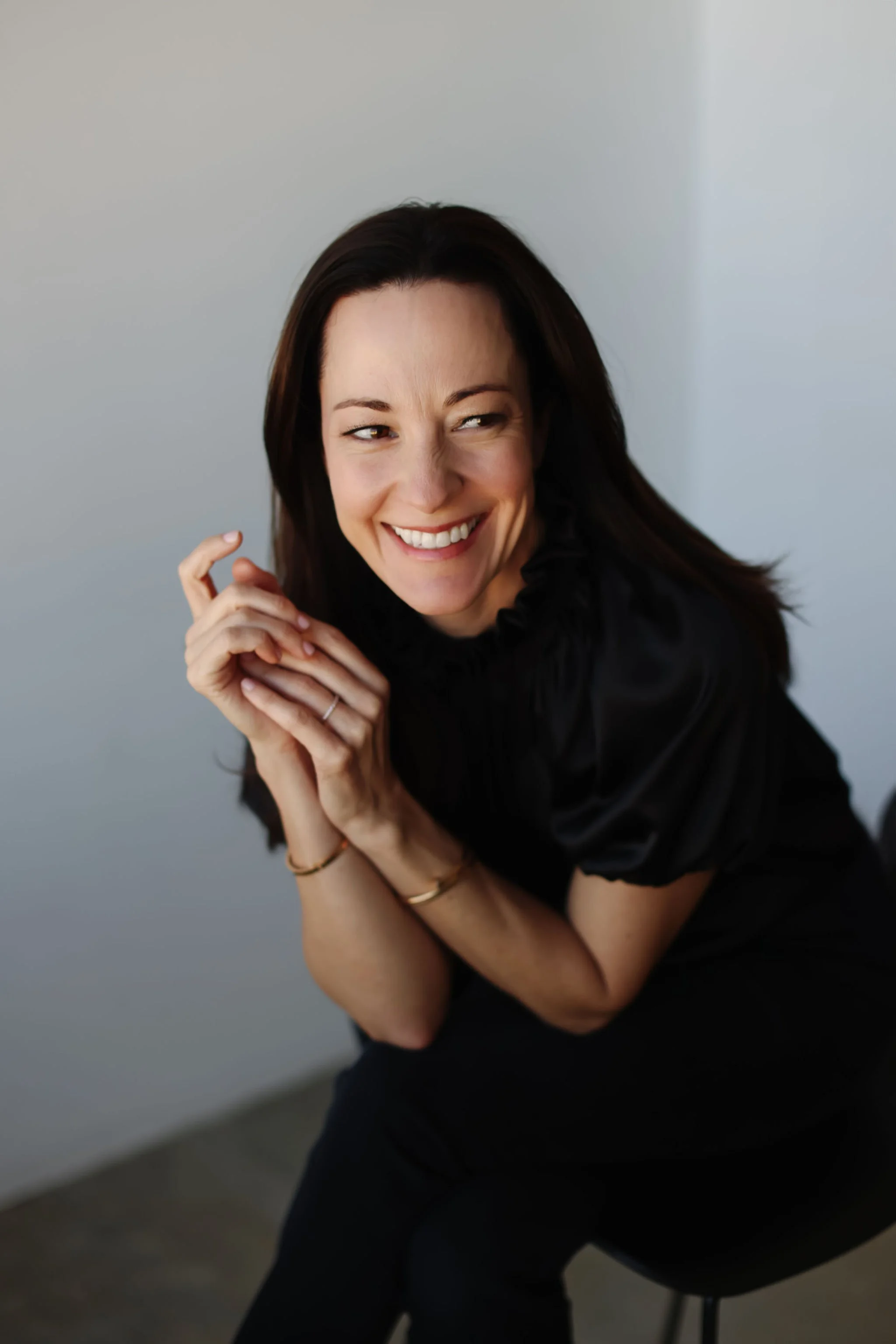
Life coach Wendy Valentine, author of Women Waking Up and a recovering people pleaser herself, has a practical way through both: figure out what your boundaries actually are, say them kindly and briefly, and stop treating the guilt afterward like a verdict.
This is for you if you've been thinking:
I say yes to things before I've even checked whether I want to, and then I dread them for weeks.
I know I need better boundaries, but I honestly don't know where to start.
When I say no, I end up writing a whole paragraph explaining why.
I feel guilty for hours after I turn someone down, even when I know it was the right call.
I set a boundary, the other person pushed back, and I caved.
I've heard "no is a complete sentence," but saying just "no" feels rude to me.
I've spent so long taking care of everyone else that I'm not sure what my own needs are anymore.
Prefer to listen? Press play below:
Or listen on:
Apple Podcasts | Spotify | YouTube
How to Know You Need a Boundary
Wendy's first answer is awareness. Most of us rarely stop to ask how we actually feel about something, because we're too busy running to the store, getting to the meeting, and keeping everyone around us happy.
Her second answer is permission: permission to slow down, to say no, or to say "let me put a pause on this for right now."
She points to how much of our day runs on instant response. A text comes in, an email lands, and we feel like we have to answer right now. Wendy's question for herself is simple: why? Most of the time, the person on the other end isn't expecting an immediate reply. We've trained ourselves to respond that way, and we keep proving to ourselves that we're needed every second.
The signs you're giving away energy you don't have can be big (resentment, grief, exhaustion) or small. One of the clearest is opening your calendar, seeing something you agreed to, and feeling dread. That feeling is information. It usually means you said yes to something you didn't want.
How to Say No Without Being Cold
"No is a complete sentence" is technically true, and Wendy agrees you don't owe anyone an essay. But she's just as clear that saying no doesn't require being cold. Something like "No, I'm not able to do that right now, but thank you so much for the invite" is direct, kind, and finished.
Jessica shares the other side of it. A friend once turned down an invitation with a flat no, and Jessica spent weeks wondering if she'd done something wrong. It turned out the friend's husband had a last-minute work trip and she had no help with the kids. One sentence of context would have kept the relationship intact. As Jessica puts it, a bare no can lose all the humanity.
Wendy's guideline is to match the explanation to the relationship. People close to you deserve a short, honest reason. What doesn't help anyone is the long, repeated explanation. When someone over-explains a no, you can feel their discomfort, and it makes the whole exchange uncomfortable for both people.
Should I Say No, or Is This One Worth Doing?
Not every no is the right call. Sometimes showing up is part of being a good partner, sister, friend, or colleague. Wendy's approach is to look at the whole picture: what else is on your plate, and what you're working toward a year or two from now. If you never say no to anything, when does it stop?
She uses her own podcast as an example. She gets 20 to 30 guest requests a day and used to try to answer each one personally. Now she sends a standard reply, because she has another book to write, and the energy she gives to everything else is energy the book doesn't get.
Jessica suggests taking this a step further with an energy audit. List what you value most, then look honestly at how much of your energy each one gets. If your marriage is at the top of your list and receiving a sliver of your energy, the things crowding it out get much easier to say no to.
Why the Guilt Shows Up, and What to Do With It
Wendy's people pleasing started in childhood, when she learned that standing up for herself wasn't safe. For decades she said yes to keep everyone happy.
Around age 50, sitting on a picnic table at an RV park in Malibu, she had the realization that changed things: in trying so hard not to be abandoned by other people, she had been abandoning herself.
That reframe matters for guilt. Wendy describes guilt after setting a boundary as a trained response, not a sign you did something wrong. Just because you feel something doesn't mean it's true.
She also shares that setting boundaries did cost her some relationships, and that she'd rather lose those relationships than lose herself.
She points to hospice nurse Bronnie Ware's book, The Top Five Regrets of the Dying, where the most common regret was living the life others expected rather than your own.
Jessica's practical tool for the guilt spiral: ask how you'd advise a friend in the same situation. Most of us hold ourselves to much harsher standards than we'd ever hold a friend to, and borrowing that compassion makes it easier to stay steady.
How to Make a Boundary Stick: Wendy's 4 D's
Wendy teaches four steps for setting boundaries: Define, Decide, Declare, and Dedicate.
Define comes first, because you can't set a boundary you haven't named. Your boundaries with your spouse will look different from your boundaries with your parents, your kids, or the barista. Wendy's exercise: draw a circle on a piece of paper. Inside it, write what brings you joy, what you love, and what you'll tolerate. Outside it, write what isn't going to happen, like the friend who keeps canceling lunch.
Decide means choosing in advance what you'll do if a boundary gets crossed. Three strikes? It depends on the person. Knowing ahead of time keeps you from improvising under pressure.
Dedicate is where most of us slip. Wendy's advice is to write your boundaries in permanent marker, not pencil. If you ease back on a boundary, especially with someone who knows how to push your buttons, they tend to come back harder, and you've taught them the boundary wasn't real.
Start small, practice with the people who aren't as close to you, and it gets easier every time. It also models something for everyone around you, including your kids.
FAQs
How do I set boundaries without feeling guilty?
Expect some guilt at first, especially if you've spent years saying yes to everyone, and don't treat it as proof you did something wrong. Life coach Wendy Valentine describes that guilt as a trained response: if you learned early that saying no had consequences, your body still reacts that way even when the boundary is completely reasonable. A helpful check is to ask how you'd advise a friend in the same situation. Then hold the boundary anyway. The guilt usually fades the more you practice.
How do I say no without overexplaining?
Give a short, honest reason instead of a long justification. Something like "I can't make it this time, but thank you so much for inviting me" is kind and complete. For close friends and family, one sentence of real context, such as a schedule conflict or childcare problem, helps protect the relationship. The trouble starts when you explain the same reason three different ways, which tends to make both people uncomfortable and invites debate.
Is "no" really a complete sentence?
Technically yes, and you never owe anyone an elaborate explanation. In practice, a bare "no" with nothing after it can leave the other person guessing whether they did something wrong, especially in close relationships. Many people find the best middle ground is a warm, brief no: decline clearly, add a thank you or a short reason, and stop there. Direct and kind are not opposites.
What should I do when someone pushes back on my boundary?
Stay with it, especially early on. If you back down when someone pushes, you teach them the boundary was negotiable, and people who know how to push your buttons often push harder the next time. It helps to decide ahead of time what you'll do if the boundary is tested, so you aren't making it up in a heated moment. Start practicing with lower-stakes relationships, where the pushback is easier to tolerate, and build from there.
Meet Wendy Valentine:

Wendy Valentine is a speaker, certified professional life coach, and author of Women Waking Up: The Midlife Manifesto for Passion, Purpose and Play.
She hosts The Midlife Makeover Show, ranked in the top 1% of podcasts globally, and helps women through her group coaching program, FREEDOM at Midlife, and in-person retreats.
Connect with Wendy Valentine:
WendyValentine.com | @hellowendyvalentine | Podcast: The Midlife Makeover Show | Book: Women Waking Up: The Midlife Manifesto for Passion, Purpose and Play
-
Jessica Long (00:00.392)
What would our calendars look like and how would we feel if we became masters at setting boundaries and protecting our energy? Well, we're about to find out. Wendy, thank you so much for coming on the show and sharing your insights with us today.
Wendy Valentine (00:08.382)
Hmm
Wendy Valentine (00:16.552)
Thank you so much. Yeah, a free calendar. Wouldn't that be nice?
Jessica Long (00:20.768)
Well, not okay, let's be let's be real. It's not gonna be free, at least most of the time. But could we look at it without having heart palpitations? That might be nice, right? Or dread. So let's start here. I think some people probably know, dude, I really could be better at setting boundaries. Others might just kind of be going through life thinking, well, no, I'm good. What do you mean? So
Wendy Valentine (00:35.54)
Kind of.
Jessica Long (00:50.648)
Tell us first what are some signs that boundaries could be helpful for us? I'm assuming it like when we're leaking our energy, when we're not saying no, that there's some symptoms that arise as a result of that.
Wendy Valentine (01:02.772)
Yeah, you're so right. And I think this is something I'm learning in general with myself in all areas of life. And I think for everyone, it's awareness.
It's literally tapping into yourself and asking how you feel and just like you know like your energy and how you feel about something. And very rarely do we do that because we're so busy trying to do all the things and please everyone around us and okay, I gotta go run to the store and do this. I gotta be go for this meeting, da-da-da-da. And very rarely do we tap into ourselves and go, you know what?
How am I feeling right now? Am I feeling a little tired? And so I'm I'm guilty of this where I will keep going and going and going until I'm like, I can't go anymore. I just can't do it. But I know that about
myself. So therefore, I'm like, all right, Wendy, about halfway through if I feel like I'm running out of steam, I will stop and go, Wendy, you know what, maybe we need to chill for a little bit. And I think the biggest thing is besides the awareness, it's the permission.
To slow down, to say no when you need to say no, or hey, let me just put a pause on this for right now. And I think that is key and just giving yourself permission to be able to slow it down a little bit. Because I mean, let's be real though, especially nowadays with social media and everything being right here at our fingertips, we feel like we have to respond to a text right away or an email right away. We have to be able to just
Wendy Valentine (02:43.945)
be like boom boom boom but why? You mean I ask myself that question all the time. I'm like, why do I have to feel like I've got to respond to these next you know, these last twenty emails that just came flying through? Why? You know, it's like
Jessica Long (02:56.334)
I do that with my husband all the time. I see him, a text comes in, he runs over, he reads it. I have to respond right away. I'm like, no, you don't. No, you don't. Even the person on the other end doesn't necessarily expect you to, right?
Wendy Valentine (03:03.783)
No. They're like it's like Pavlov yeah, it's like Pavlov's Yeah, it's what is it, Pavlov's dog, right? Remember where it's like, I mean we've gotten we've trained ourselves to be that way. But then we have to question is that the right way to go about it? And
Jessica Long (03:11.672)
Yeah.
Jessica Long (03:16.748)
Yeah, yeah.
Jessica Long (03:22.1)
And we have to model for others. Like, hey, I'm not always available to you. And I think it takes practice for us to take our foot off the gas and realize everything doesn't fall apart. So, you know, we kind of have latched onto this identity of busyness and everyone needs me all the time. And everything's gonna fall apart if I don't show up. But the reality is
Wendy Valentine (03:25.883)
Yes. Right.
Wendy Valentine (03:32.827)
Okay.
Wendy Valentine (03:37.243)
Yes, exactly
Wendy Valentine (03:43.827)
Okay.
Yes.
Jessica Long (03:51.631)
We perpetuate that ourselves by continuing to exist in that identity. And we can we can prove that we can't actually cancel down and the world keeps going and nothing falls apart, nothing falls through. And we get the benefit of tuning into ourselves, noticing what our needs are and giving ourselves a chance to actually meet those needs.
Wendy Valentine (03:51.645)
Uh-huh.
Wendy Valentine (03:58.58)
Yeah.
Wendy Valentine (04:16.326)
And I think you said the magic word needs
I mean it wasn't until I was almost 50 years old that I was like, what are my needs? You know, I never really asked myself. I was so busy making sure everyone else in my life was happy, making sure I did all the right things. And I'm, you know, I'll admit I'm a recovering perfectionist, people pleaser, approval seeker, codependent, you name it. I rocked every single one of those labels. But I was so busy making sure that everyone else was happy.
to the point I did end up in exhaustion, right? And I did not know what my needs were.
And then also, I did not know how to ask for that. I didn't know how to go, you know what, I actually need this, or to just simply not respond to something or not give my energy to something. And I'll get a little geeky here, but an atom is 99.99% energy, right? Which leaves only 0.01% matter. Why does this matter? You are made up of atoms, you are 99% energy.
The microphone, your headphones, the the chair you're sitting on, all of it's energy. And that's 99% of it. But we concentrate on that teeny tiny percent of matter. But if you tap into your energy and know that you you actually have a choice on how much energy you give out and how much energy you you keep right here within you, right? You have a choice. We think we don't have a choice. We think that we have to do all the right things.
Wendy Valentine (05:56.833)
For everybody else, but not all the right things for ourselves. So just really tapping into that energy again, how do you feel? It seems like such a simple question to ask ourselves, but you really need to see how you feel because you don't you don't want it to catch up with you and then it's too late. And that energy can affect you physically, mentally, emotionally, spiritually, everything. Yeah.
Jessica Long (06:21.814)
Yeah, it shows up everywhere. So I think some of those feelings that come up when you're leaking energy in places that don't feel good to you, you might notice resentment, you might notice grief, you might notice stress, you might notice burnout, you might notice exhaustion. So, and and it they don't have to be huge. All those words sound really big, but it could even just be opening up your calendar, seeing that appointment and going,
Wendy Valentine (06:29.928)
Mm-hmm.
Wendy Valentine (06:36.284)
Yeah.
Wendy Valentine (06:47.4)
Yeah.
Jessica Long (06:51.534)
That's your first sign that, okay, I said yes to something that I don't really want to do. So if we find ourselves in that position and we're at the stage where we're like, you know what? I'm ready to start making some different choices. I'm ready to start saying no to some things. Tell us how we say no. And I I I know that sounds silly, but there's all this hype around no is a complete sentence right now. Okay. But I
Wendy Valentine (06:52.744)
I know. Yes.
Wendy Valentine (07:00.233)
Right.
Jessica Long (07:18.966)
And I get that, I understand the principle of it, and I totally stand behind. We don't need to overexplain ourselves. And the reason we do that is people pleasing and all the things that we're trying to get away from. And I live in today's culture, and saying no with nothing else after it doesn't feel good to me. And it doesn't feel good when I'm the one receiving that. So coach us through how to say no in a way that feels firm, respectful, and not dismissive to the recipient.
Wendy Valentine (07:25.235)
Yes.
Wendy Valentine (07:29.512)
Mm-hmm.
Wendy Valentine (07:36.126)
I know.
Wendy Valentine (07:40.712)
Yeah.
Wendy Valentine (07:48.115)
Well, and you're so right. I mean, and I was guilty of this myself and trying to overexplain because of, you know, being a people pleaser. You want to make sure you didn't hurt someone's feelings. And like I it would be at the point where I would end up hurting my own feelings and sacrificing my own time and energy so that the other person wouldn't get hurt, you know. And they may not have cared anyways, right? But you don't have to over explain and it doesn't mean that you have to be cold about it. I mean
You know, maybe there are a few instances where you're just like, Nope.
Most likely, most likely you're gonna continue at least the rest of the sentence to say, no, I'm not able to do that right now. But thank you so much for the invite. I mean you can still be kind. It does because you say no to something, that doesn't mean that you're rude. And I think for women especially, we're so like, let me try to do all the right things and and be the good girl. We were trained that way, if you will. You don't have to. It's actually like I I totally
admire someone even if I'm on the receiving end of the no when they go, you know what, I actually can't do that right now, but I appreciate it. Or no I I have plans. Or no, but maybe another time.
Okay, cool. Like I I appreciate the honesty and I appreciate just someone being very direct. I think we've all met someone where they're just like boop boop boop boop like very direct in their speech and like dang that is so awesome, you know? It's like so cool and so bold. I just love it. But then you know what to expect. There's no gray area with those people, right? The people that can be very bold and very strong and still kind.
Jessica Long (09:35.223)
Yeah. And I mean, I I agree with all of that. you have to kind of find your own way. But I will give this example. So I was on the receiving end of like a no is a complete sentence. This was a while ago. It was a it was like an invitation to an event, and someone said no. And this was someone who I really thought would enjoy this event. And
Wendy Valentine (09:35.484)
Because yeah.
Wendy Valentine (09:42.322)
Yes.
Wendy Valentine (09:47.964)
Okay.
Wendy Valentine (09:55.719)
Just like I d just yeah.
Jessica Long (09:59.361)
I really wanted her to be there. But and of course I respected that. And I and I even remember thinking, she's doing no as a complete sentence. Okay. And then it was weeks later that I came to find out her husband had a last minute business trip. She had she really wanted to go, but she had to say no because she had no help with her kids. And to me, I just feel like, why didn't you just say that? Because we lost all the humanity in the no.
Wendy Valentine (10:13.566)
Hmm.
Wendy Valentine (10:21.511)
You just say that, yes.
Jessica Long (10:25.89)
Like if you had just told me all that, I totally would have understood. And I felt like it would have kept our relationship more intact than this like cold no, which then leaves me assuming why she said no. Does she not like me? Does she not want to go to this event? Did something happen? Did I say something? You know, you start going through that whole thought process of like, did I offend her?
Wendy Valentine (10:26.25)
Yeah.
Wendy Valentine (10:46.301)
Yes. No, you're so right. You can give a very nice warm no with a very simple explanation with your no. You can do that for sure. And so that and I think it also depends, you know, the relationship for sure. If it's someone that you're really close to, of course they deserve a little bit of an explanation. Like, gosh, I'd love to, but my husband's going out of town. I just need to just, you know, stay at home.
but love you know, thanks so much for the invite, right? But yeah, the big long explanations are just like 'cause then you start to think if someone's trying to explain something to you over and over you're like, Why are you why are you saying this? You know, like it's it's okay. Chill. Like it's all right. Yes, I know, I know.
Jessica Long (11:26.786)
Yeah, you kind of feel their discomfort coming through when the over-explaining happens, which then is just uncomfortable for everyone and nobody needs that. okay, what about the times when we're like, okay, I'm ready to say no and I'm gonna find the way to say no that feels good to me? When you see an event on your calendar and it's like, I should do that, but I really don't want to, like, how do you know when you actually can say, No, I'm not doing that versus
Wendy Valentine (11:33.577)
Yes. Yes.
Wendy Valentine (11:44.125)
Mm.
Wendy Valentine (11:51.529)
Mm-hmm.
Jessica Long (11:56.963)
You know what, I actually should do that one because i I will show up as a better partner, sister, wife, colleague, friend if I do.
Wendy Valentine (12:04.106)
Right.
think it depends on what it is and I think also
If there's that one thing that's really gonna throw off your entire calendar and your entire life and you know again physically, mentally, emotionally, spiritually, how that can throw you off, you also need to take a look at everything else. I I will give you a story of this is happening to me now, even, and I'm very, very grateful that I have a popular podcast. Very grateful for that.
But as you know, podcasting is not easy. You have to really do, you know, the scheduling and the planning and the posting and all of that stuff and the promoting, right? And it can be really overwhelming at times. And I wish I I wish I could serve everyone. I wish I could like have everybody on the show. And I get probably a good night, I mean 20 to 30 requests a day.
And I'm like, I can't. And there's a part of me where I feel like I really need to go and respond and da-da-da. And I did that in the beginning with the show. And now I have to send back the blanket, you know, email responses: hey, you can go ahead and submit your request here. But I had to take a look at my own life and go, what's important here, Wendy? Do we need to be the nice little hostess to every single person and try?
Wendy Valentine (13:34.929)
try to s send back a personal email. Like I can't do it. and there's also a part of me where I can't just delete the email. So I have to at least respond to something. But you you do what works best for you. And you also have to again kind of take a look at everything else going on in your life. Is there other things that are taking up too much time and energy where you need to maybe it's it's you know cutting back on other things to make time for the one thing that you really want to do.
So you it I mean again, I think at this day and age we get tossed with so many opportunities, which is awesome, but that doesn't mean you have to take them all. And you also have to think like, well, what is my big goal here? What am I looking at like a year from now, two years from now? And if I'm not saying no to all this stuff, when is it gonna stop? Right? And then and then also it's the more, you know
Jessica Long (14:26.285)
Yeah.
Wendy Valentine (14:30.642)
It it's that energy, right? Like the more energy that you're giving is something else, it's taking energy away from something else. So for me, for example, I have another book I want to write. I'm gonna have to cut back on all this other stuff in order to make that time and energy to write a new book. So it's just kind of tweaking things and what is really, really important to you for right now and also in your future. Because that is g yeah.
Jessica Long (14:57.602)
Love that idea because it's like do an energy audit, right? They talk about like doing calendar audits and time spent audits. What about an energy audit and look at it in relation to your values? What do you say is your highest value or what's most important to you? Let's say someone says their marriage is at the very top of the list. Okay, how much of your energy are you spending on your marriage right now? I mean, I'm maybe I'm using myself as an example, and I'm like, five percent.
Wendy Valentine (15:01.768)
Yeah.
Mm-hmm.
Wendy Valentine (15:08.392)
Yeah.
Wendy Valentine (15:14.472)
Yeah.
Wendy Valentine (15:21.082)
No, I know.
Jessica Long (15:26.38)
Like so small. What am I doing? This is all backwards. And like, why is such a huge chunk of my pie chart going to something that I don't want to do? That's not anywhere near the top of my values list. So doing some sort of audit like that can help you like just, I don't know, remove the wool from your eyes and say, okay, this is making this so much easier. It's so much easier to say no when I look at it through this lens.
Wendy Valentine (15:28.308)
I know.
Wendy Valentine (15:39.177)
Yes.
Wendy Valentine (15:48.627)
Yes.
Wendy Valentine (15:54.27)
Right.
And I think it's even, yeah, it's it's it's setting those boundaries within yourself too, right? And within your own business. I think when you're self-employed, it can be a little bit more difficult because you're like, wait, Wendy, you know, what am I doing here for who and for what and why? And what's underneath it? Like why I had to ask myself, like, why am I feeling like I have to give all thousand people an opportunity to be on the show? I'm like, there's not enough me to go around. And what do
It's like, yes, that's what they want, but what do I want? And it's and I think it's also just making it a habit to constantly tap into yourself and go, what is important to me right now? And and just because it might work for your friend Judy or your Aunt Lisa, that doesn't mean it's gonna work for you, right? I mean, everyone's responsible for their own values and their own boundaries.
Jessica Long (16:55.158)
100%. So let's talk about guilt that comes in. This is super common, especially for women who've been so accustomed to people pleasing and making sure other people around them are comfortable. It can be really uncomfortable to start saying no to things that you have been saying yes to. And it does impact the other person who's fully expecting you to say yes or you've said yes to them many times in the past. And then there might be a little bit of guilt associated with that. So how can you
Wendy Valentine (16:56.317)
Yeah.
Wendy Valentine (17:01.555)
Yeah.
Wendy Valentine (17:09.768)
Yeah.
Wendy Valentine (17:22.579)
Yes.
Jessica Long (17:24.834)
Help us tolerate the guilt so that we still hold firm on the boundary that we know is the right choice for us.
Wendy Valentine (17:28.806)
Yeah, mm.
Wendy Valentine (17:33.401)
Answer that with a with a story that popped into my mind. So when I was young, when I was a little girl, I was abandoned. And from that moment of abandonment, I did become the people pleaser, perfectionist, codependent, right? Because I did not want to be abandoned again. So I tried so hard to please everyone around me because I was so fearful that I would be abandoned. Well
Fast forward, I'm 53 now, but I was about 50 years old, and I'll never forget this aha moment that I had. And it was after I had taken off in this RV across the country, and I was sitting on the picnic table at the Malibu Beach RV park, looking out over the ocean. I remember it exactly. And I remember thinking
That I became my greatest fear. That even though I was fearing my entire life of being abandoned, really I ended up abandoning myself. And with that abandonment includes not setting boundaries. And I was taught at a very young age in several dis different instances that if I said no or if I stood up to for myself.
Then I would either be abused physically or mentally, or I would be criticized. So I learned that setting boundaries was bad. That it meant if I say no to this person, or if I stand up to them, I'll get beaten, or I will be left behind, or I will be called all sorts of names. So I just for decades never stood up for myself. But then I realized.
that I was abandoning myself, that I wasn't able to have the relationship that I wanted to or a career that I wanted to have. I didn't have the life that I wanted to live because I was so terrified of what the other person or persons might do if I actually say, no, that's not gonna work for me. Those are not my values. You were not treating me well.
Wendy Valentine (19:50.349)
And so yeah, the guilt obviously came with it that even even if I used to even just think back then of standing up to you know for myself, I would have that feeling of guilt that even if I did do it, I was like, God, I can't do it. I can't do it. I'm gonna feel so bad. It feels like such a bad person to say something. So I would never do it. But then after that realization that I had.
I was like, I cannot abandon myself anymore. That the pain of that was far greater than to actually just not say anything at all, to not set the boundaries. And here's the other thing, too. I realized that in setting those boundaries, that I might lose some people in my life. And sure enough, I did. But it was
worth not that I wanted to lose some of these relationships but I'd rather lose those relationships than lose myself because it's just not it wasn't worth it. So the guilt is something to be aware of and to get underneath why are you feeling this guilt? Because you have to ask yourself why do I feel bad about actually taking care of myself? It all goes back to the self-care right I mean
Jessica Long (20:52.94)
Mm.
Wendy Valentine (21:14.664)
We think self care is just, you know, getting in a pedicure, but it's so much more than that. It is setting the boundaries and it is it is stating your values and your needs. And s it's taking care of yourself. Your Yeah.
Jessica Long (21:26.656)
Yeah. And I th I just sometimes when I get caught in that cycle, it helps me to think about if I saw a friend acting this way or feeling this way, how would I advise her, right? Just taking it outside of yourself because we hold ourselves to such crazy standards and we have so much more compassion for our friends. So is it possible to find that level of compassion for yourself? so I just in situations like that, I I find that exercise.
Wendy Valentine (21:37.672)
Yes.
Right.
Wendy Valentine (21:47.678)
Yeah.
Wendy Valentine (21:52.755)
Yeah.
Jessica Long (21:56.482)
To be helpful.
Wendy Valentine (21:57.875)
You know, there's Bronnie Ware, she she wrote the book, The Top Five Regrets of the Dying. Do you know the number one regret is living life for everybody else? And I remember it was about that same time when that I had my aha moment of like, my god, I'm a totally abandoning myself. that I was like, I am not.
Jessica Long (22:05.198)
Mm.
Jessica Long (22:11.212)
Yes, I've heard that.
Wendy Valentine (22:25.33)
Going to have that regret of living life for everybody else and just basically constantly putting myself on the back burner. And you know, it does, it feels weird if you've never set boundaries before, if you've never stood up for yourself, it feels really weird. It feels so strange. And I had this happen just not too long ago. My biggest bully in my entire life. I finally stood up to this person.
And I remember it was so like my thoughts were so loud in the moment. Everything was so vivid. And s and I remember thinking, here's your chance. Here's your chance to actually stand up for yourself, to love yourself, and to tell this person that no, you are not going to do this to me anymore. And it does feel strange. And I did even have a little
Bit of that guilty feeling afterwards. And I thought, okay, this is just my typical trained response. Cause I was trained to feel guilty. So I was like, this just because you feel something doesn't mean it's actual truth though, either, right? Because it's your yes, it is. I know, right? I'm like, wait a minute, no.
Jessica Long (23:35.0)
Mm.
Jessica Long (23:41.974)
right, that
Jessica Long (23:47.609)
This isn't fact, truth. Well, so okay, I have a question for you that you can reply to with this story if it makes sense. But did that person push back? I want to know what your thoughts are when you hold the boundary and you're feeling a little wobbly and a little weird about it, and then that person pushes back. How do you make sure that you hold firm and not give in?
Wendy Valentine (23:49.372)
Yeah, I know, right? Yeah. So then yes.
Okay.
Wendy Valentine (24:10.714)
going back to that moment and there was more moments after that, that I had to g s just keep tapping into my heart
And and loving that little Wendy, even that was hurt for so long, and going, you know what, girl, I got you. I'm gonna take care of you. And I'm not gonna abandon you anymore. And you have to stay on your ground. And even in my book, I talk about, you know, I think there's the four D's of setting boundaries, define, decide, declare, and dedicate. And that last piece of dedicate is basically, yeah, you're writing your boundaries in a person.
Permanent marker, not a pencil. Because if you ease back on those boundaries, especially if it's someone that's a narcissist or someone that really knows how to push your buttons, ooh, they will come right back around and even stronger. And then basically what you're teaching that person is that, yeah, actually my
Whoopsie. I didn't mean to set that boundary a while back. I was just kidding. I'm like and that you're weak and that you can't yeah, it's like, no, no, no, no, no. We're sticking with this. We are sticking with this. And it feels so good after you do it because then it's like, thank God. 'Cause it's just
Jessica Long (25:25.71)
Mm.
Wendy Valentine (25:33.469)
I I I think even it even more so when you reach, you know, midlife in your forties and fifties and many of us have checked off all the boxes, you know, in our twenties and thirties, kids, career, marriage, house in the burbs, again, doing all the things for everyone else and leaving ourselves on the back burner. And it piles on. It it really just is like, Wait, who am I? What am I doing? And why am I doing it? And it's a really I think midlife is such a beautiful scene.
to be able to take a step back and go on, who am I? What do I want? And why? And it's such a it's such a great way to actually even evaluate some of those relationships that you have that maybe are not serving you.
Jessica Long (26:20.972)
Yeah, and the patterns that you have that are not serving you. And actually, we're finally wise enough to be able to see them for what they are, right? And make the change and have the confidence and the experience behind us to make a different choice going forward. So for the woman who's listening, who's recognizing herself and some of what we're saying and is thinking like, yeah, I don't.
Wendy Valentine (26:23.88)
Yes. Yeah.
Wendy Valentine (26:39.186)
Yeah, you're so right.
Jessica Long (26:47.244)
I don't have the best boundaries in my life. I could stand to have better boundaries and I could see how it would feel on the other side if I did. What's the first step she should take?
Wendy Valentine (26:55.144)
Yeah.
Wendy Valentine (26:58.472)
The first step would be
Define your boundaries. And of course, you're gonna have different boundaries with your spouse than you would have with the barista at Starbucks, right? Like totally different boundaries, right? Yeah, exactly. or with your parents or your children, right? D define what those boundaries are, right? Because how can you set the boundary if you don't even really know what the boundary is? And I've a good exercise to do, just take a piece of paper, draw a circle, and
Jessica Long (27:09.014)
I hope so.
Wendy Valentine (27:30.866)
Inside that circle is what you will is what brings you joy, is what you will tolerate, is what you love. Whether it's receiving a nice text from your spouse saying, I love you, I care for you. Outside of that circle is the stuff that's like, uh-uh, not gonna happen. And we typically know those things that have happened in relationships that do not work for us. Like the friend that's like, let's go meet for lunch, and then she keeps canceling.
not gonna you know things like that and really you know practice practice if you will setting boundaries on the ones on the barista on the people that aren't as close to you and you get better and better at it as you go along and the more that you do it the more love that you give to yourself and the more that you're not willing to sacrifice giving up that love for yourself anymore
So start small, define exactly what those boundaries are, and decide what you're gonna do after you've set those boundaries. You know, are you gonna give them like, okay, you know, three, three shots and then you're out, three strikes and you're out? Or is it or does it depend on who it is, right?
And so decide what those are and the more that you work on that within each relationship, the more the other person is learning. And they will either go along with it or they won't. Yeah.
Jessica Long (28:58.172)
that's so true. And I love the the fact that you're modeling this for other people too. So I like to think of how I'm modeling this for my kids so that hopefully they don't find themselves in their 40s thinking, why am I saying yes to everything I don't want to say yes to? Like this doesn't it's isn't even a thing for them. But then to your point, you're training the people around you, like, there's gonna be a little bit of a shift in this relationship and how do I need to kind of
Wendy Valentine (29:03.693)
Wendy Valentine (29:13.554)
Yes. Yes.
Wendy Valentine (29:19.09)
Yeah.
Mm-hmm.
Jessica Long (29:24.3)
work with myself to make this work for me. So and and you're you're modeling for everyone, adults too, like how to actually choose yourself and live in a a life that's in alignment with you. So yay, thank you for all the insights you shared with us today. Where can everybody find you, get your podcast, get your book, and learn more about your work.
Wendy Valentine (29:31.732)
Yeah.
Wendy Valentine (29:37.81)
Yeah.
Thank you.
Wendy Valentine (29:46.054)
All the things. Thank you so much. This has been awesome. It's actually sometimes doing these interviews are a great reminder to myself of the things I still need to work on. I mean we're we're we're we're all a work in progress, right? Like, my gosh.
Jessica Long (29:55.938)
Yeah.
Forever a student.
Wendy Valentine (30:01.606)
Yeah, exactly. so wendyvalentine.com is probably the best place to go and from there you can go anywhere else. the podcast is the midlife makeover show wherever you listen to podcasts. And the book is Women Waking Up, The Midlife Manifesto for Passion Purpose and Play. And that is of course everywhere books are sold. Of course it's on Amazon. Everything's on Amazon. I actually found out today, I'm like, you can buy a car on Amazon. I was like, what can you not buy on Amazon?
Jessica Long (30:29.868)
Wait, why?
Wendy Valentine (30:31.55)
I know. So buy a car, buy a car and then you can buy my book. Same time.
Jessica Long (30:34.144)
Okay, we're not just books anymore.
Jessica Long (30:40.312)
Perfect. Use my affiliate link so I get a percentage of that car. All right. Thanks so much. Been so fun chatting with you.
Wendy Valentine (30:43.143)
Yes, exactly. Exactly. I know. So cool. Thank you so much, Jessica.
🎧 Other Episodes You’ll Love:
How People Pleasing Keeps the Patriarchy Running (And How to Stop)
Midlife Overdrive and Why Slowing Down Feels Hard
Like what you hear?
➕ Follow Midlife Advice on Apple podcasts, Spotify or YouTube for more super smart and slightly sassy midlife conversations that blend science, intuition, and zero BS.
⭐️ Please share this episode with a friend, drop a 5-star rating and leave a review! That is the best way you can help me book more expert guests for us!
Disclaimer:
Belong Wellness and its members, managers, employees, contractors, and other agents or representatives are not licensed medical care providers and do not provide medical services or advice, including without limitation diagnosing, examining, preventing, treating, or curing any medical conditions. The information shared in this podcast is meant to be educational, not prescriptive. Please consult your medical doctor before making any changes to your diet or lifestyle. Further, the opinions of guests on this show do not necessarily reflect the opinions of Jessica or anyone affiliated with Belong Wellness.