How to Reinvent Yourself in Midlife by Changing Your Identity First
If you've looked around at your life lately and thought, I have everything I wanted, so why don't I feel like myself? this conversation is for you.
I'm joined by Ellen Baker, novelist and founder of The Next Chapter Studio, to talk about reinventing yourself in midlife by doing something most of us have completely backwards: choosing your identity before you have proof you're there.
This is for you if you've been thinking:
I've worked hard to get here. Why am I still not happy?
I don't feel like myself anymore and I don't know why.
I'm exhausted from doing all the things but I don't know how to stop.
I feel like I’m just going through the motions of life.
I want to step into who I'm becoming, but I keep waiting to feel ready.
Prefer to listen? Press play below:
Or listen on:
Apple Podcasts | Spotify
Why the Identity That Got You Here Won't Get You There
So many midlife women hit a point where life looks successful on the outside and something still feels off. Ellen calls this living from an outdated identity. Many of us adopted patterns to survive: people-pleasing, overworking, over-functioning, putting everyone else first, not speaking our truth. These patterns worked. They got us here. But at some point, they stop fitting. You don't want to live this way anymore. The question is not just what to do differently, but who to be.
The Author's Approach to Identity Change
Ellen's insight comes directly from her work as a novelist. Before writing a word, she decides who the character needs to be in order to arrive at the desired outcome. She argues we can do exactly the same thing in our own lives. Instead of waiting until we feel like the next version of ourselves, we decide who that person is first, and start acting accordingly. The story shifts because the character shifts.
"I Choose To": The Language Shift That Gives You Agency Right Now
Before you change a single behavior, there is one language shift that can change your relationship to your choices immediately. Replace "I have to" with "I choose to." Even when your actions stay the same, the shift from obligation to agency is real. Ellen teaches this as one of the first tools in her method. It reconnects you to your own authority over your life.
You Don't Have to Earn a New Identity Before You Claim It
This is the most counterintuitive part of Ellen's framework. We have been conditioned to believe that achievements unlock identities. You become a VP after the promotion. You deserve a vacation after the deadline. Ellen says it's backwards. You choose the identity first, and the evidence follows. The achievement is the outcome of the identity, not the other way around. This applies to every domain: career, relationships, self-worth.
How to Tell If a New Identity Is Truly Yours (Not Just a Performance)
There is a fine line, Ellen acknowledges, between an identity that is genuinely right and one you are just performing. Her answer comes back to the body. When you bring your energy in, breathe, and tune in, your body knows the truth. You may feel peace, expansion, or a sense of ease. You may feel chills or a release of tension you had stopped noticing. That is the signal.
The "What If?" Question That Makes It Possible
When it feels too hard to simply claim a new identity outright, Ellen recommends asking a question instead. What if I were a VP right now? What would she do? The question opens the door to new behavior without requiring belief. And once you do the brave thing, your brain gets evidence. That was safe. I made it. Let me try that again. The identity builds from action, and the question makes the first action possible.
What Actually Changes When You Step Into a New Identity
Change is gradual. Ellen is direct about this. The belief shift can happen quickly, but behavioral change takes time. Old habits run deep. The most important thing is to notice: notice when you could have chosen differently and didn't. That noticing is progress. And over time, the noticing becomes choosing differently.
How an Identity Shift Ripples Into Your Relationships
Stepping into a new identity doesn't just affect you. It ripples into every relationship you have. Partners, children, friends, coworkers. Ellen's reassurance: the people who truly care about you will ultimately be relieved. You will be less resentful. More honest. More aligned. And that benefits everyone in your orbit.
FAQs
How do I reinvent myself in midlife without losing who I am?
Ellen's answer: reinvention isn't about losing yourself, it's about dropping the beliefs and patterns that are no longer serving you. You are not trying to become someone unrecognizable. You are trying to become more yourself. The parts of you that are truest, most authentic, most alive. Those do not go away. They get more room.
Why do I feel stuck in midlife even when my life looks successful?
This is often a sign that the identity you adopted to get where you are is no longer the identity that fits. The over-functioning, people-pleasing, not-speaking-your-truth version of you was effective. It got you here. But at some point it stops fitting. That gap between what you have and how you feel is the signal.
How do I know which new identity is right for me?
Ellen says the body knows. When you bring your energy in, breathe deeply, and check how a new belief feels in your body, you can sense whether it is aligned. Look for a feeling of peace, expansion, or relief. That is the signal that you are on the right track. If you want guidance for how to tune into your body, try my private podcast custom created to help midlife women feel like themselves again.
What does it mean to embody a new identity?
It means making choices from a new identity before you have proof it is real. Starting to act the way the next-level version of you would act. Asking, what would she do? And then doing it. The embodiment comes from the action, not the other way around.
How do identity shifts affect relationships?
They ripple out. When you stop people-pleasing, stop saying yes when you mean no, stop acting from resentment, the people around you will feel the change. Ellen says the people who love you will ultimately benefit. The transition may feel uncomfortable at first. But a version of you that is more aligned, more honest, and less resentful is a gift to everyone in your life.
Meet Ellen Baker:
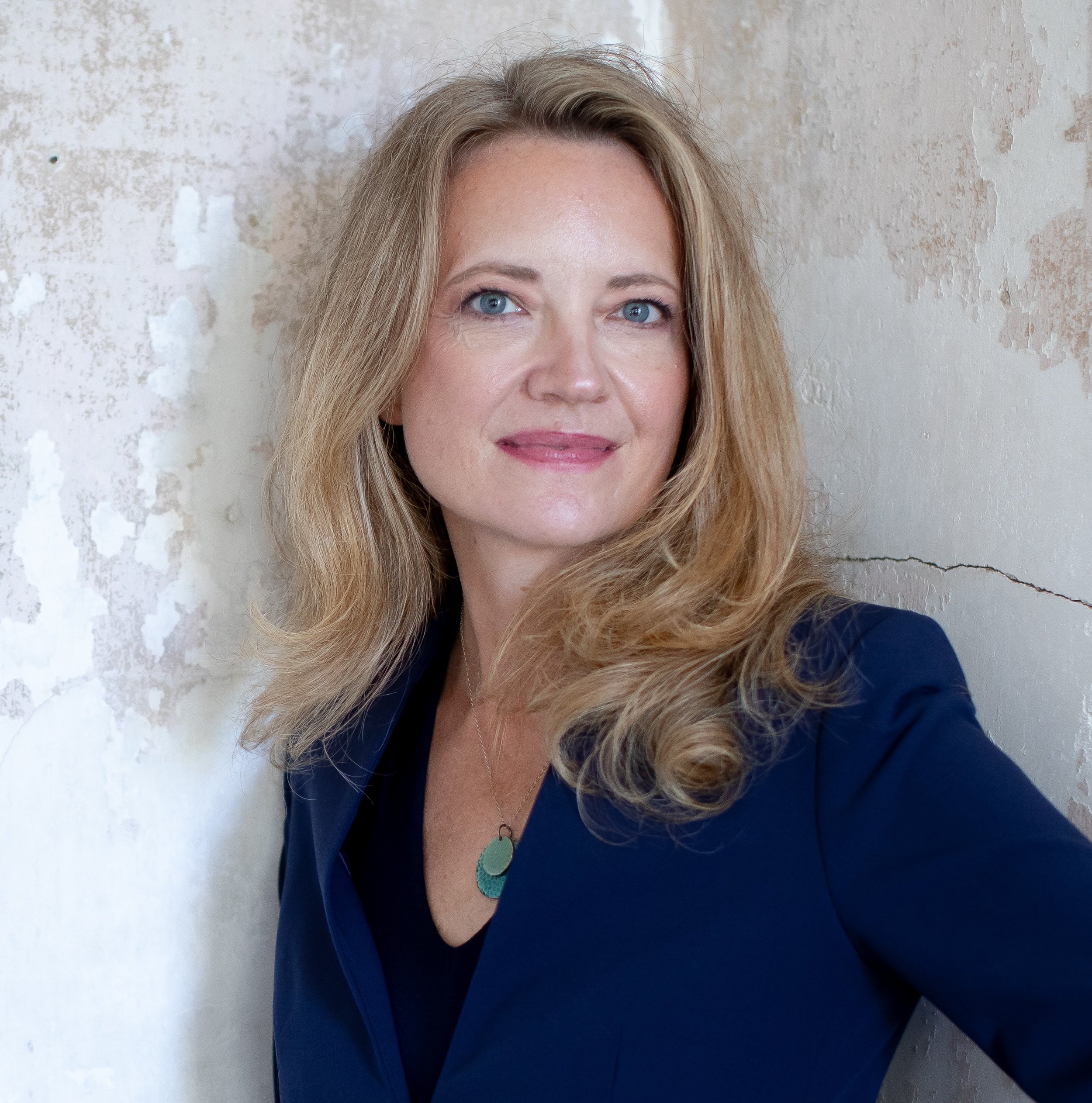
After early success as a novelist with Random House, Ellen Baker spent a decade navigating divorce, rejection, a solo cross-country move, and reinvention before her third novel, The Hidden Life of Cecily Larson, became HarperCollins’ Lead Read for Winter 2024 and was featured in People and Woman’s World.
Her fourth novel, Summerland Cove, is new in June 2026.
With a passion for life stories and reinvention, Ellen is also the founder of The Next Chapter Studio, where she helps women rewrite the internal beliefs that shape how they show up in their lives so they can author a next chapter they love.
Connect with Ellen Baker:
-
Jessica Long (00:00)
Have you found yourself looking at your life thinking, I've made it, the career, the house, the family, everything I've always wanted. And also, I don't feel like myself anymore. That disconnect is real. You have outgrown the identity that got you here. The question is, who do you need to be going forward? Today's guest is Ellen Baker. Ellen is a novelist and coach whose book, The Hidden Life of Cecily Larson, became Harper Collins' lead read for winter 2024.
She says, we can write the next chapter of our own lives the same way an author writes a character into existence by deciding who that character needs to be before writing a word. You choose the identity first, the outcomes follow. We cover how to actually do that, how to tell the difference between a new identity that's truly yours versus one you're just performing, and what to do when the people around you don't quite recognize you yet. Stick around because this topic is so fascinating.
Jessica Long (00:58)
Hello, my friend. You are in the right place. This is where smart and sassy women over 40 come to figure out all things midlife. We talk hormones, careers, relationships, and everything in between. I'm Jessica Long, health coach and fellow midlife woman on this wild ride with you. Stick around for honest conversations with experts, rebels, and wise women rewriting midlife on their own terms. Let's dive in.
Jessica Long (01:22)
Ellen, your unique approach had me hooked right away and I can't wait to dive into this with you today.
Ellen Baker (01:29)
Thank you so much for having me, Jessica. I'm really excited to be here.
Jessica Long (01:32)
Well, my listeners are in for a treat because like I said, your perspective is unique. It's really fun. And I was just thinking about it before we hit record. It just gives us so much agency and that's what I love about it. So here's what we're talking about. We're talking about that point in many women's lives that usually happens in their forties, maybe early fifties where they look around and they think, all right, like I've made it. I have the successful career. I have the house. have the
family, whatever it is that I've always wanted. Yay. And also I don't describe myself as like super happy. And we were talking about this in our initial conversation. I've talked about it on the podcast before. This often comes from living in a way that just doesn't suit you anymore. And there's this identity that a lot of us, myself included adopted that got us here. And it's not
It's actually good. I'm thankful for that because I'm thankful for where I am. But for a lot of us, some of those traits in that identity included overworking, over functioning, little to no boundaries, people pleasing, good girl conditioning, taking care of everyone else before yourself, and my favorite one, not speaking your truth. And you just get to a point where you don't want to live this way anymore, or you literally can't.
With this away anymore. It's almost like trying to put on that work outfit that you were to work in your late twenties now and being like, ew, this is not me. It's just not me. And that's okay. But the question is who am I and who do I need to be going forward to get me where I want to go? And so I can live in this life that feels more like me, more authentic to me. And this is where
your unique perspective comes in. you say that we can approach ourselves the way an author approaches a character when writing a book and essentially choose the identity that will help us feel more like authentic selves. So tell me how this works.
Ellen Baker (03:41)
Absolutely, So it is a really exciting.
way to think about life, And I'm an author of fiction, so this is how I came up with it, is like, if I can create a character and decide who she is and the things she believes and the things that are important to her, and I notice that throughout the story that those affect the story, and I can, start to change them if I don't like where the story's going, I can actually
create problems by making her believe a certain thing if I want a certain problem in the story. And so I thought, well, this could be really applicable to life too, because what I notice in stories is that I may have written a whole novel and the novel may be set, but if I go back and change on page 20, one line of dialogue that somebody says, sometimes that's like, ⁓ I've got to change the whole story now because this one thing was different.
And so the way that you can apply that in your own life is really by noticing that you have the choice to say what it is you want to say. And if you say something different and unexpected outside of what you normally would say, it's going to change the story. Now to back up just a little bit from that.
I think the most important thing and the first shift to make is to become what I like to call the author of your own life.
And as you're saying, so many of us grew up with all these rules and we learned how to be a certain way. We learned to be the good girl. We learned to be the people pleaser. And all of these things were what we needed to do to be successful in life. And we got really good at that. And now we get to this stage of life and it's like, something's just not working anymore. Like it just feels off and I don't know why.
I also do a lot of work with energy and embodiment. And what I've noticed is that when you're in the mode of people pleasing, if you tune into your own energy, you will feel it sort of outside yourself. I always feel it straight out in front of my forehead. And if I...
shift into being the author of my own life, I pull that energy back in and all of a sudden, like everything feels really different. I'm in my own body, I'm in my own gut and I can know what I feel is the right thing to do. So that to me is where we begin. We begin by saying I am the authority over my own life. I am the author of my own life. And to make it even more fun, we can talk about
being a character, like I'm a character that I, the author, am creating. And we can talk more about that too, but, but really that first thing is to really claim the authority over your own life and say, well, I get to choose, you know, some of these things that I've been living by that are keeping me kind of stuck are things I didn't even choose to begin with. Those were things that were imposed on me 30 years ago or 40 years ago when I was 10, you know.
like
Jessica Long (06:42)
But like
this is what I always say too. Yes, that is true. And it's not your fault that you learn those patterns. You have learned them for survival. However, every time you do that trait, people pleasing, not holding a boundary, not speaking your truth, you're choosing that. It's a choice that you're making. Like it might not feel like one, but the whole point is if you have the choice to not do that, then you actually have the choice to do that. And so it's up to you to decide, am I going to keep acting in this way that feels counter?
to me and who I'm becoming, or am I going to make a wildly different choice and see where that takes me? And it's going to remind all of us who are listening who used to read those choose your own adventure books where you got to flip to page 72 if you wanted to make this choice or 68 if you wanted to make this choice.
Ellen Baker (07:17)
Yeah.
I loved those choose your own adventure books. Those were the best because you could read them over and over again and it was never the same twice. But yeah, I think that's a really key point is and that's one of the first tools that I teach is I think so many of us go through our lives day to day of just like, okay, I have to do this. I have to do this. It's on the list. It's on the list. And it's exhausting to go through just doing what you have to do every moment of every day.
I think just changing that sentence to I choose to.
just helps so much because even if you don't change a thing about the action that you're doing, yes, you follow through on your obligations that you've made. You don't just blow everything off. But if you say, well, I choose to bake these cupcakes tonight because I want to provide this for my child's classroom or whatever it is, I'm choosing to do this. I'm the author of my own life. If I didn't want to do it, I wouldn't do it. And it just feels so much better even if
you don't change anything about what you actually do right at first.
Jessica Long (08:32)
Right, it gives you that agency. I first learned that concept the other way around, where it was, if you're choosing not to do something, then you're saying, this is not a priority for me right now. So if you're choosing not to make the cupcakes, then you're saying, I'm not making the cupcakes because it's not a priority for me right now. And it really changes how you think about these decisions that you're making. And it does help you.
take those decisions that you have to make every day and put them up against your core values, which is what we want to be doing all the time. Measure up and make sure are the choices that I'm making in my daily life matching back to what I say is important to me.
Ellen Baker (09:11)
Absolutely. And outsourcing authority, is one of the things that can be so sneaky. we often don't even see how we're doing it or where we're doing it. So just noticing those times when you're saying, have to, to really interrogate and be like, okay, well, what are my priorities? What could I choose to do differently? If this is making me unhappy, maybe I could make a different choice.
Jessica Long (09:34)
absolutely. And so this concept of looking at ourselves so objectively, it requires us to step outside of ourselves a little bit, the way an author looks at a character, right? How do you coach women how to do that, to actually step outside of yourself and look more objectively at yourself and your own life?
Ellen Baker (09:53)
I take women through a step-by-step process that first begins with noticing how they're feeling and usually the time for growth and reauthoring of a moment is indicated by a feeling of frustration or this just isn't feeling good. So you hone in on the feeling that you're having and then it literally is just a matter of okay now I'm going to be in my case I'm a character named Ellen.
and Ellen is feeling frustrated because she wants to go on this vacation and she has too much work to do. She shouldn't go on the vacation. So if I zoom out and now I'm the author and I'm writing about a character named Ellen who wants to go on this vacation but doesn't think she should, then I,
can look at that and be like, okay, so what does this character believe about herself that's causing her to feel this way? And as long as I have that kind of zoom out, you can imagine it like a dream, like you're watching yourself, or you can imagine it like you're watching yourself in a movie, or you're reading about yourself in a book. And I actually love where you just even write down like a character named and your name, because...
We have all these ideas about who I am. And they feel very fixed. But if you think of yourself as a character that can be revised along the way, you can step back and be like, okay, well, what does she believe? So in this moment, she believes I'm a woman who is valuable only because I work hard, or
I am a woman who's not used to taking time off. I'm a woman who doesn't deserve to take time off. All those things that are being hard on herself.
So as the author, can really see those from a new perspective. Whereas if you're kind of inside yourself, it's really hard to see what those core beliefs are that are causing you to feel the frustration and disconnect that you're feeling. But as the author, can zoom out and really get a good look and be like, oh, well, what if Ellen believed that she was worthy of taking a vacation? And then, I mean, I feel that
shift in my body just saying that of like wow I'm a woman who is worthy of a vacation how about that and then it really makes a different decision much easier fairly quickly because you're no longer bound by the restriction of all that matrix of beliefs that's keeping you stuck in like well I have to be this I have to be this and I am this instead you can say
I could be that, but I could be this, you know?
Jessica Long (12:26)
⁓ so cool. I can feel my energy
expanding out as you're talking. So it sounds like step one for those of us that are feeling like we might want to take a look at our identities and maybe choose a different path going forward. A good exercise is to start with looking at yourself the way an author looks at a character and start to notice what some of your beliefs or limiting beliefs are and write them down. And if that feels too big and too hard, then
Like you said, choose this one example of the vacation or whatever it is for you that's going on in your life right now. And can you identify what your beliefs are around that one situation that's making you make the choices that you're making? And then my therapist used to always challenge me like, what else could be true? What else could be true? Because I'm really good at telling myself stories and believing them and not considering other options. And so
She would say, can you find evidence that that belief is not true? Of course I can. That's very easy. Well then, OK. So that's a belief. It's not a fact. And then what could other beliefs be? And you could write down ones that maybe don't even feel good to you just to show you what all the options are and to help you hone in on the new identity that you do want to start to adopt moving forward. Does that sound right?
Ellen Baker (13:41)
absolutely. So we're all so good at finding evidence for things we already believe, whether it's, things that we believe to be true about ourselves or things we believe to be true about life or the world or just, anything in our experience. And our brains are actually wired that way. we're designed to look for evidence that supports what we already believe. So that's why changing at a deep level can be very challenging because it is going against the way that your brain is wired.
so that is another reason why stepping back and just kind of making a, a playful thing out of it of like, okay, well, here's this character and she's feeling stuck in this way, what if I did this with her instead? Because then we disconnect from
that sense of like I can't change because I'm this way.
So stepping back from that, saying, well, what if I were a character who was doing this instead? so it is a great technique to come up with a new belief and say, instead of I am a woman who doesn't deserve a vacation to say, I'm a woman who deserves a vacation. This character that I'm going to become is a woman who deserves a vacation. And boy, that feels different, right?
It's actually a foundational shift of like you can see something else as possible now.
so in that way, shifting your foundational beliefs is really a great place to start because it's not like you have to change you. That's not what we're talking about at all. We're just talking about, what if this one little thing were different? Because of course, we're all made up of thousands of beliefs and thousands of things, all of which are
basically mutable in the end. But it's hard, you can't change everything at once, but you can change one thing. You can just change one little thing that causes you some relief in the moment and causes you to be able to make a different choice that then sends your life in a little bit of a different direction.
Jessica Long (15:19)
Mm-hmm.
one belief change can be so profound right away. So yeah, I agree. We don't have to completely change ourselves. It's one belief, one step, one decision at a time. But this does make me think there seems to be a fine line between finding what feels authentic to us as we go forward versus being performative and
acting like someone who believes that. So how do you help women find out which of these new beliefs actually are the right fit for them?
Ellen Baker (16:15)
Great question.
It really has to do with finding the truth within your body. As I said, I work a lot with energy and embodiment and your body knows the truth.
your body will be able to feel when you're aligned with something
You may feel a sense of, getting some chills. You may just feel like a sense of peace in your body. You may start to relax for the first time in a long time So I encourage people to tune into their own inner knowing. we can sense when we're performing. And I will say, there's an element of it that can.
can be kind of fun to say like, what if I decided to be a little bit different in this moment? Let me try that. You can do that.
And then see how it feels. If you feel like ⁓ God, no, that wasn't right. That's okay. Then you won't go in that direction again. But if you feel like, ⁓ that felt really good. That felt aligned with the truth of who I really am. That felt really empowering. And that's really a part of it too, is the sense of what makes you feel empowered, what makes you feel disempowered. And anything that you say or do that makes you feel more empowered and more aligned with who you
are, that's a good sign that you are definitely on the right track.
Jessica Long (17:25)
So I was going to ask, how do women who successfully embody this new identity feel? How does this show up in their lives? And so you're saying you feel empowered. Can you give us a real world example of one of the women that you coached and a different choice that she made after going through your program?
Ellen Baker (17:43)
Yes, so it was actually.
related to this example I gave of hard work. And that's something we, lot of us struggle with, right? our identity is our work and our worth is tied up in what we deliver and all of that. And so she had this vacation she wanted to go on. I encouraged her to think about it a little differently. Cause she was like, I just can't, I don't have the time. I'm under all these deadlines. And I was like, well,
know what if you could deliver even better if you went on this vacation she's like no I just be distracted the whole time but when we did the shift in the identity of like we got down to like what it really was about it was really about a sense of self-worth and
I don't deserve it until I've proven myself, until I've made all the deliverables and I've hit all the deadlines and maybe then I could go, but.
the truth of that is I think those of us who are conditioned to over deliver and over perform, there's always going to be another deadline. There's always going to be something else. There's always going to be something you haven't proven yet. You always move the finish line. So I said, well, what if you change, where your sense of self worth coming from?
And so we got into the body and it's like, okay, I believe this character believes I'm a woman who doesn't deserve a vacation. And so it's like, okay, well, what if you're a woman who deserves a vacation?
And suddenly it's like, ⁓ okay, that sounds good. And there was a shift, and she was actually able to go on the vacation, set aside the work, nothing fell apart. Everything was good, and she was actually able to enjoy the vacation. So, these are not small things that may feel like, ⁓ just a vacation, but like, that's the quality of life.
That's
how you're looking at your value and your sense of self-worth. So to be able to really hone in on that and figure out what is it that's causing all this angst and all this frustration and to be able to shift it I think is pretty cool.
Jessica Long (19:42)
And I think you're hitting on something important too, which is we've been conditioned to believe that we have to achieve something before we earn the identity shift. So if you think about this from a corporate world standpoint, I have to be promoted to VP before I am a VP. But that's backwards, right? Like we could actually start to embody our VP self and act like a VP acts.
and probably earn that promotion faster than we would if we believed we had to earn the promotion first. It's so funny. We talked about that in an episode with Katie McPhee where we were talking about how so many midlife women get stuck at director level. And this is why, and she was talking about this. We were using different language and it wasn't framed the same way, but this is what she was saying. You have to be visible, show up, put yourself out there, start thinking like a VP, start thinking about the strategy for the business and then go reach out and share your ideas with someone. that's
how a VP acts and that's what she was saying, how you get the promotion. So it's almost like we think about this in a backwards way. And actually that next level identity of ours is already in us. There's nothing we have to achieve to start acting like it. We can just choose to start acting that way now. Why not?
Ellen Baker (20:57)
Yeah, absolutely.
I think the thing that can be really challenging about that is when we feel so attached to the I am statements of I am this, I am this way, I always do this. So that's where zooming out and looking at yourself as a character in a story that you're writing, it takes some of that attachment to those stories about ourselves because they really are just stories. It can remove some of that attachment and make the transition a little bit easier.
I also like to encourage people to just ask the question because sometimes it's hard to separate yourself, the I am, from...
Well, I'm not a VP. Like your brain is going that's not true. so I encourage people to use a question and be like, what if I were a VP right now? What would she do And that can really help step into that next level and do the new behavior without really like you don't have to believe it. You're just like, well, what if, the question opens the possibility for new behavior, new action, new identity.
the end. And the more that you act in the new identity, the more you kind of say, what if I were a VP? What brave thing would I do today? And if you actually do the brave thing, then your brain gets evidence for like, ⁓ that was safe. I made it. That was cool. Let me try that again. So the next day, what if I were a VP? What would I do today? That was brave and good and, and would move me forward. and so you do begin to act out of that next level without really feeling
like you're disconnecting from yourself because you're not. You're just like, what if, And then you start to have fun with it.
Jessica Long (22:33)
Yeah, it's this more expansive version of yourself. This is exactly what my mastermind teaches us. They say, if you want to be a seven figure female founder, for example, then act like her now. What would she do in this scenario? How would she spend her time? Look at your calendar. Does it look like a seven figure female founder or does it look like someone who's just trying to get a business off the ground? And it still have to be realistic, but like what's one small
change or choice that you can make this week that embodies her. And it could be as simple as reaching out to make a networking connection, inviting one person to coffee or sending that hard email, putting yourself out there and pitching yourself to someone that you think you're not ready for. But that's you telling yourself you're not ready for that. let them decide, and it changes everything because then even if you don't get the yes, you still feel like, ⁓ I did it.
I did that. I did something that was hard that I felt like I wasn't ready for. And actually I was. And it was fine. I actually, doesn't even matter what the answer is. I did it. And now I can do it again. So I love that expansive what if view. It's, feels very exciting. And to your point, it feels like it's an open ended.
book, right? Instead of like knowing for sure that this is where I'm going because these are all the beliefs I have, if I switch it up, then maybe I don't know the ending and maybe it's even better than I could have imagined.
Ellen Baker (23:58)
Absolutely. another benefit of looking at yourself like a character in a story you're writing is just that it really takes the pressure off. if you're acting as the I that you've been all your life and you're trying to act like a VP or a seven figure founder and you're stuck with all your old fears or insecurities that can really feel like you're pushing to do the activity that you know you need to do to
act like the seven figure founder and you're so fearful of rejection. you know, if you
kind of pretend and you imagine like I'm this new character, I am the seven figure founder. Well, she doesn't care about rejection. She's gonna ask six people until she gets a yes that's how she does it. And just taking like, again, the zoom out so that we're not attached to our old fears or our old stories we tell ourselves about what's possible. it becomes really like the sky's the limit.
And
I do love the idea of thinking of it like a choose your own adventure book because like today I get to choose something and then tomorrow I'll be on a different page and I get to choose again and I choose again and I choose again. And if I feel like I made a mistake, that's okay. life is about learning along the way and I am where I am now and I get to choose today where I go from here.
But this is just a way of expanding and a way of getting outside of a structure of who we've been that is keeping us from reaching that next level self.
Jessica Long (25:27)
Right. And just reclaiming that agency and making the choice. But I do have to ask this. So the identity and who we are affects not just us, but everyone that we have relationships with. Our spouse, our kids, our in-laws, our friends, our coworkers. How do you prepare women for the quote unquote consequences of an identity shift?
as it relates to how the people around them perceive them. because it's hard, it might be confusing or feel inconsistent to the people that we love when we start acting in a different way.
Ellen Baker (26:04)
What I...
have found in working with women and in my own experience is that this change is gradual. So you'll feel it right away when you go through the method of changing your belief. You'll feel the change right away. But then you'll go back into your life and we've acted in ways that are habitual for years and years and years. And so it isn't as if you're necessarily going to act differently instantly. You may find that you instinctively or flexibly
respond in the old way. So the thing to do there is to give yourself some grace and notice that there was a possibility you could have chosen differently there. And even noticing is a form of progress to be like, ⁓ I didn't have to say yes to that, but I did. Okay, we'll go from here.
So I think you won't find people noticing drastic, huge changes. And the other thing is that because a lot of these structures or the limiting beliefs we're talking about, they keep us acting in ways that keep us frustrated, unhappy, just not feeling great, not acting like we feel great. And so the more that we can align
what feels good and align with who we truly are in our core. Say no when we mean it. Stop people pleasing.
People may be taken aback for an instant, but people who truly care about you are going to be relieved. They're going to be so happy because you're going to be happier and they're going to feel good about it. And your relationship can also be different because instead of doing stuff out of resentment or doing stuff out of, well, this is the way we've always done it. you get to choose, you get to choose who you want to be in the relationship.
and you can choose to be a better version of yourself than you have been. So I think it's a gift in the end. And it's not like it's a smooth process and it's not an instant process, but it's a growth process and anyone who's willing to go through it with you is, going to benefit from it.
Jessica Long (28:10)
And you're bottling that for them. You're showing them they could do it too. So that's one more benefit. Ellen, this is such a fascinating concept. Thank you so much for coming on the show and sharing this with all of us. Where can everyone find you, read your books and learn more about your coaching program?
Ellen Baker (28:27)
Yeah, thanks so much, Jessica. people can find me at EllenBakerNovels.com. And if this conversation has been resonating in terms of feeling like something in your life no longer fits and you're curious about the method of seeing yourself as a character in your own life, I have a space that I've created called The Next Chapter Studio. ⁓
space for growth and change on the identity level. It's very personal, very at your own pace, very gentle, but very transformative. And you can find that at ellenbakernovels.com slash studio.
Jessica Long (29:00)
So cool. Thank you so much. can't wait to see all the identities shifting.
Ellen Baker (29:07)
Thank you.
Jessica Long (29:09)
All right, here are three things to take away from this conversation. One, you don't have to earn a new identity before you claim it. The identity comes first, the evidence catches up. Two, try swapping I have to for I choose to this week, even when nothing about your actions changes. It's a small shift that gives you your agency back. And three, when you're not sure how to show up as the next level version of yourself, ask, what would she do? That question opens the door before you feel ready.
If today's conversation resonated with you, then make sure you're on the wait list for my new signature program launching so soon. It's called Hello Next Level You, and it's all about using breathwork to unearth your next level self who is already within you. It's so, so good, and I can't wait to share it with you. Waitlist link is in the show notes. Have a beautiful day, and I will see you next week.
🎧 Other Episodes You’ll Love:
I Checked All the Boxes, So Why Am I Still Unsatisfied?
Why High-Performing Midlife Women Get Stuck at Director Level (and How to Break Through to VP)
Like what you hear?
➕ Follow Midlife Advice on Apple podcasts, Spotify or YouTube for more super smart and slightly sassy midlife conversations that blend science, intuition, and zero BS.
⭐️ Please share this episode with a friend, drop a 5-star rating and leave a review! That is the best way you can help me book more expert guests for us!
Disclaimer:
Belong Wellness and its members, managers, employees, contractors, and other agents or representatives are not licensed medical care providers and do not provide medical services or advice, including without limitation diagnosing, examining, preventing, treating, or curing any medical conditions. The information shared in this podcast is meant to be educational, not prescriptive. Please consult your medical doctor before making any changes to your diet or lifestyle. Further, the opinions of guests on this show do not necessarily reflect the opinions of Jessica or anyone affiliated with Belong Wellness.