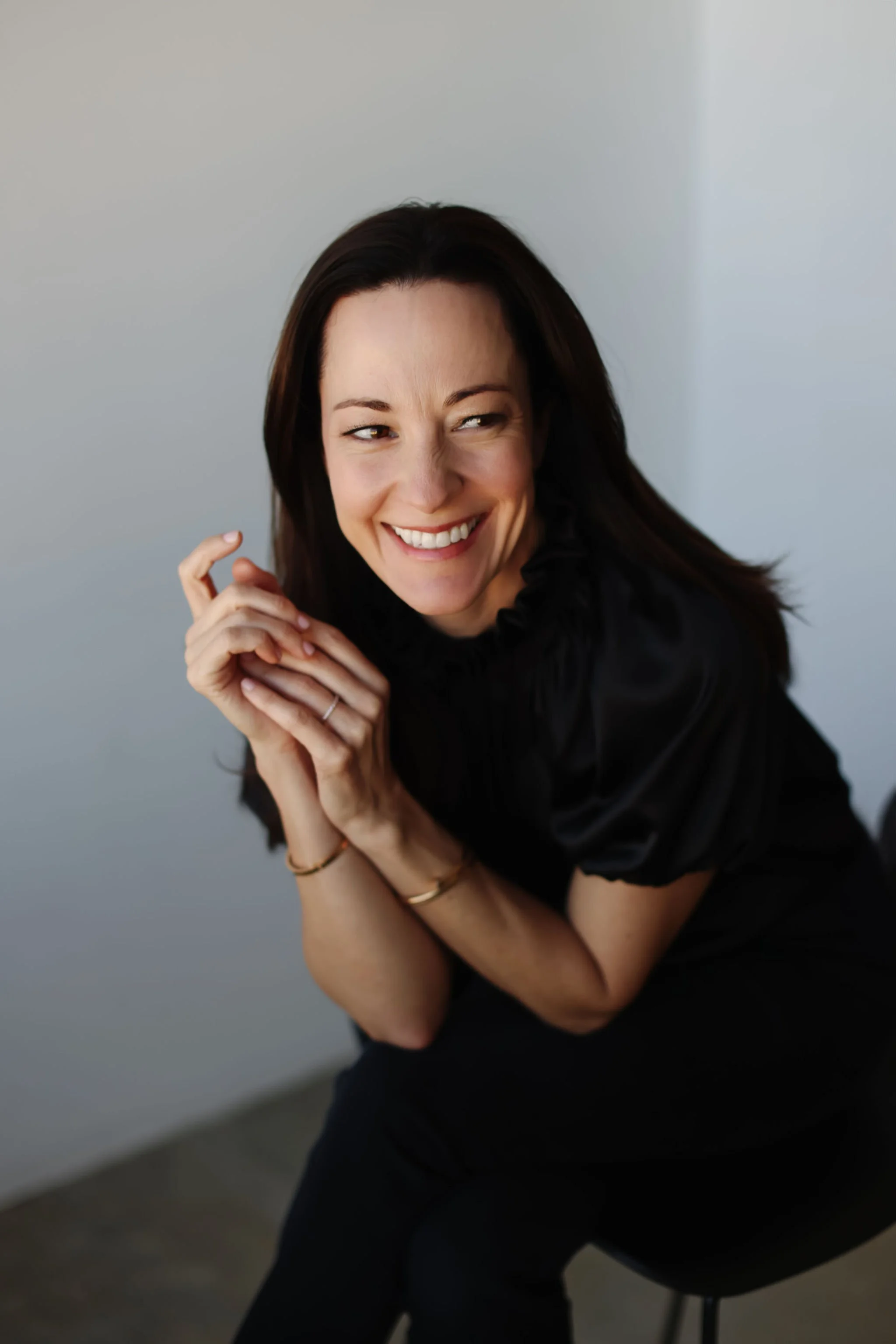
Skincare for Women Over 40: What Your Changing Skin Actually Needs
If your skin feels completely different than it did a decade ago, drier, more sensitive, and harder to please despite a longer and more expensive routine, you are not imagining it.
In this conversation, I sit down with May Lindstrom, founder of May Lindstrom Skin, to talk about what midlife skin actually needs, why adding more products often backfires, and the simple shifts that make a real difference for women over 40.
This is for you if you've been thinking:
"Why is my skin so dry all of a sudden? I'm doing everything right."
"I look older than I feel and nothing I'm using is helping."
"My skincare routine keeps getting longer and my skin keeps getting worse."
"Do I really need to switch to organic skincare? Does it actually matter?"
"I don't even know which products are worth the money anymore."
"My skin has gotten so sensitive. I don't know what to put on it."
"How many steps do I actually need in a skincare routine?"
Prefer to listen? Press play below:
Or listen on:
Apple Podcasts | Spotify
Why Skin Changes After 40 (And What's Actually Happening)
Skin in midlife is changing. Estrogen decline during perimenopause and menopause affects how quickly skin cells turn over, how much moisture the skin retains, and how well the skin barrier functions. The result is dryness, sensitivity, slower healing, and the feeling that nothing works the way it used to.
Most women respond by adding more: more serums, more steps, more products. May Lindstrom makes the case that this instinct, while understandable, is often part of the problem. Midlife skin tends to respond better to simplicity and high-quality ingredients than to volume and complexity.
Why More Products Aren't Helping
Over-layering products can compromise the skin barrier, cause sensitivity flares, and prevent any single product from working the way it should. When you are applying five to eight products in sequence, you may be creating interactions that work against your skin rather than for it.
May's perspective: fewer, better products, ones formulated with intention and ingredient quality, tend to outperform a long routine filled with conventional products. This is not a pitch for minimalism as an aesthetic. It is a case for skin that can actually function.
This is the serum and moisturizer May recommends. (These are affiliate links because I LOVE these products!)
Does Organic Skincare Actually Make a Difference?
It's a fair question. If you are already eating organic and taking care of your body, do you really need to scrutinize your skincare ingredients too? May's answer is yes, and her reasoning centers on what skin actually does: it absorbs. Synthetic and heavily processed ingredients applied daily have a cumulative effect on the skin and, potentially, the body.
She also addresses the skeptics. Some dermatologists argue natural skincare cannot deliver real results. Her counter is that results are not just about short-term outcomes. They are about what is happening to your skin over years of use. She also explains what to look for when "clean" claims on labels are not always what they seem.
What Ingredients Actually Support Midlife Skin
Rather than chasing trending ingredients, May focuses on botanical actives with a long track record of safety and efficacy for sensitive, dry, and maturing skin. In the episode, she walks through specific ingredients that genuinely support the skin's moisture barrier, texture, and resilience, and flags several common ingredients that may quietly be working against you.
How to Build a Simpler Skincare Routine That Actually Works
If a midlife woman came to May saying her skin feels dry and looks older than she wants, where does she tell her to start? This part of the conversation is the most practical. May gives a clear starting point, explains which products in her line she reaches for most for these concerns, and makes the case for skincare as ritual rather than routine.
The distinction matters more than it sounds. When skincare becomes something you do for yourself rather than something you do to fix a problem, the relationship with your skin shifts. That shift is part of what makes results last.
One Thing You're Probably Doing Every Day That's Working Against You
There is something most of us do automatically after washing our faces. May identifies it in the episode, explains exactly why it works against the skin, and offers a dead-simple fix that costs nothing and takes the same amount of time. Listen to hear what it is.
FAQs
Why is my skin so dry after 40?
Declining estrogen during perimenopause and menopause reduces the skin's ability to retain moisture and maintain its barrier. Skin also produces less natural oil as we age. Dryness in midlife is structural, not a sign something is wrong with your routine. The solution is often not more products but the right ones applied the right way.
Does organic skincare actually work for aging skin?
Yes, and in many cases it works better for sensitive, midlife skin than conventional formulas. High-quality botanical ingredients are gentler on a compromised skin barrier and free from synthetic additives that accumulate with daily use. The caveat: quality matters more than the label. Not everything marketed as "clean" or "natural" meets a high standard.
How many skincare products does a woman over 40 actually need?
Far fewer than most of us are using. A well-formulated cleanser, a rich moisturizer, and one targeted treatment or facial oil are usually sufficient. Adding more steps does not multiply results and can actively confuse the skin barrier. This is the serum and moisturizer May recommends. These are affiliate links because I LOVE these products!
What skincare ingredients should I look for after 40?
Botanicals that support moisture retention, skin barrier repair, and gentle cell renewal. May discusses specific ingredients in the episode. The more important question is whether those ingredients are organic and minimally processed, because the source and quality of an ingredient affects how the skin responds.
Meet May Lindstrom:
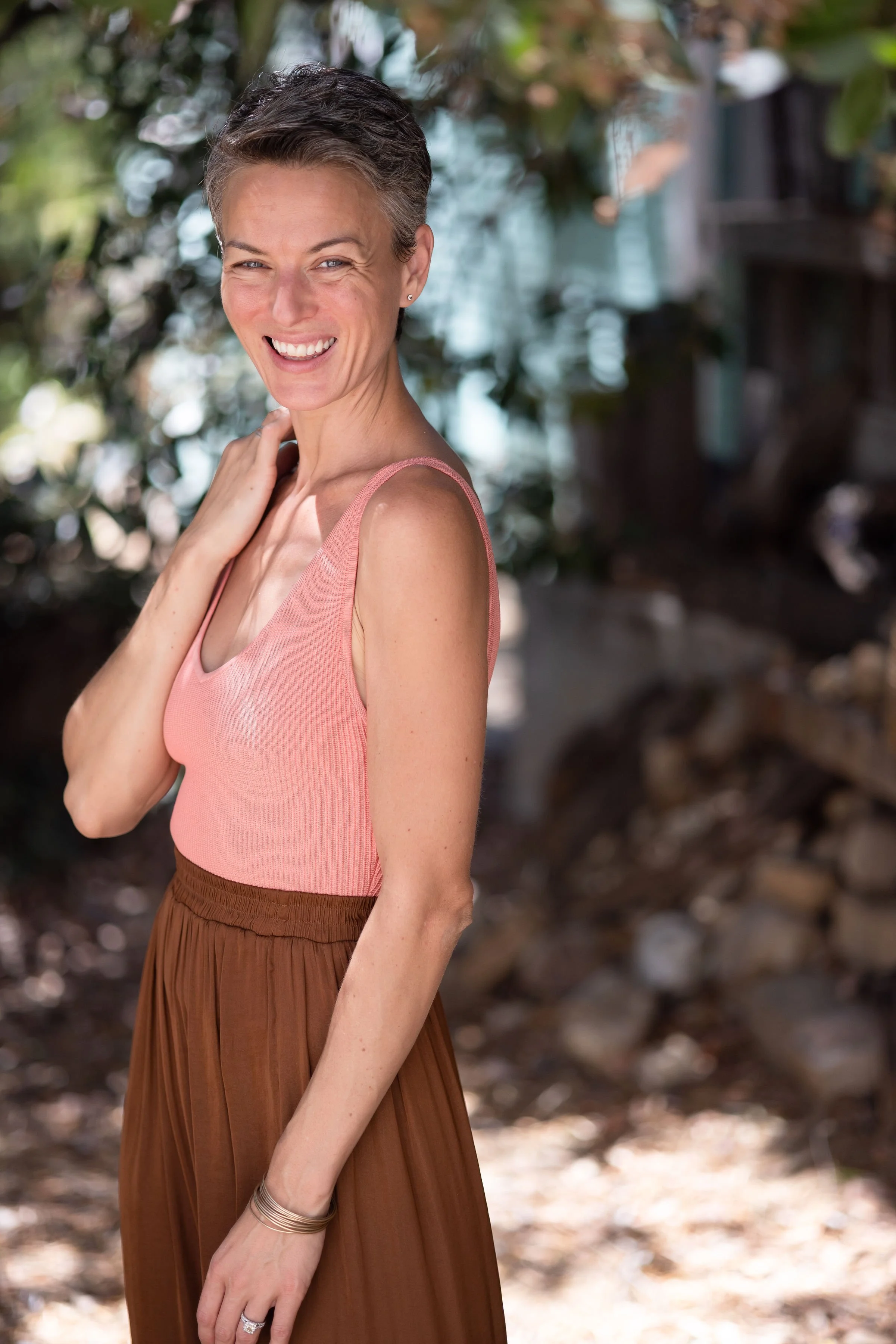
May Lindstrom is the Founder, Skin Chef, and CEO behind the luxury organic skincare brand, May Lindstrom Skin. For more than two decades, May has crafted dramatically effective, holistic, plant-based skincare solutions designed to feed, nourish, and support all skin types. May believes skincare is an opportunity to create a daily self-love ritual. She focuses on showering your skin with tenderness and appreciation, providing visible results while also seeing age or wrinkles as something that don't need to be erased. Skin is intimate: lean in.
For more than two decades, May Lindstrom has been crafting dramatically effective, holistic, plant-based skincare solutions designed to feed, nourish, and support all skin types.
With boundary crushing and beloved industry products like The Blue Cocoon, May Lindstrom Skin seamlessly bridged the gap between luxury, natural and results oriented skincare. As Founder, May brings a unique and interesting perspective to the beauty space — she believes skincare is an opportunity to create a daily self-love ritual. She focuses on showering your skin with tenderness and appreciation, providing visible results while also seeing age or wrinkles as something that doesn't need to be erased. May is committed to supporting people in loving the skin they are in through resonant sensorial skincare.
Connect with May Lindstrom:
-
Jessica Long (00:00)
If you feel like your skin is changing, maybe it's drier, droopier, more wrinkly, or more sensitive than it used to be. Hi, welcome. You belong here. And let me ask you this, are you using even more products and following more steps than ever before and seeing even fewer results? It's so annoying. I know. Well, today we're talking about what our skin actually needs when we're over 40, why using more products is not necessarily helping, and a few simple shifts that can make a real difference, including
One thing you're probably doing every single day that might be working against you. My guest is Mae Lindstrom, founder of Mae Lindstrom Skin. For over two decades, she's been formulating plant-based skincare for sensitive, changing skin with a focus on the best quality ingredients, simplicity, and results that last. If your skin is feeling like it belongs to someone older than you, this episode is for you.
Jessica Long (00:55)
Hello, my friend. You are in the right place. This is where smart and sassy women over 40 come to figure out all things midlife. We talk hormones, careers, relationships, and everything in between. I'm Jessica Long, health coach and fellow midlife woman on this wild ride with you. Stick around for honest conversations with experts, rebels, and wise women rewriting midlife on their own terms. Let's dive in.
Jessica Long (01:19)
Today we get to learn all about quality skincare for women over 40 from May Lindstrom herself. May, thank you so much for coming on the show.
May Lindstrom Skin (01:29)
Thank you so much for having me, Jessica. Really a pleasure to start my day with you.
Jessica Long (01:33)
Ah, well, yeah, it's a pleasure to start my day talking about this. This is
such a fun topic. And I feel like a lot of women are confused about if the products they're using are actually helping. Are they hurting? What should I be using now that I'm a little bit older than I used to be? So I'd love to just dive into all that with you, but let's start with what I think is such a common concern of women over 40, which is they start saying, I feel like I look
old or I feel like I look older than I feel and my skin is aging faster than I want it to. First of all, I know you have some thoughts about that. So I'd to hear your thoughts on that. And can skincare products help with this?
May Lindstrom Skin (02:18)
for my clients that are coming to me in their 40s and their 30s asking about preventative care, asking what to do about the thinning skin, the redness, the inflammation, the crepiness, the dryness, all of the things that are coming up at this age, I have empathy. I'm right there with you.
But I also, know that fundamentally we overthink this a lot. Most of my clients fall into two camps.
There's the camp that is throwing everything possible at their skin. They have overflowing medicine cabinets full of products, some of which they're using all at once, some of which they've used once and given up on. They're buying everything from every article they read, every podcast they listen to, every sister, mother, friend, neighbor recommends something. And so it's just this constant influx of product.
And the other camp Said, skin care is not for me. It's too scary to test new things. The chance of reaction in response is too high.
And so I vacillate between those two worlds of people quite a lot. And what I returned to over and over and over again is this relationship to our care. And
Maybe that's the question is what if this could feel good? What if we liked bringing our hands to our skin? What if we liked getting in the shower and loving ourselves up from head to toe? What if we just appreciated what hot water felt like on our back?
What if massage is actually the thing that shifts the physical appearance right along with your mood for that day. And I can't think of something that makes somebody shine brighter than when they're comfortable in their skin. And sometimes comfort comes from literally having enough moisture so that you're not cracking and breaking and in pain in your skin. And sometimes comfort comes from smelling something delightful and feeling joy.
rediscovering what beauty means beyond the aesthetic.
Jessica Long (04:28)
And I also know that you talk about this whole ritual of taking care of yourself, that it shouldn't feel like something you have to do at the end of the night, but actually the whole process of taking care of your skin, removing your makeup, washing your face, putting on your products is something that should be kind of like a self love ritual and feel good. And so that sounds like it's what you're talking about. And you guys were...
generous enough to give me some of your products. I've been using them for over a month now. And I have to say that they have that spa quality feel. So I see what you're trying to do. And it's totally working because just even looking at the packaging, right? this is a really nice product. And then the way they smell and the way they feel, it feels luxurious. It feels like
how you get pampered at the spa versus, what you do every night.
May Lindstrom Skin (05:24)
So I think about this a little bit like I think about eating vegetables because it's really related.
Skincare requires consistency. You can't do this once a month and call it good. It'd be like eating broccoli once a month and saying, that's it, I did my vegetables, I'm set. And so when you have your Sunday spa day once a month or on your birthday, it's not gonna cut it.
Jessica Long (05:43)
No.
May Lindstrom Skin (05:53)
And so when I set out to make Maelstrom Skin, the collection on a shelf, my goal was, what if it was the most beautiful thing? What if it made you want to really come into your care every day?
Jessica Long (06:08)
So you're setting us up for success by giving us these beautiful products that feel good and smell good. And so it's something we look forward to. And I, I do see that in myself. I noticed like I wasn't using them every night. was using them every other night. And on the nights that I was using them, was like, good. I get to have my spa experience tonight. and you're right. we have to take care of ourselves consistently. can't just be, you know,
May Lindstrom Skin (06:12)
Yes.
you
you
Jessica Long (06:31)
every other night, so maybe I should be doing it every night. ⁓
May Lindstrom Skin (06:34)
You gotta do it all the time. But that's
actually, think, the biggest challenge is even when you do figure out that it's delicious, we don't think that we're worthy of that every day.
And so sometimes it's a budget thing. But really, if you're using really good products and you're using them well, you can throw out 95 % of what's in that cupboard, I guarantee it. And so you got to come back to the parts that are really working and feed that and make that beautiful. And it's as much about setting the mood and the environment, like turn off the bathroom lights.
Jessica Long (06:55)
Yeah, well, let's,
May Lindstrom Skin (07:07)
hit play on a song on a playlist. Bring some grapes in there with you be ridiculous. So there's what you put on your skin, but there's also how you're talking to yourself as you feed in the mood that you set is really important.
Jessica Long (07:21)
Yeah.
It's an inside job too. But let's
talk about some of the ingredients that you have in here and why you think organic is important because I know some people listening are like, my God, I eat organic food and now you're telling me I have to put organic products on my face too. why does that matter? So tell us about that.
May Lindstrom Skin (07:43)
Well, it matters for the same reason that food does. And I don't think that organic is the end-all, be-all. Same with vegetables, right? It's more important that you eat your vegetables than it is that everyone be organic.
For me with skincare, it's less about is this plant ingredient organic as it is about using these ingredients to begin with. I personally have incredibly sensitive skin.
My skin needs, butters, oils, plants, clays, salts, spices, honey.
It's all of the things that our ancestors have used since the beginning of time. And I don't think that in every case all across our life, should we go back to what our ancestors are doing? I'm not of that mentality. I just know that very basic skincare ingredients for me, it's emulsifiers, it's surfactants, the things that are in soap, the things that are in lotions, the basic skincare that people use. I just simply can't. And so I started my work as a formulator.
more than two decades ago, I was really trying to care for organ, first and foremost, it's really that simple. And so now
the blue cocoon, our number one selling moisturizer. has a base of raw cacao butter, really incredibly beautifully sourced in Shea butter. I use Camellia oil. I use Tom Noo oil. I use all of these beautiful oils in our collection. Do they need to be organic? Not for everybody. Not all the time. And not everybody needs this kind of skincare. But for the people that do, I source
the
best ingredients in the world. I source direct from the farmers. It's fresh. It's this year's harvest. We take an incredible amount of care in the sourcing itself. think that from the seed to the soil, it's important to think about these things. I think about the villages in which this is grown. I think about who receives the money.
I think about the investment all the way through and I get to think about that. It's a luxury. This is our 15th year in business. Every year we've gotten to double down on our ingredient sourcing and the integrity behind those choices.
But the other part about processing plants is that it does matter because those pesticides and different residues that remain on them are...
focused in an essential oil in a plant product. so sourcing matters.
Jessica Long (10:08)
And I think it matters just to the point you're making about thinking about where our dollar goes and who we are supporting with our dollar every step of the way. I know I think about that all the time and I appreciate product owners who think about that so that I can feel more comfortable purchasing your product. So thank you for that. And for, your average midlife woman who doesn't have highly sensitive skin but does want to take good care of it. And we know how important
moisturizing is. Are these products good for us too? Are they better than what we could buy at the drugstore or get from our dermatologist?
May Lindstrom Skin (10:45)
Well, I've spent my life building this, so I do believe this is the best. But better is relative.
My focus on the organ means I'm paying attention to the organ, which means you're going to glow. because when your tissues are healthy, it shows.
And so I might not be leading from the aesthetic, but we're going to get there and we're going to get there faster because we're taking out the ingredients that are irritating and incompatible that are just fillers that either don't serve a purpose or it's just too much, all at once. And so I'm stripping away everything that's not needed and giving you truly the best of the best, highly concentrated formulas that are made with the best ingredients
in the world that are bottled fresh in small batches here in Los Angeles, shipped to you from our kitchen lab with the highest level of care. And then we give it to you with as much education as we can, as much follow up in our communication. We have so many videos on how to actually use things. There's me in the shower giving lifetime demonstrations on everything because that's how you actually do your skincare. And talking about how to really prep your
even if you never used my products ever. What I talk about most is really tuning into your own fingertips, feeling the texture on your skin, having that be what dictates whether it's time to exfoliate or whether you need more moisture or whether your moisture isn't...
able to absorb because you have dead skin cells on the surface or because everything is just congested and stuck or because you have so much inflammation that your skin is just pissed off and just doing its best to hold itself together quite literally and
Jessica Long (12:31)
So you're saying this is something
we could train ourselves to do instead of going to our aesthetician and saying, tell me is my skin dehydrated? Do I need to exfoliate? Okay. Yeah. I feel like a lot of us just go through our day without actually paying that much attention. We just go through the steps that we think we're supposed to go through without actually getting that tactile feedback that you're talking about.
May Lindstrom Skin (12:37)
Yes, yes.
Jessica Long (12:51)
So one of your messages is touch your own skin. Notice what it feels like. But what about, the oils from our fingers or that could be dirty transferring to our skin? I've always been told not to touch my face.
May Lindstrom Skin (12:54)
a billion percent all day every day.
Yes,
I mean, touch your skin on purpose. So yes, I massage my chest literally all day long. I put just a little bit of oil on my hands and massage my chest or my arms or my hands multiple times a day. People ask, what do I do for my neck? What do I do for my chest? Because now that's
the healthiest skin on my body is and it is because I am massaging that part of my body all the time.
massage your chest, massage your neck, massage your ears, massage your scalp, your crown, massage your feet. It's all connected. And when you are able to massage your face, you do that on purpose and you do that with clean hands. Ideally, you do that in the shower when your skin is soft, soft, soft, squishy, warmed up, tissues loose, and all of your blood
flows better. And so I don't care what moisturizer you're If you're using something from the drugstore that's six dollars and your skin handles it well, awesome. But if you add massage to that...
and that song that you love that makes you sing along. I guarantee give yourself two weeks singing in the shower, and massaging in that $6 moisturizer. And you're going to have a little bit of extra sparkle And if you have the ability to feed in better ingredients, do it.
because it is like going to the grocery store and it's the difference between the canned tomato sauce in aisle six versus that fresh tomato that you pluck from your mother's garden where you still smell the vine.
Jessica Long (14:35)
So if someone listening is like, OK, I'm using the drugstore products, but I'm curious about your products. I like your story. I like where you're sourcing them from. I like the idea of minimizing ingredients and trying to weed out what may not be doing me any good if we can't afford the whole product line, is there one product that is the most important to start with?
May Lindstrom Skin (14:57)
say too because the answer is moisture. Moisture is the most important thing. Before you can address any of the texture, any of the flakes, any of the congestion, acne breakouts, other concern, your skin has to be pliable.
And so my goal is always to make your organ as soft and comfortable and receptive as possible so that whatever you build on from there can actually absorb, can actually come in without damage or irritation or inflammation. So moisture is important. We have two primary moisturizers, the blue cocoon, which I mentioned earlier, which is this beautiful, it's a blue balm. It's very pretty.
Jessica Long (15:35)
It is.
so what is in here and what makes it blue? It's so unique.
May Lindstrom Skin (15:38)
So the blue comes
from blue tansy, which is actually a yellow flower in the process of distillation, it turns blue naturally, it's pretty incredible. It comes from a compound called camazulin, which is anti inflammatory, it's calming, it's wonderful for any kind of heat, redness, itch, clines with rosacea, psoriasis, dermatitis, but also just any kind of red heat flushing, paramenopause, menopause, all of that good stuff. My kids use it for bug bites
We have clients who use it for nipple rash, for surgical scars, post-surgery. It's wonderfully healing and nourishing, but it's also simply the best moisturizer on the planet. Even if you have totally normal, healthy, supple, gorgeous, glowing angel skin, lucky you, this is still just the best moisturizer. ⁓
On
the other side of that we have the Youth Do, which is our original face oil. This is actually what we launched with in 2011. It is a blend of 21 of my favorite plant oils on the planet, along with coenzyme Q10, which is especially good for aging skin, for lines, for tension. It's a powerful antioxidant.
Sea Buckthornberry is another star in this one. That's what gives it this beautiful, bright, juicy orange color. So it gives you this instant glow and then it feeds in and the glow over time is pretty outrageous. So most people want the benefits of both of those things. And so I personally use both the Blue Cocoon and the Youth Dew every morning, every night. What I adjust is ratios. in the winter when I'm more red and more dry,
dry, more sensitive, I will use more of the Blue Cocoon, like a blueberry sized amount and a pump or two of the used to and I will massage that into wet skin either in the shower or at the sink after splashing my skin until it gets soft, soft, soft. You leave it soaking wet, skip your towel entirely. That's just pressing bacteria into your face. Stop it. You actually need that water and you don't need that bacteria. So massage your oils directly into the water.
And it gives you that extra slip. It makes the oils go further. You take it all the way down your chest, massage out towards your armpits, helps everything just flow. The neck is really important Do your eye area. The blue cocoon especially is wonderful for puffiness, and the eye is for irritation, puffiness, redness. ⁓
Jessica Long (17:53)
So tell me
about this, the do and the right way to use. do you mix the two together? Do you put one on first and then the other one?
May Lindstrom Skin (17:54)
the lips too.
both. really, number one, you can't mess it up. With ingredients this good, you can't mess it up. So take the pressure off yourself. Again, let this feel good. That's the most important part. If you have a little extra time and you want to go in layers, it's really beautiful to experience them on their own. You get to have two different sensorial experiences. You get a little bit more time. I like to go in.
Think of this like medicine and you want to go in with what applies to you most directly first. So for me, I lean more red, more sensitive. So I will massage the blue cocoon into the waters on my skin first. And then I will follow it with the youth dew and more massage. it's summer and I'm sticky and I'm sweaty and my skin is congested or maybe I'm having an acne breakout, the youth dew is my favorite for acne prone skin as well as maturing skin.
If I'm more that direction, I might go in with the youth do first and then follow with the blue cocoon, maybe even just in the areas that need a little bit more comfort and moisture, especially the eye area and the lips. But a lot of the times I'm a workaholic mother of two and I'm moving real fast. And so even though I want this to be super delicious, I also have, you know, two minutes like the rest of you. And so I...
almost always do my skincare right in the shower. I keep my products in there so I don't forget and so that I'm using them actually on warm, wet, fully prepped skin. That's when you're the most ready to absorb. And so I'll be in the shower, I turn off the water, I skip the towel. And while I'm standing there wet, I put a blueberry sized amount of the Blue Cocoon right into the center of my palm. I squirt two or three pumps of the Youth Do right over top of that.
then I rub my palms together, it turns to a liquid and then I massage that forehead to chest. And it all just sucks in so much better in the warm, steamy, moist environment of your shower. And so you're saving time.
You don't have to layer them. You can mix them together. it feels delightful. It smells amazing. You walk out of there like a peacock and people are going to ask you what you're using on your skin.
Jessica Long (20:06)
gosh, okay, I'm
gonna try that. Cause I haven't tried using them in the shower and I do towel myself off. I guess that's a tip that I will try. I do think about that though, when I put a towel on my clean face, like, I don't know about this.
May Lindstrom Skin (20:11)
you
Yeah, no, you're taking away
the water and you need that water. And I don't care where you keep your towels in the bathroom. They're either absorbing the things that your toilet throws out. That's real. Or it's just getting musty. so skip the towel.
And same thing for your body oils and body oils, think are like the key to showers. Nobody invests in body oils and I swear it is the thing that actually will change your relationship to your skin. Get a good body oil that you love. The good stuff, which I hope they sent you. that's actually the formula that everyone told me to bottle 20 years ago and that was the catalyst for the rest of the collection
Jessica Long (20:49)
It's right here.
May Lindstrom Skin (20:57)
keep that in your shower soaking wet, turn off your shower and start at your toes, massage yourself all the way to your neck. Yeah, you'll just want to sing even when you're not a singer.
Jessica Long (21:08)
Okay, I'm gonna try it.
May, thank you so much for coming on the show and sharing your wisdom and your tips with us. We all have something new to try.
May Lindstrom Skin (21:17)
You do, it's good homework. Enjoy.
Jessica Long (21:19)
Thank you. ⁓
Jessica Long (21:23)
Okay, let's recap what our skin actually needs right now. One, moisture. Always start with moisture. Two, touch your skin and learn to understand what it's trying to tell you and what it actually needs. And three, skip the towel. Put your moisturizer on when your skin is still wet so it has a better chance to absorb it. I'm gonna try that. Are you? Click the link in the show notes and text me if you do. I'd love to hear how it goes.
and make sure you're following the show so next week's episode drops right into your feed. I will see you then. Bye for now.
🎧 Other Episodes You’ll Love:
The Surprising Power of Peptides for Midlife Skin, Hair Loss and Longevity
How Beliefs About Aging Affect Midlife Health and Longevity
Like what you hear?
➕ Follow Midlife Advice on Apple podcasts, Spotify or YouTube for more super smart and slightly sassy midlife conversations that blend science, intuition, and zero BS.
⭐️ Please share this episode with a friend, drop a 5-star rating and leave a review! That is the best way you can help me book more expert guests for us!
Disclaimer:
Belong Wellness and its members, managers, employees, contractors, and other agents or representatives are not licensed medical care providers and do not provide medical services or advice, including without limitation diagnosing, examining, preventing, treating, or curing any medical conditions. The information shared in this podcast is meant to be educational, not prescriptive. Please consult your medical doctor before making any changes to your diet or lifestyle. Further, the opinions of guests on this show do not necessarily reflect the opinions of Jessica or anyone affiliated with Belong Wellness.